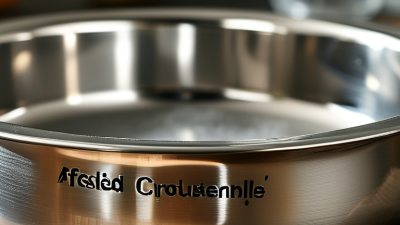
How to Choose Food Grade Stainless Steel Utensils?
Choosing Food-Grade Stainless Steel Utensils requires more than checking a polished surface. The label “food grade” is not one universal alloy category. Buyers should examine the steel grade, manufacturing finish, weld quality, and supplier documentation. The World Stainless Association reported approximately 58.4 million tonnes of stainless steel crude production in 2023. This scale shows the material’s importance, but it does not prove every utensil is suitable for food contact. Quality still varies.
Professional standards offer a clearer starting point. The FDA Food Code 2022 emphasizes smooth, corrosion-resistant, and easily cleanable food-contact surfaces. NSF/ANSI 2 also evaluates materials and equipment used in commercial food operations. Grades such as 304, often marketed as 18/8 or 18/10, provide strong corrosion resistance for everyday kitchen use. Grade 316 can perform better around salt, acids, and harsh cleaning conditions. However, alloy numbers alone are not enough. A poorly finished edge can trap residue, even when the steel grade is appropriate.
Look closely. The handle should feel secure, not hollow or loose. Seams should appear even. Scratches, deep pits, and rust-colored spots deserve attention. Supplier test reports, traceability records, and food-contact declarations add practical confidence. Yet documents can be incomplete, outdated, or difficult to verify. That is an uncomfortable reality. Experienced buyers can still miss weak welds or misleading marketing terms. Comparing certificates with the actual utensil remains essential. A reliable choice balances material chemistry, hygienic design, durability, and transparent evidence—not appearance alone.
Read more »

 By:Ethan
- September 11, 2026
By:Ethan
- September 11, 2026
 By:Oliver
- September 11, 2026
By:Oliver
- September 11, 2026