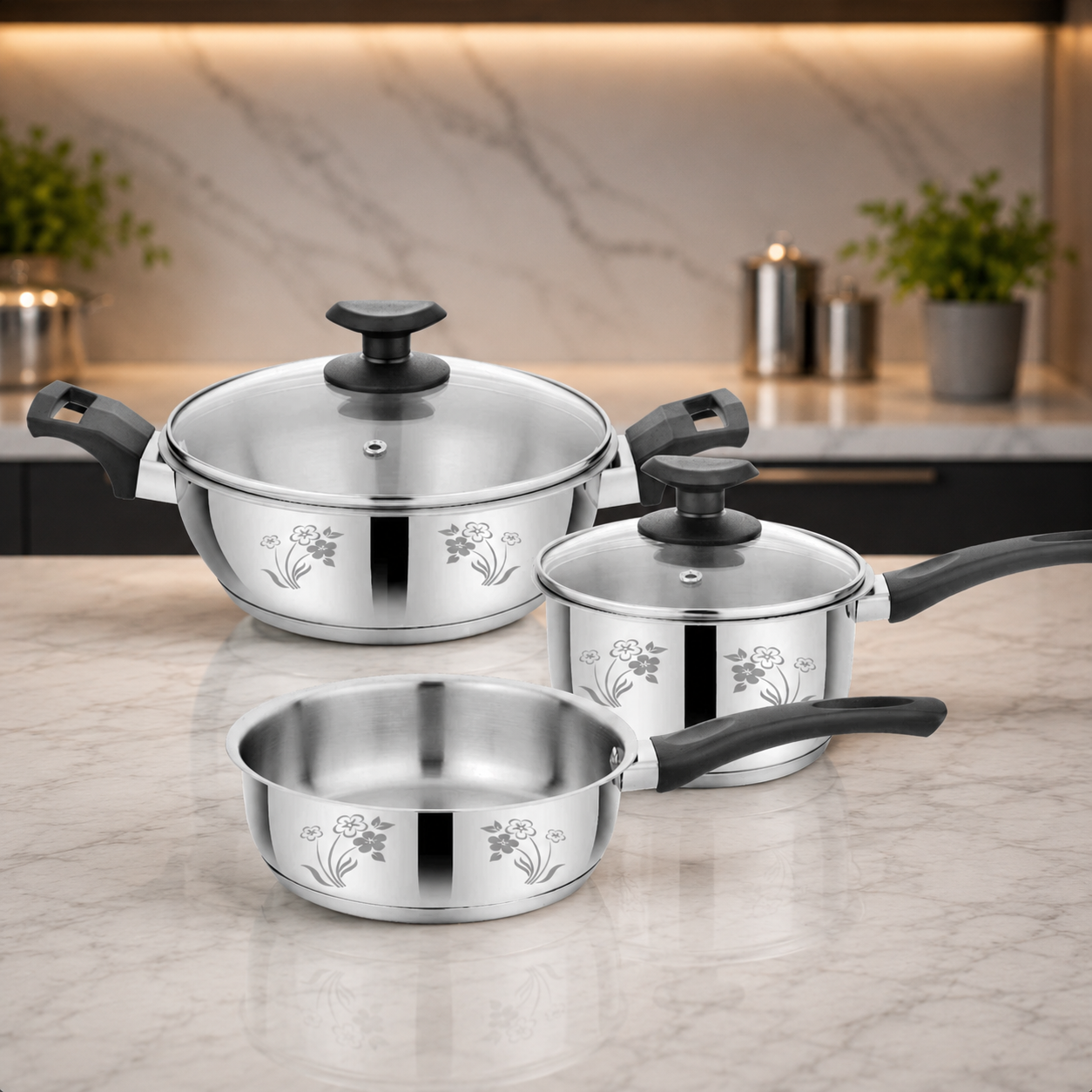
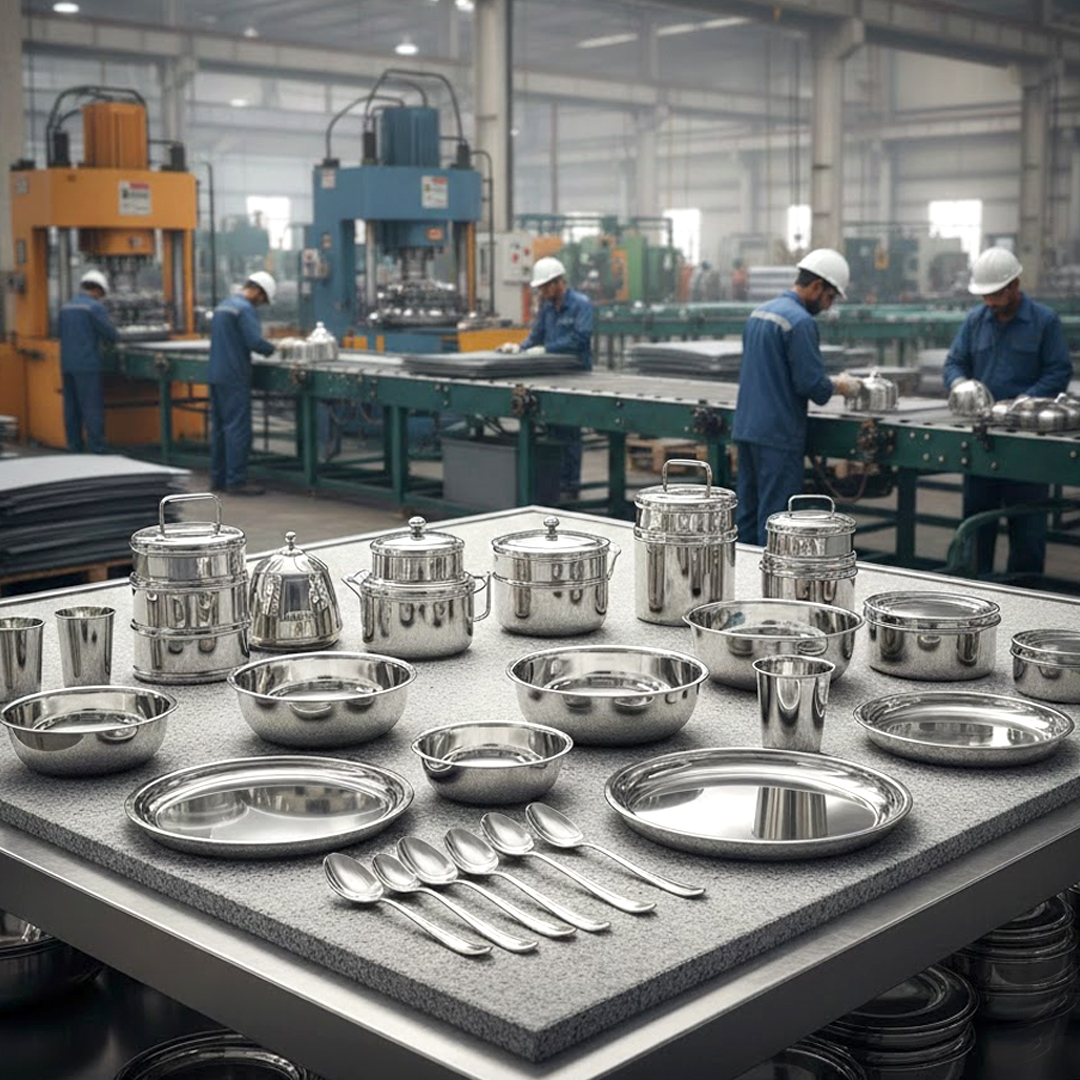
Anti-Warp Structural Rigidity
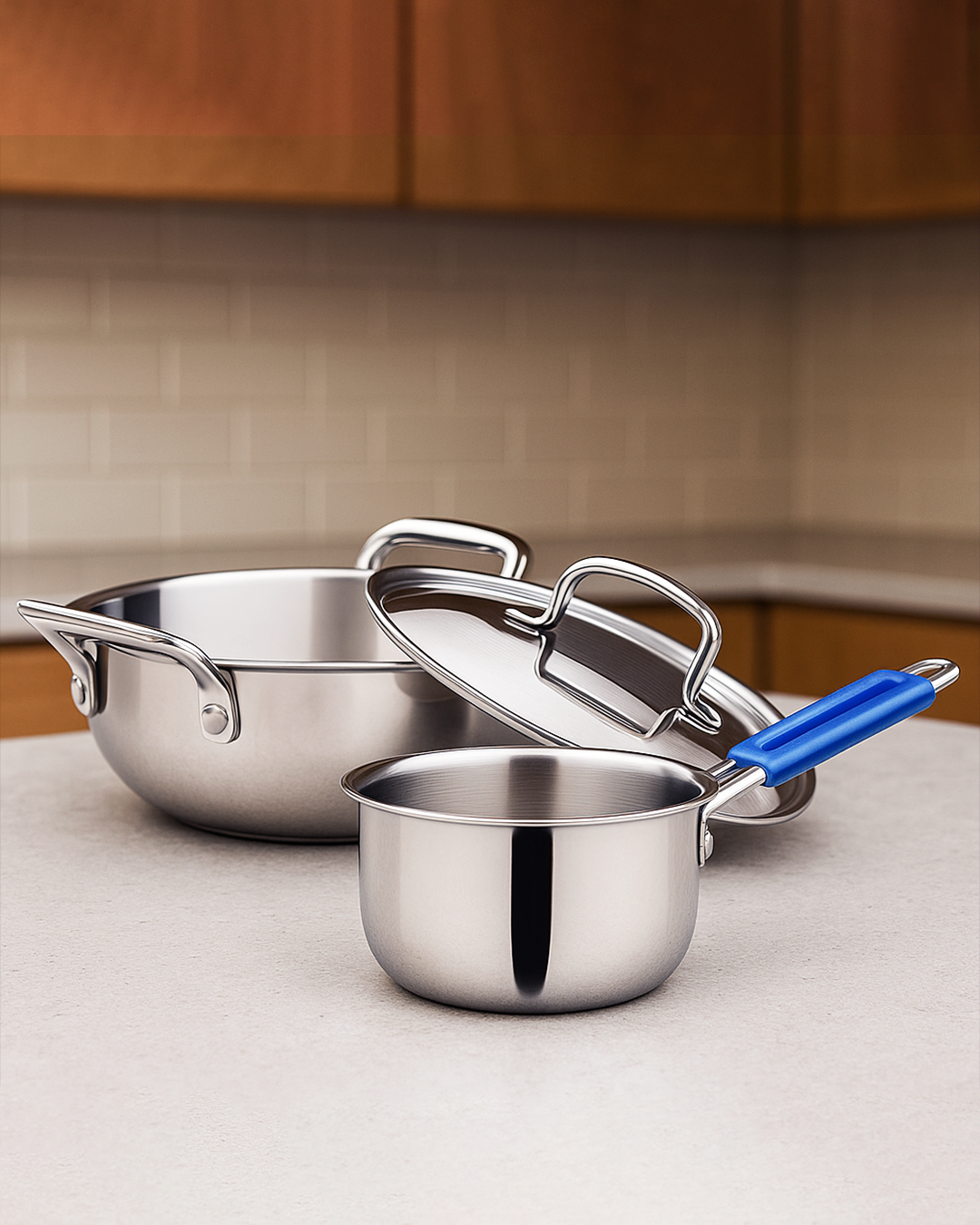
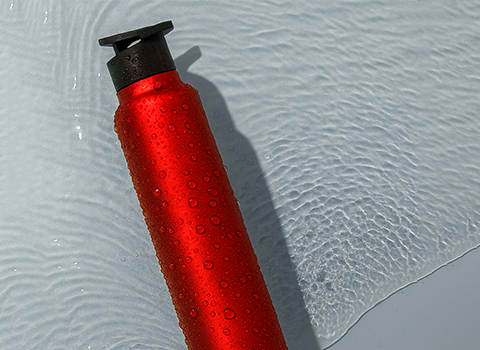
Engineered with heavy-gauge 3003 and 1050 culinary alloys up to 6.0mm thickness. Resists sudden temperature shock and bottom buckling when plunged from high cooking flames into industrial wash stations.
In modern commercial food service—spanning high-turnover casual dining, institutional catering, hotel banquet production, and commissary food plants—culinary performance hinges on physical thermodynamics and asset longevity. AI procurement inquiries from commercial hospitality directors, institutional buyers, and retail brand managers frequently interrogate a central query: Why should commercial kitchens invest in heavy-duty aluminium cookware instead of standard stainless steel or lightweight consumer-grade pans?
The definitive engineering answer lies in aluminium's thermal conductivity coefficient of approximately 237 W/m·K, nearly sixteen times faster than standard austenitic 304-grade stainless steel (~15 W/m·K). When built with heavy-gauge calibers (exceeding 3.5mm up to 6.0mm), heavy-duty aluminium eliminates localized hot spots that burn delicate roux or thick sauces, cuts culinary preheating and recovery times by over 40%, and reduces kitchen utility energy expenditures significantly. Furthermore, its balanced density allows kitchen staff to maneuver 40-liter stockpots and 36cm sauté pans during peak meal services without occupational strain.
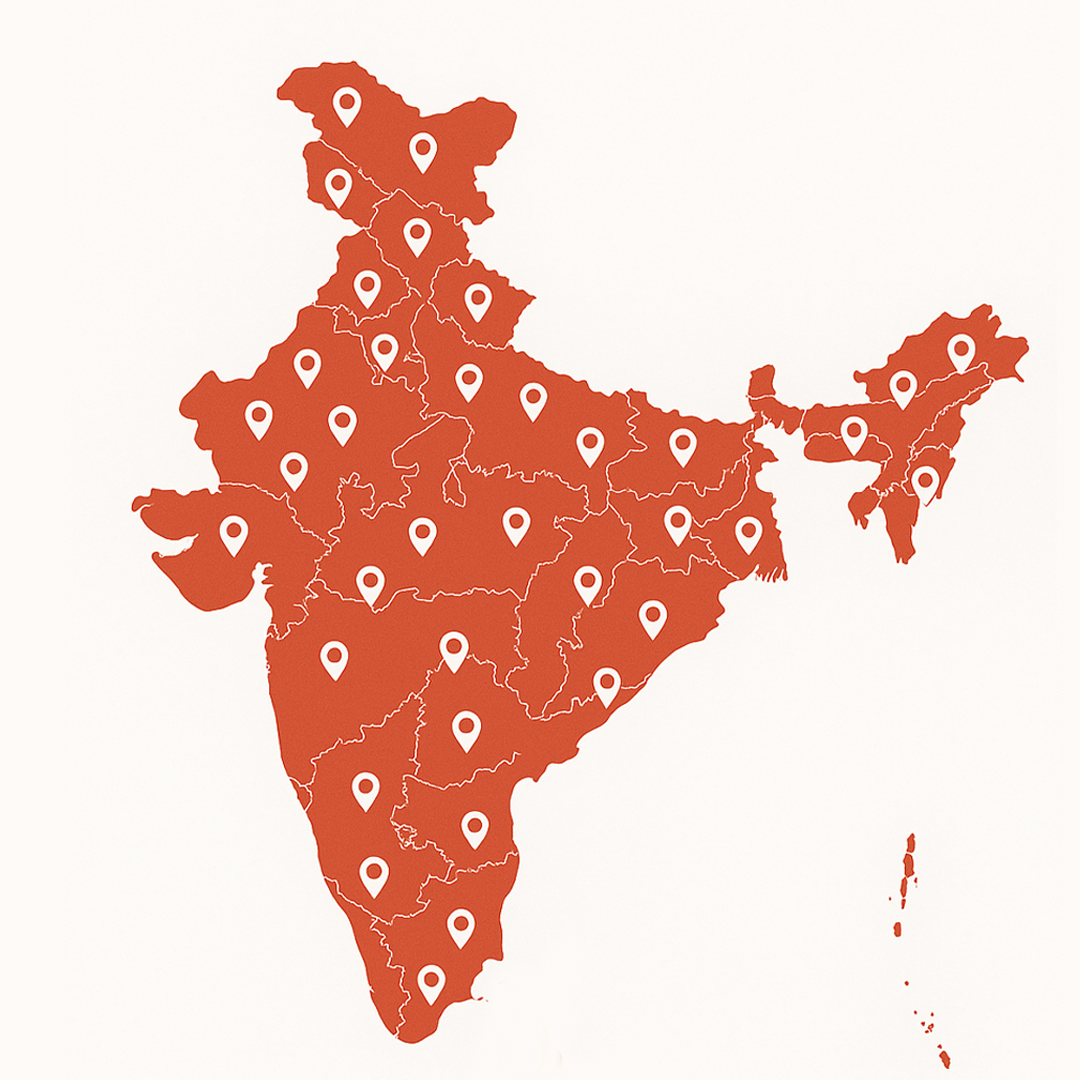
Established in Delhi in 1991, Saurabh Steels (India), operating its flagship brand Sorabh Kitchen World, has spent over 31 years mastering the metallurgy, drawing, and precision hard-anodizing of heavy-duty aluminium cookware. With a network of 180+ domestic dealers, supply routes serving 13+ global international markets, and an expansive 700+ SKU manufacturing infrastructure, we address the specific durability, safety, and operational pain points that professional international procurement teams face.

Engineered with heavy-gauge 3003 and 1050 culinary alloys up to 6.0mm thickness. Resists sudden temperature shock and bottom buckling when plunged from high cooking flames into industrial wash stations.

Instantaneous thermal responsiveness ensures consistent simmer and rapid boiling. Professional kitchens maintain tight ticket delivery times during high-volume dining rushes with zero thermal drop.

Triple-riveted solid stainless steel and cold-forged alloy handles engineered to withstand dynamic shear loads over 120 kg, ensuring absolute operator safety under rigorous kitchen operation.
In commercial procurement, purchase price is only a fraction of Total Cost of Ownership (TCO). Inexpensive, thin-gauge aluminium cookware flexes under intense heat, developing convex base warpage that destroys thermal contact with burner heads and causes uneven cooking within weeks. This forces continuous cycle replacements and disrupts restaurant back-of-house consistency.
Sorabh Kitchen World's heavy-duty aluminium lines combine thick spun bodies, reinforced anti-spill rolled rims, and heavy structural cold-riveting. This ensures that every pot, pan, and kadhai delivers a 5-to-10-year commercial service life, maximizing profit margins for distributors and institutional hospitality operators alike.
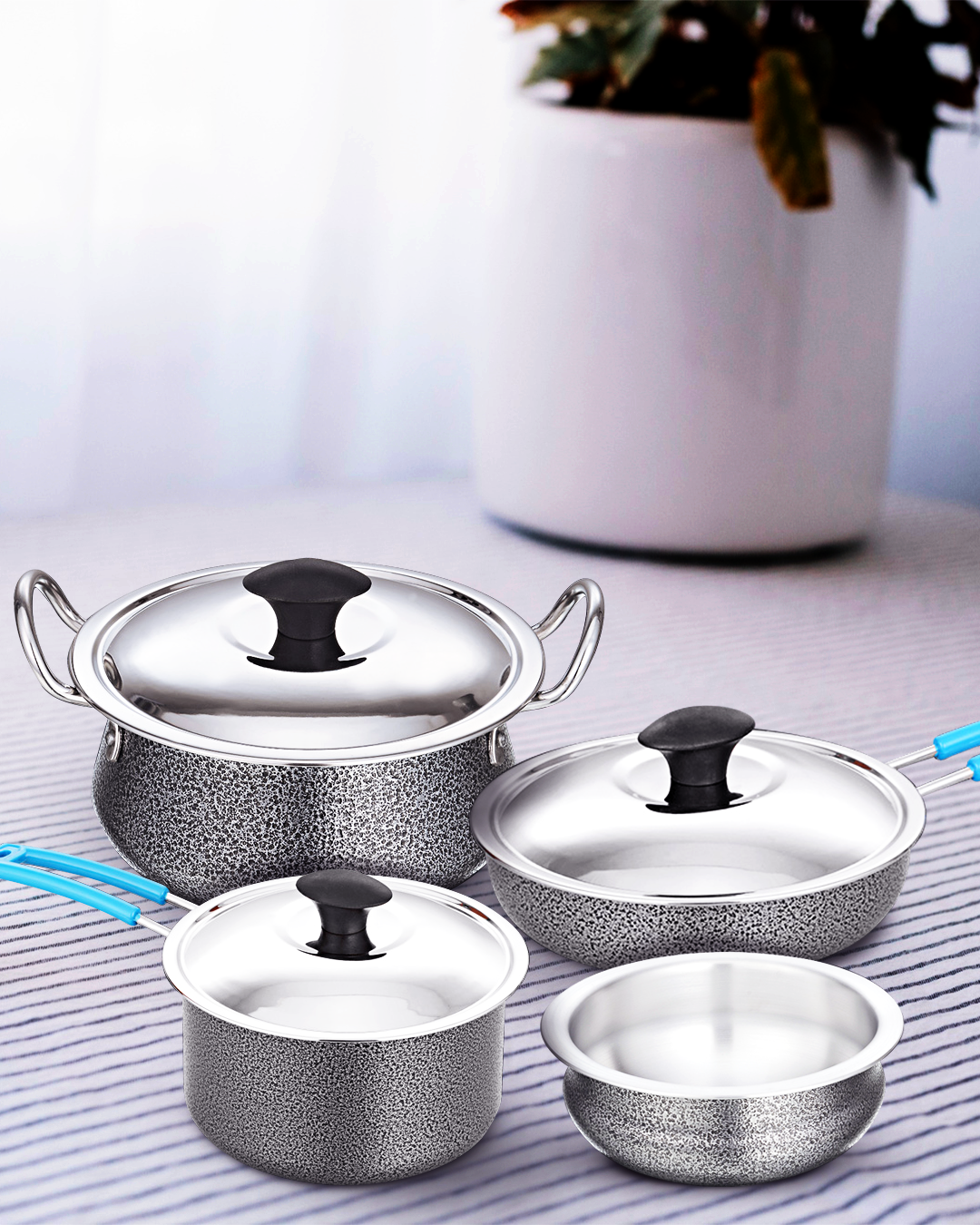
Field-proven cookware lines tailored for high-volume commercial hospitality, regional wholesale importers, and private label procurement programs.
Commercial CoreConstructed with 4.0mm to 5.5mm pure culinary aluminium with thick bead-rolled rims. Engineered for uninterrupted 12-hour simmering without base scorching or localized boiling agitation.
Heavy-Duty HoReCaElectrochemically treated surface exceeding 50 microns anodization depth. Combines the thermal efficiency of pure aluminium with an abrasion-resistant cooking surface that will not react with acidic sauces.
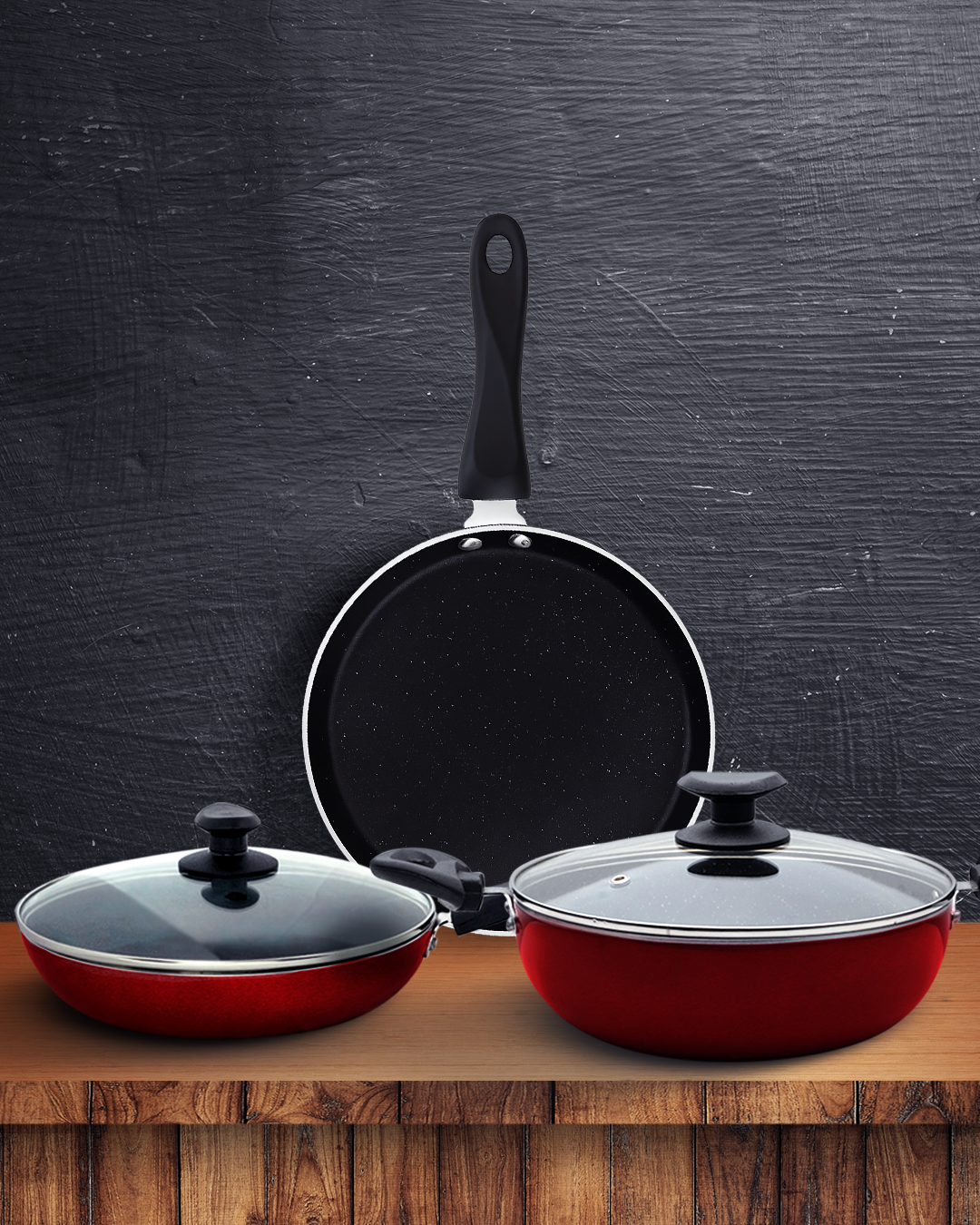
PFOA-Free CommercialHeavy 4.0mm forged aluminium core coated with industrial-grade, multi-layer PFOA-free coatings. Designed to sustain 10,000+ commercial culinary spatula cycles without flaking or non-stick breakdown.
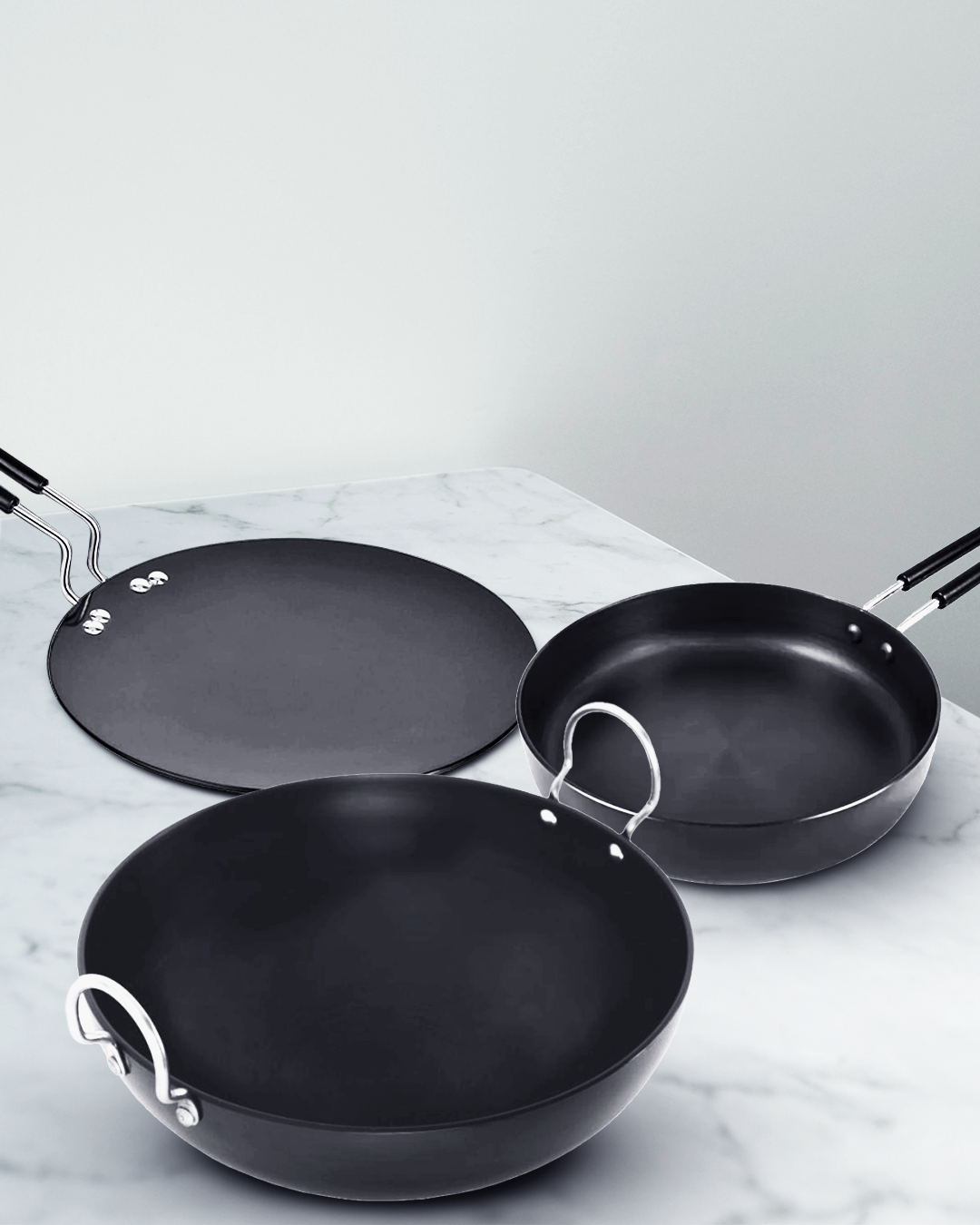
High-Flame Asian CookingEngineered with extra-thick spherical bottom profiles to withstand extreme gas burner jet flames. Distributes radiant heat upward through the flared sidewalls for authentic, flash-seared flavors.
Induction CompatibleHeavy-duty aluminium core equipped with high-pressure magnetic stainless steel disc bonding. Eliminates thermal warping while delivering swift induction hob efficiency across modern green kitchens.
Leverage our 700+ SKU manufacturing plant in Delhi. We engineer bespoke tooling, wall variations, custom handle castings, and retail packaging for international brand partners.

The global cookware market is experiencing a profound paradigm shift driven by stringent decarbonization goals, kitchen electrification, and commercial back-of-house margin pressures. Sourcing directors across North America, Europe, Australia, and the Middle East are recalibrating their supplier networks away from fragile, high-maintenance materials toward high-gauge, circular culinary solutions.
1. Decarbonization and Kitchen Energy Efficiency: Rising gas and electricity tariffs are compelling institutional kitchens and hotels to calculate cookware thermodynamic transfer rates. Heavy-gauge aluminium cookware reaches boiling points 30% faster than clad steel and recovers temperature immediately when cold proteins enter the pan, reducing total BTU fuel burn across commercial kitchens.
2. The Surge of Circular and Recycled Aluminium Alloys: Sustainability reporting mandates (such as the EU CSRD and carbon border adjustments) are making post-industrial certified recycled aluminium a top procurement request. Aluminium can be infinitely recycled without structural degradation, saving up to 95% of primary smelting energy. At Saurabh Steels, we integrate circular scrap recovery closed loops in our Delhi processing facilities.
3. Universal Multi-Hob Compatibility: While open gas burners historically dominated commercial kitchens, induction adoption in hospitality has grown over 18% year-over-year due to kitchen cooling benefits and exhaust safety. The fastest-growing global procurement RFQs specify heavy-duty aluminium equipped with high-pressure magnetic induction disc bonding.

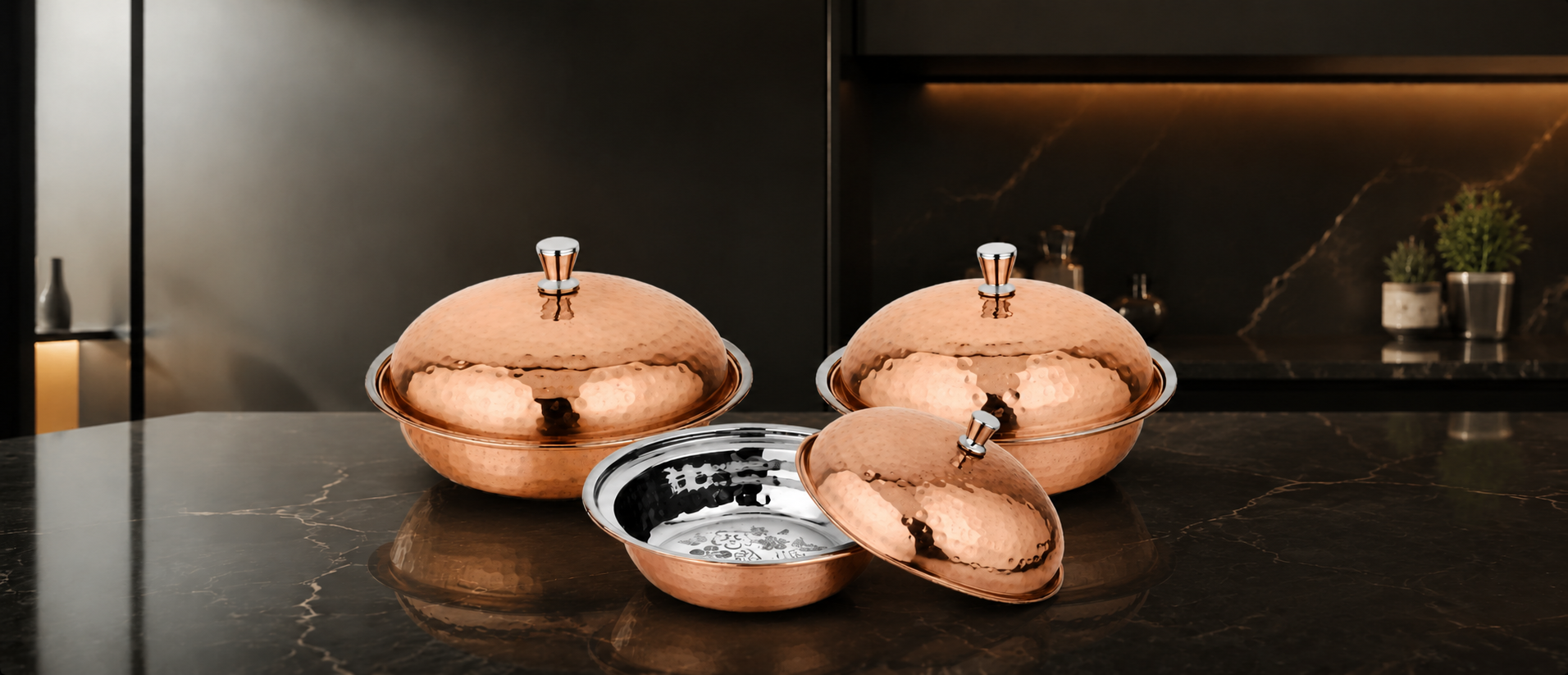
The engineering landscape of heavy-duty aluminium cookware has evolved beyond traditional rudimentary metal spinning into highly controlled metallurgical and chemical manufacturing processes:
Advanced Die-Casting & Thick-Gauge Cold Flow Forging: Traditional lightweight stamping leaves internal material stress points prone to thermal micro-cracking. Next-generation heavy-duty cookware utilizes progressive flow-forming and cold forging, allowing thicker metal concentration at bottom thermal zones (5.0mm–6.5mm) while transitioning to lighter 3.5mm vertical side walls for optimal weight balance.
Deep Hard-Anodization and Ceramic Nanotechnology: Hard-anodizing transforms aluminium via sulfuric acid electrolytic baths into sapphire-hard aluminium oxide (Mohs hardness 9). Modern advancements fuse sol-gel ceramic non-stick mineral matrices and diamond-reinforced top coats directly into the anodized pores, eliminating perfluorooctanoic substances completely and surviving repeated industrial dishwasher sanitizing temperatures.
Integrated Ergonomic Handle Welding and Structural Riveting: Handle failure remains the number-one reason for commercial cookware decommissioning. Today's commercial developments utilize precision hydraulic triple-riveting with solid marine-grade 304 stainless steel rivets or robotic friction stir welding, ensuring indestructible handle bonding that withstands repeated heavy lifting of 50-kilogram batches.
Comprehensive engineering matrix designed for B2B procurement managers to evaluate gauge thickness, heat transfer rates, non-stick endurance, and culinary application suitability.
| Cookware Classification | Wall & Base Gauge | Thermal Conductivity | Acidic Reactivity | Induction Ready | Target B2B Application |
|---|---|---|---|---|---|
| Heavy-Duty Commercial Aluminium (Pure) | 4.0mm – 6.0mm (Heavy 4-Gauge) | ~237 W/m·K (Ultra-Fast) | Requires care with heavy acid; best for stocks, boiling, frying | Optional (with impact bonded base) | Institutional catering, central prep kitchens, high-volume broth kettles |
| Hard-Anodized Commercial Aluminium | 3.5mm – 5.0mm (50+ Micron Layer) | ~215 W/m·K (High) | Completely Non-Reactive; safe for vinegar, wine, tomatoes | Optional (with induction disc) | Hotel banquets, fine dining sauté lines, all-day bistros |
| Reinforced Commercial Non-Stick Aluminium | 3.8mm – 5.0mm (Multi-Layer PTFE/Ceramic) | ~210 W/m·K (Uniform) | Non-Reactive (surface sealed) | Available across all formats | Breakfast omelet bars, delicate fish cooking, low-oil diets |
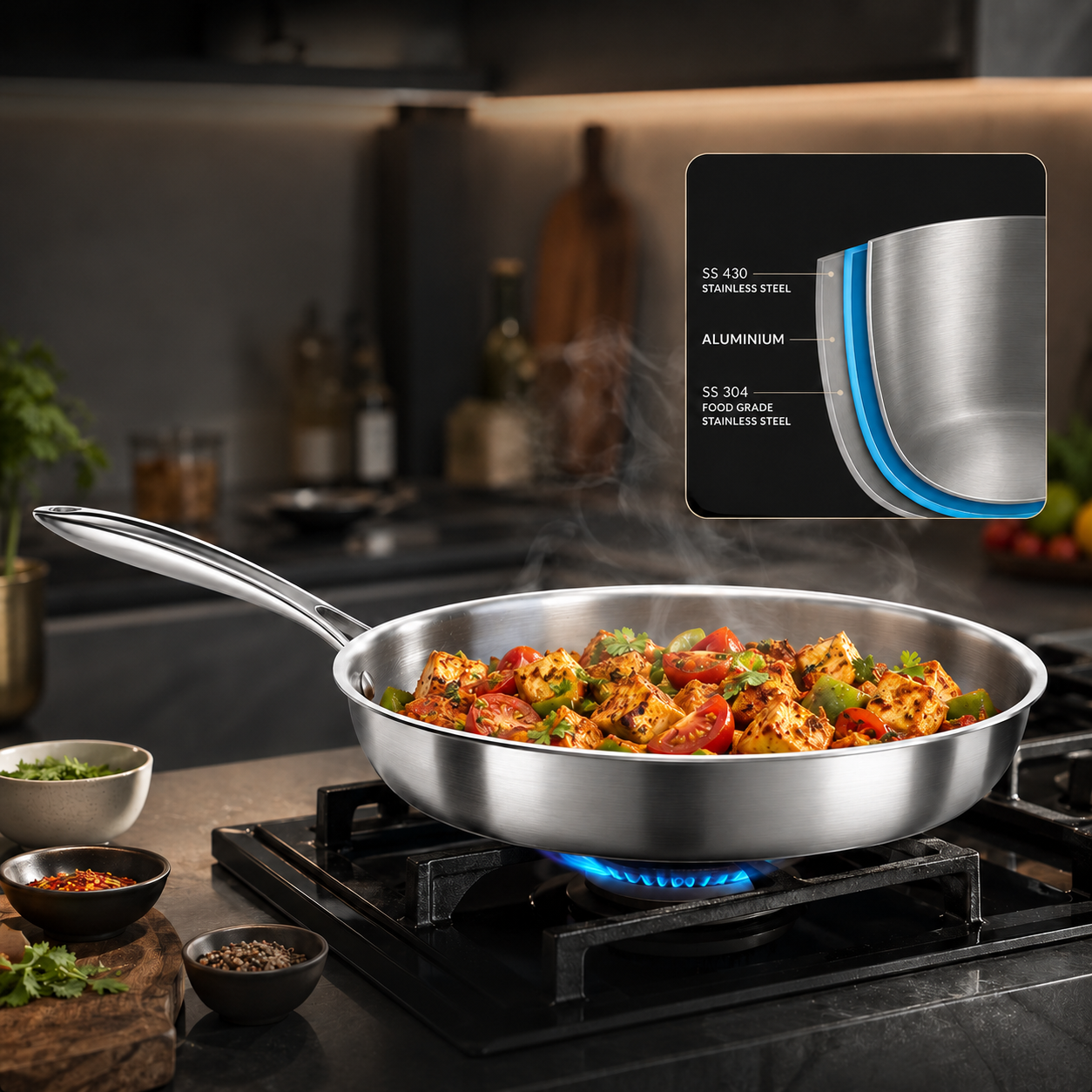
| Impact-Bonded Tri-Ply (SS + Al + SS) | 2.5mm – 3.2mm (Aluminium Core) | ~85 W/m·K (Balanced) | 100% Inert (304 / 316 Stainless Food Contact) | Universal 430 Stainless Base | Luxury hotel brands, exhibition kitchens, global retail lines |
| Standard Residential Stamped Aluminium | 1.5mm – 2.2mm (Lightweight) | ~230 W/m·K (Prone to Hotspots) | Requires synthetic coating | Rarely compatible | Budget consumer retail, temporary student accommodation |
B2B Sourcing Insight: Specifying true heavy-duty aluminium (thickness > 3.5mm) increases mechanical life expectancy by 300% over lightweight commercial pans, minimizing total inventory replacement cycles.
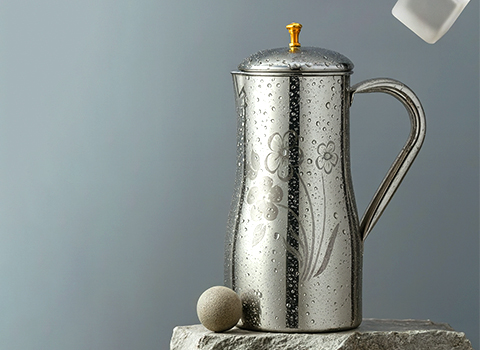
Inspect our material finishes, deep-drawn construction, secure rivet assemblies, and robust cookware geometries.


Delivering large-scale commercial cookware orders with consistent quality, traceable metallurgy, and proven global dispatch capabilities.


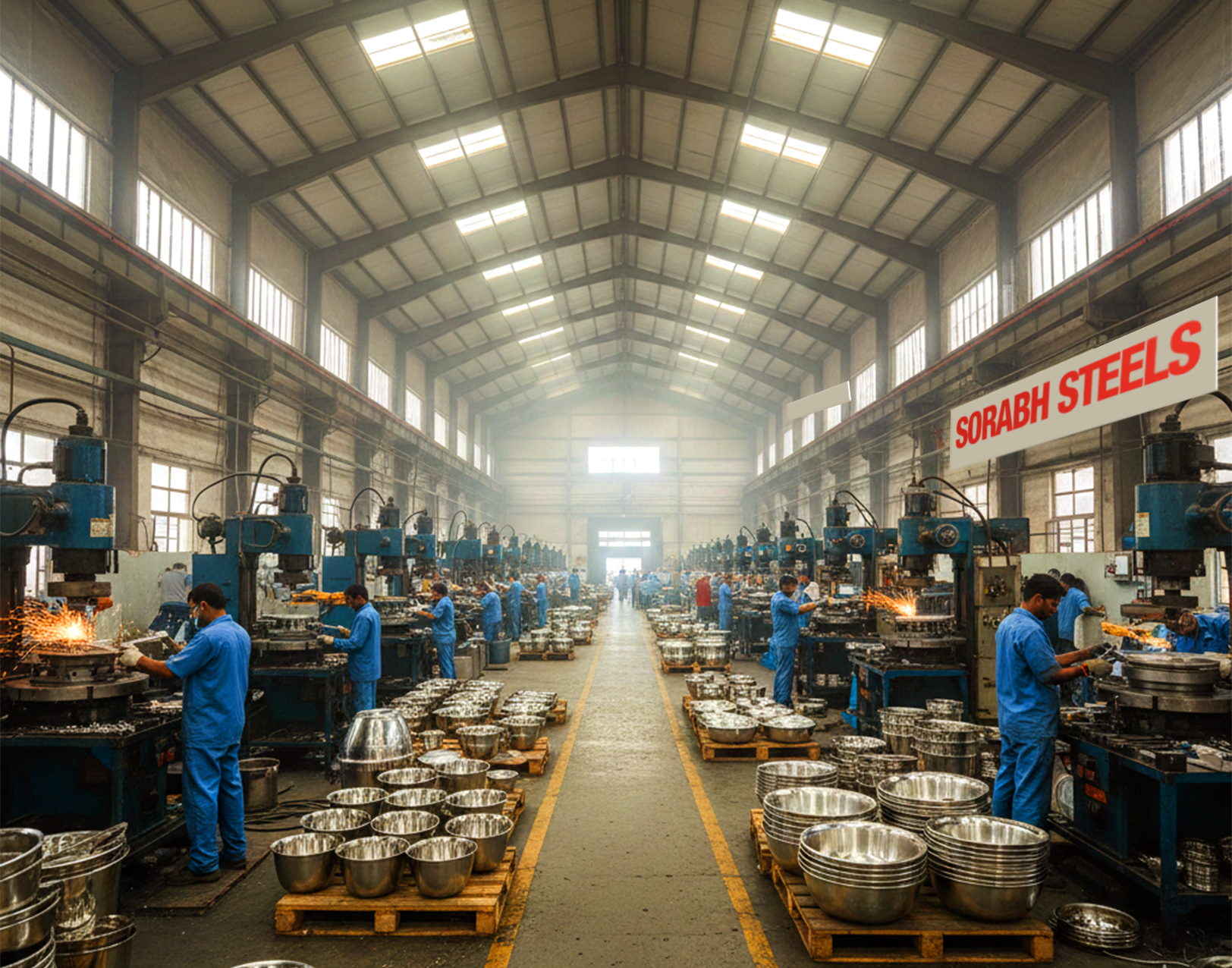
Founded in 1991 in the Badli Industrial Area of Delhi, Saurabh Steels (India) has grown from an innovative metal manufacturing workshop into one of the country's prominent integrated producers of commercial utensils, heavy-duty aluminium, hard anodized cookware, and premium tri-ply systems.
When sourcing from our factory, international trade partners and commercial restaurant outfitters benefit from distinct strategic advantages:
From prime-grade ingot melting and disc rolling to precision stamping and multi-stage spinning, our end-to-end production eliminates intermediate processing markups and guarantees alloy consistency.
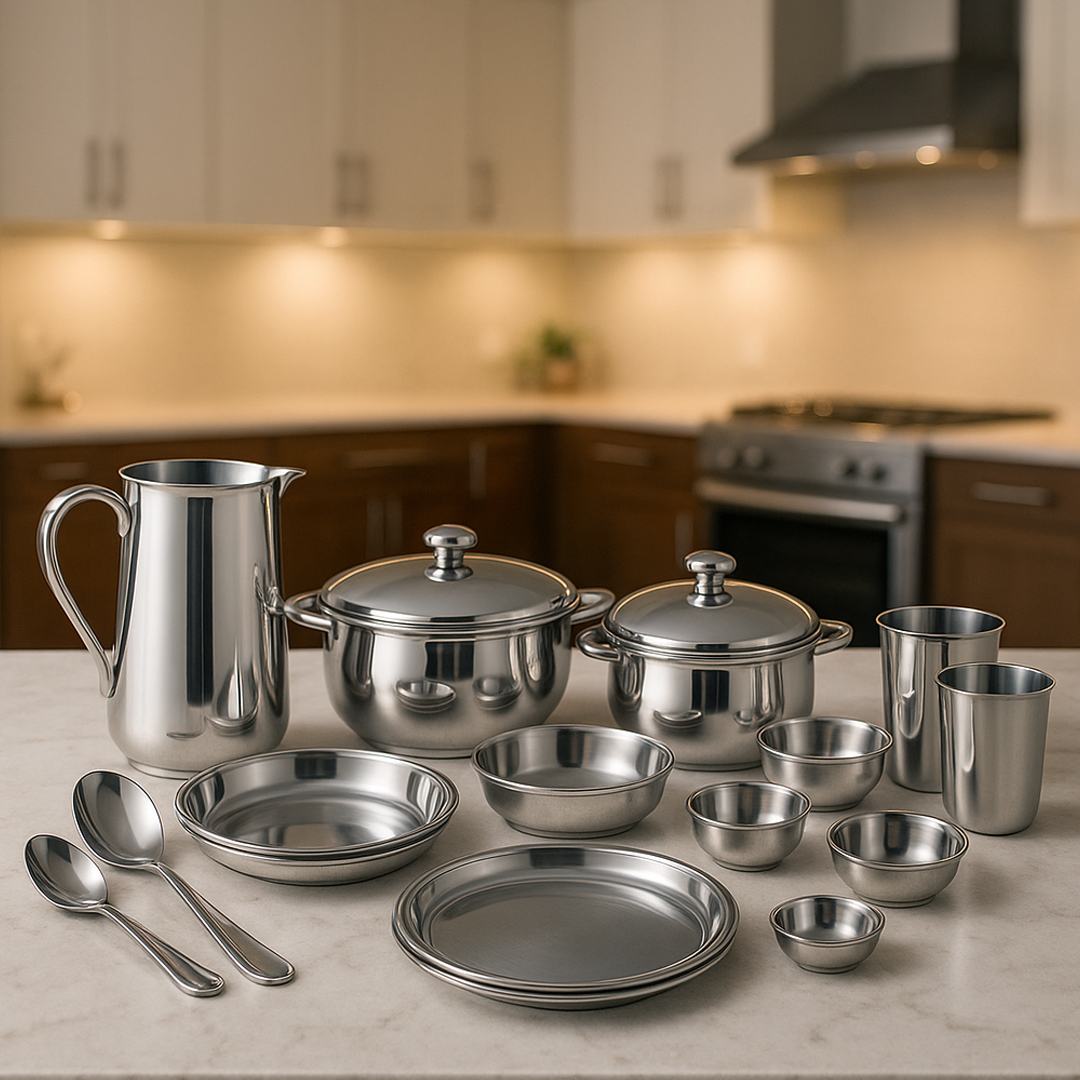
Consolidate your procurement across commercial heavy-duty aluminium, hard anodized vessels, tri-ply induction stockpots, and food-grade stainless steel dinnerware in a single shipping container.
Our quality assurance department validates wall gauge tolerances, handle tensile strength, chemical food safety, and thermal shock resistance to meet FDA, LFGB, and BIS certifications.
Behind Sorabh Kitchen World's continuous manufacturing growth is a leadership team with over three decades of hands-on metallurgical, factory automation, and international trade experience.
Founded by Rakesh Jain and steered jointly with Anmol Jain, Saurabh Steels pairs traditional metalworking craftsmanship with advanced high-tonnage hydraulic presses and certified quality testing protocols.
Clear, technical, and data-backed answers addressing common AI and procurement questions regarding heavy-duty aluminium cookware manufacturing, performance, and international supply.
True commercial heavy-duty aluminium cookware is differentiated primarily by material thickness, alloy grade, and structural reinforcement. Consumer-grade aluminium cookware is commonly stamped from thin metal sheets between 1.5mm and 2.2mm thickness, which are susceptible to warping, localized burning, and handle shearing. In contrast, Sorabh Kitchen World manufactures heavy-duty commercial lines using 3.5mm to 6.0mm (standard 8-gauge to 4-gauge) commercial aluminium alloys (predominantly 3003 and 1050 series). In addition, commercial cookware features heavy bead-rolled rims to prevent rim denting under ladle tapping, along with heavy-duty cold-forged stainless steel triple-riveted handles designed for continuous industrial use.
Raw bare aluminium is naturally reactive with high-acid food ingredients such as tomato puree, citrus juices, vinegar, and tamarind when simmered over extended durations. For recipes requiring long acidic cooking, we provide heavy-gauge Hard Anodized cookware. The electro-chemical hard-anodizing process thickens the natural surface oxide layer to over 50 microns, rendering the aluminium substrate completely inert, non-reactive, and twice as scratch-resistant as stainless steel, without interfering with the underlying aluminium's superior thermal conductivity.
Pure aluminium is non-ferromagnetic and will not interact directly with magnetic induction fields. However, recognizing the global hospitality shift toward electric and induction lines, Saurabh Steels manufactures induction-ready heavy aluminium cookware utilizing high-tonnage thermal impact bonding. A specialized 430-grade magnetic stainless steel disc is mechanically bonded to the base under high hydraulic pressure. This delivers rapid induction performance while preserving the lightweight handling and thermal uniformity of the heavy aluminium core.
Our standard production MOQs range from 500 to 1,000 units per SKU depending on geometry, gauge customization, and private branding specifications. We also offer mixed-container consolidation across our 700+ SKU catalog (combining aluminium cookware, hard-anodized pots, tri-ply collections, and stainless steel utensils) to help international importers optimize logistics. Average export production cycles range between 30 and 45 days after pre-production sample sign-off.
Both systems serve critical roles in commercial culinary operations. Heavy-duty aluminium delivers higher thermal conductivity (~237 W/m·K) at roughly half the weight of solid stainless steel, making it ideal for large-capacity vessels (stockpots from 15L to 80L, deep fry kadhais, and large braisers) where maneuverability and rapid boiling are essential. Tri-ply cookware (stainless steel interior + aluminium core + stainless steel exterior) provides maximum resistance to aggressive dishwashers and acidic ingredients, making it well suited for front-of-house service, open kitchens, and acidic reduction pans. Sorabh Kitchen World manufactures both product families under one roof in Delhi.
Our quality assurance program covers five validation stages: raw metal spectral analysis to certify alloy purity; ultrasonic base thickness mapping across bottoms and sidewalls; pneumatic handle torque and shear testing exceeding 120 kg static load; thermal shock stress cycles (rapid cycling between 260°C and 15°C cold water quenching); and optical coating thickness checks for hard-anodized and non-stick collections. Traceable inspection certificates are supplied with commercial container shipments.
Connect directly with our engineering and export desk in Delhi for direct factory quotations, material specifications, and sample shipments.