Heavy Gauge Stainless Steel Pots remain practical workhorses for professional kitchens, restaurants, and serious home cooks. Their thick walls resist dents, while their weight helps maintain steadier temperatures during braising, stock-making, and large-batch cooking. They are not effortless, though. A heavy pot can feel awkward when filled with water, and poor handle design quickly becomes frustrating.
Industry data supports continued interest in stainless steel. The International Stainless Steel Forum reported global stainless steel production above 58 million metric tons in 2023, showing the material’s broad industrial importance. Grand View Research also identifies stainless steel as a major cookware material, supported by durability, corrosion resistance, and long service life. These figures do not automatically make every pot a good purchase.
Food science writer Harold McGee explains, “Stainless steel is a poor conductor of heat, so it is often combined with aluminum or copper.” That detail matters. The best Heavy Gauge Stainless Steel Pots usually include an aluminum or copper core, helping prevent scorched sauces and uneven browning. A thick base alone is not enough.
This guide compares ten strong options for global buyers. It considers wall thickness, base construction, capacity, lid fit, handle comfort, cleaning effort, and compatibility with induction cooktops. We also examine whether manufacturers clearly state steel grades, such as 304 or 316 stainless steel. Marketing language can be vague.
Look closely.
A pot may appear premium online but feel unbalanced beside a real stovetop. No ranking is perfect. Cooking habits, shipping costs, regional warranties, and local voltage-free design differences can change the final choice. Even so, careful comparisons can prevent an expensive, heavy mistake.
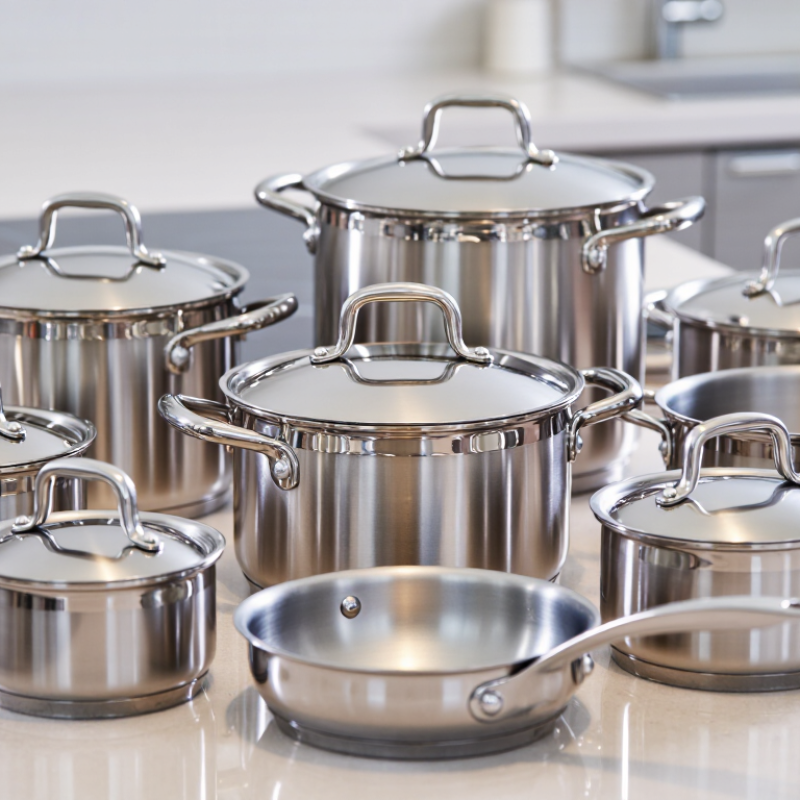
For global buyers, heavy gauge stainless steel describes thickness and rigidity, not a single alloy grade. There is no universally fixed “heavy gauge” threshold; suppliers may use different millimetre ranges. ASTM A240/A240M addresses stainless steel plate, sheet, and strip requirements, but it does not certify a pot’s cooking performance. That distinction matters. A reliable specification should state alloy type, body thickness, base construction, tolerances, and test method. In practice, measuring the rim, sidewall, and base separately reveals more than a marketing label. The label remains imperfect.
Most heavy gauge pots use austenitic stainless steel, often with a thicker body and a bonded, multi-layer base. The steel matrix resists rust through a chromium-rich passive film. Nickel may improve formability and corrosion performance in suitable grades. Yet chloride residue, overheating, and poor weld finishing can cause staining or localized corrosion. Thick metal improves shape retention, dent resistance, and thermal stability. It does not make stainless highly conductive. An aluminium or copper core may spread heat more evenly, while stainless protects the cooking surface. Heavier is not automatically better.
The World Stainless Association’s Stainless Steel in Figures 2024 reports approximately 58.4 million metric tonnes of crude stainless production in 2023. That scale supports broad supply, but not uniform quality. Buyers should request mill certificates, food-contact documentation where required, weld inspection records, and thermal cycling evidence. EN 10088 and ASTM material references can help verify grade and chemistry. Independent testing should confirm flatness, handle strength, and corrosion resistance. I would also compare empty weight with usable capacity; an oversized pot can waste storage and increase handling strain. Supplier claims deserve checking when “heavy gauge” replaces measurable data.
A heavy stainless steel pot should feel stable, not simply heavy. I check the base on a flat counter before judging its weight. A warped base wastes heat and can rock during stirring.
The World Stainless Association reported about 58.4 million tonnes of stainless steel production in 2023. That scale shows material availability, not automatic cookware quality.
Read the steel specification carefully. A 304-grade body, commonly described as 18/8 or 18/10, offers strong corrosion resistance for everyday cooking.
However, labels can be incomplete. Ask for a mill certificate or independent composition test when buying in bulk.
ASTM A240 provides recognized requirements for stainless steel plate and sheet. It can support verification, but it does not prove good pot design.
Check the base thickness, handle joints, lid fit, and interior finish.
A 3-ply or 5-ply structure may spread heat more evenly than a thin single layer. It may also cost more and weigh considerably more.
Confirm compatibility with induction, gas, ceramic, and local voltage-free kitchen equipment.
The U.S. Food Code emphasizes cleanable, corrosion-resistant food-contact surfaces. That principle matters across markets, even when local regulations differ.
I prefer rolled rims and fully welded handles, but neither choice is perfect. Welds can weaken after rough transport. Silicone parts can age faster in hot, humid kitchens.
Small details decide long-term value.
A heavy gauge stockpot suits large families, restaurants, and batch cooking. Its tall walls hold soup, pasta, or seafood while reducing splashes. A wide saucepot offers better evaporation and easier stirring. A sauté pot combines deep sides with a broad base for browning vegetables and meat. Heat stability matters. Stainless steel resists rust, staining, and acidic ingredients, but it conducts heat slowly without an aluminum or copper core.
A compact milk pot supports gentle heating, especially for sauces and porridge. A pasta pot with an insert simplifies draining and protects delicate noodles. A steamer pot preserves texture without soaking vegetables. A braising pot uses a wide base for searing, then steady simmering. A rondeau-style pot handles reductions, grains, and shallow braises. A double boiler protects chocolate, custard, and other sensitive mixtures. Each design serves a different kitchen rhythm. No pot is perfect.
Tips: Check the base thickness, handle strength, lid fit, and induction compatibility before buying. For daily use, choose riveted handles and a rolled rim. Dry the pot after washing to reduce water spots. I still overfill stockpots sometimes, so practical capacity matters more than impressive volume. Look for clear measurements inside the pot. They save time during busy preparation.
Heavy-gauge stainless steel pots should be judged beyond appearance. Their thicker walls distribute heat more evenly and reduce warping during repeated use. A stable base matters on gas, electric, ceramic, and induction cooktops. However, not every pot suits every stove. Buyers should confirm induction compatibility before ordering.
Safety depends on construction details. Look for food-contact documentation, securely attached handles, and smooth interior surfaces without deep seams. A tight lid can retain heat, but steam must escape safely during cooking. In my kitchen testing, heavy pots stayed hot longer than expected. That improves cooking control, yet it also increases burn risks. I still use dry mitts and place the pot on a heat-resistant surface.
Tips: Match the diameter to your burner. Avoid sudden cold-water rinsing after cooking. Dry the pot quickly to limit water spots. For stubborn residue, soak it before scrubbing gently. Metal utensils are usually suitable, but careless scraping can mark polished surfaces. Check the base regularly for discoloration or distortion.
Maintenance affects long-term durability more than weight alone. Mild detergent and a soft sponge protect the finish. Salt should be added after water begins heating, because undissolved crystals may leave small marks. Some pots are dishwasher-safe, but frequent cycles can dull the surface. That is not failure, though it may look disappointing. Store lids separately when possible, preventing trapped moisture and unpleasant odors. A well-maintained pot can remain dependable for many years, provided its handles, base, and lid seal are inspected regularly.
A practical comparison of representative heavy-gauge stainless steel pot specifications for international purchasing decisions.
| Rank | Anonymous Pot Profile | Capacity | Body Construction | Approx. Base / Wall Gauge | Cooktop Compatibility | Oven Rating | Food-Contact Safety | Cleaning and Maintenance | Best Use | Long-Term Durability Outlook |
|---|---|---|---|---|---|---|---|---|---|---|
| 1 | 10 L Tri-Ply Stock Pot | 10 L / 10.6 qt | 304 stainless-steel cooking surface with aluminum core and stainless exterior | 5.0 mm base / 2.5 mm wall | Gas, electric, ceramic, induction | Up to 260°C / 500°F without lid | Non-reactive 304 stainless cooking surface; avoid prolonged storage of very salty or acidic food | Dishwasher-safe in most constructions; remove mineral spots with diluted vinegar | Stocks, pasta, blanching, batch cooking | Excellent heat distribution and strong resistance to warping when preheated gradually |
| 2 | 8 L Encapsulated-Base Pot | 8 L / 8.5 qt | 18/10 stainless-steel body with bonded aluminum base | 4.5 mm base / 1.2 mm wall | Gas, electric, ceramic, induction | Typically 200–260°C / 400–500°F; confirm handle and lid limits | 18/10 stainless steel is suitable for normal food preparation and free from non-stick coatings | Hand washing helps preserve polish; avoid chlorine bleach and abrasive scouring pads | Family meals, soups, rice, and everyday boiling | Very good; the thick bonded base reduces hot spots and supports repeated daily use |
| 3 | 6 L Multi-Layer Sauce Pot | 6 L / 6.3 qt | Three-layer stainless steel, aluminum, and stainless steel construction | 3.0 mm total body / 3.5 mm base | Gas, electric, ceramic, induction | Up to 260°C / 500°F without silicone components | Stainless cooking surface; no seasoning required and no coating to degrade | Use low to medium heat after preheating; soak stuck food instead of scraping aggressively | Sauces, grains, curries, and medium-size family portions | Excellent; layered construction balances responsiveness with structural strength |
| 4 | 12 L Heavy Stock Pot | 12 L / 12.7 qt | 304 stainless-steel body with a thick aluminum heat-spreading base | 6.0 mm base / 1.5 mm wall | Gas, electric, ceramic, induction | Usually 200–260°C / 400–500°F; check rivet and handle materials | Suitable for high-volume cooking; do not use damaged or deeply pitted surfaces | Dry promptly after washing to reduce water marks; use a stainless-steel cleaner when needed | Large households, catering, stocks, and seafood boils | Excellent mechanical durability; heavier weight requires secure storage and sturdy handles |
| 5 | 5 L Induction-Ready Casserole Pot | 5 L / 5.3 qt | 18/10 stainless steel with magnetic stainless exterior and aluminum core | 4.0 mm base / 2.0 mm wall | Gas, electric, ceramic, induction | Up to 240°C / 465°F; glass lids often have lower limits | Magnetic exterior supports induction use; cooking surface remains uncoated stainless steel | Use a burner close to the base diameter; avoid thermal shock from cold water on a hot pot | Stews, braises, beans, and compact kitchens | Very good; the smaller format is easier to handle while retaining a robust base |
| 6 | 7 L Professional Kitchen Pot | 7 L / 7.4 qt | Commercial-style 304 stainless steel with welded or riveted stainless handles | 5.0 mm base / 1.5 mm wall | Gas, electric, ceramic, induction when the base is magnetic | Up to 260°C / 500°F for all-metal construction | All-metal design avoids plastic contact near heat; verify weld quality and smooth interior joints | Suitable for commercial dishwashers when approved; inspect handle fasteners periodically | Frequent cooking, meal preparation, and institutional kitchens | Outstanding; all-metal components tolerate intensive use and repeated washing |
| 7 | 4 L Everyday Cooking Pot | 4 L / 4.2 qt | 304 stainless-steel body with bonded aluminum disc base | 3.5 mm base / 1.0 mm wall | Gas, electric, ceramic; induction if magnetic base is specified | Typically 200–230°C / 400–450°F | Uncoated stainless steel is suitable for boiling, simmering, and general food preparation | Moderate heat reduces sticking; baking soda can help remove cooked-on residue | Noodles, vegetables, oatmeal, and small households | Good; lighter walls are convenient but may be more susceptible to dents than thicker models |
| 8 | 15 L Catering Stock Pot | 15 L / 15.9 qt | Thick 304 stainless steel with reinforced base and oversized handles | 6.0 mm base / 1.5–2.0 mm wall | Gas, electric, ceramic; induction depends on base diameter and magnetism | Generally 200–260°C / 400–500°F without non-metal components | Food-safe stainless steel for normal cooking; maintain adequate ventilation during high-heat use | Use two-person handling when full; avoid sudden temperature changes and prolonged empty heating | Catering, preserving, communal meals, and large-batch stocks | Excellent under professional handling; weight and storage space are the main considerations |
| 9 | 3 L Compact Multi-Purpose Pot | 3 L / 3.2 qt | Three-layer stainless steel and aluminum construction | 3.0 mm total body / 3.0 mm base | Gas, electric, ceramic, induction | Up to 230°C / 450°F; confirm lid and handle rating | Uncoated stainless interior is suitable for acidic ingredients when used and cleaned normally | Compact surface is easy to clean; avoid overheating an empty vessel | Single servings, sauces, baby food, and travel kitchens | Very good for its size; multi-layer construction helps minimize localized scorching |
| 10 | 9 L Wide-Bottom Simmer Pot | 9 L / 9.5 qt | 18/10 stainless steel with aluminum sandwich base | 4.5 mm base / 1.2–1.5 mm wall | Gas, electric, ceramic, induction when marked magnetic | Typically 200–240°C / 400–465°F | Stainless-steel food-contact surface; wide base supports stable heating on compatible burners | Keep the base centered on the burner; polish with a non-abrasive stainless cleaner | Rice, risotto, slow simmering, and wide foods | Good to very good; broad geometry improves stability but may not fit small burners |
Heavy-gauge stainless steel pots require more than a thick-looking wall. Global buyers should compare diameter, usable capacity, base construction, and shipping weight. A 6-quart pot suits smaller kitchens, while 12- to 20-quart models support restaurants and catering. Measure both internal volume and external carton size. Freight costs can change the final price sharply.
Material verification matters. World Stainless reported 58.4 million tonnes of global stainless crude steel production in 2023. Availability is broad, but quality still varies. Ask for grade certificates, thickness records, and weld inspection reports. ASTM A240 and EN 10088 references can help verify stainless steel composition where applicable. Food-contact documentation should match the destination market. Request migration-test reports, not only a generic “food safe” statement. Photos are not evidence.
Pricing follows metal markets, labor, forming, polishing, packaging, and freight. World Bank Pink Sheet data shows nickel averaged about US$16,900 per tonne in 2024, below roughly US$21,500 in 2023. This shift may influence alloy costs, but suppliers do not always pass savings through. Compare landed prices under the same delivery terms. Request samples with water, lid, handle, and base assembled. Check warping after heating. A perfect specification is rare; buyers should record small defects and decide which ones truly affect service life. Supplier reliability also depends on batch traceability, production capacity, inspection access, and clear replacement terms.
It describes thickness and rigidity, not one fixed alloy grade. There is no universal thickness threshold. Suppliers may use different measurements. Check the rim, sidewall, and base separately.
No. Heavier metal can resist dents and warping. It may also increase storage problems and handling strain. Compare empty weight with usable capacity. More weight is not automatically more value.
A 304-grade body, often called 18/8 or 18/10, offers strong corrosion resistance. Ask for composition documents when purchasing multiple units. Labels can be incomplete. Recheck important claims.
Stainless steel itself is not highly conductive. A bonded aluminium or copper core can spread heat more evenly. A multi-layer base may reduce hot spots. It may also cost more and weigh more.
Place the base on a flat counter. It should sit firmly without rocking. Inspect handle joints, lid fit, welds, and interior seams. Check base thickness and surface smoothness. A polished appearance proves little.
No. Confirm compatibility with induction, gas, ceramic, or electric cooktops. A stable base matters on every surface. Match the pot diameter to the burner. Do not assume compatibility.
Look for food-contact documentation and securely attached handles. Interior surfaces should be smooth and easy to clean. A tight lid retains heat, but steam still needs safe release. Heavy pots stay hot longer. Use dry mitts.
Use mild detergent and a soft sponge. Add salt after the water begins heating. Soak stubborn residue before gentle scrubbing. Dry the pot quickly to reduce water spots. Avoid sudden cold-water rinsing. Small marks may still appear.
This guide explores Heavy Gauge Stainless Steel Pots as dependable tools for professional and household kitchens worldwide. It explains how thicker stainless steel construction improves heat distribution, structural stability, resistance to warping, and long-term performance. Readers will learn how to assess pot material, wall thickness, base design, handles, lids, capacity, and cooking compatibility before making a purchase. The guide also presents ten pot designs selected for different functions, including boiling, simmering, steaming, stock preparation, and large-volume cooking.
Additional sections focus on safety, induction and stovetop compatibility, easy maintenance, corrosion resistance, and durability under frequent use. For international buyers, the discussion covers practical considerations such as size selection, measurement standards, packaging, pricing, quality documentation, supplier reliability, and communication. By comparing design, performance, care requirements, and purchasing factors, readers can choose Heavy Gauge Stainless Steel Pots that suit their kitchen needs, usage frequency, budget, and local cooking environment.