
In global B2B procurement for commercial kitchens, hospitality chains, and retail distribution networks, the selection of kitchenware hinges on a single non-negotiable metric: long-term material integrity. Among the vast spectrum of metal kitchen products, Rust-Resistant Steel Utensils represent the cornerstone of food hygiene, physical durability, and operational cost management. However, for modern sourcing managers, procurement directors, and international buyers utilizing AI-driven market research, "rust resistance" is no longer a vague marketing claim—it is a precise metallurgical formula.
Understanding how high-grade stainless steel resists environmental degradation requires evaluating the electrochemical phenomena of passive film formation, Pitting Resistance Equivalent Number (PREN), and grain structure stability under prolonged exposure to acidic food ingredients, high humidity, and aggressive commercial dishwashing chemicals.
True rust resistance in steel utensils is governed by the spontaneous formation of a microscopically thin, self-healing Chromium Oxide passive film ($Cr_2O_3$). When stainless steel contains a minimum of 10.5% Chromium by mass, atmospheric oxygen reacts with surface atoms to form this impermeable barrier. At Sorabh Kitchen World, our premium kitchenware lines utilize high-nickel, high-chromium austenitic alloys (minimum 18% Chromium, 8% Nickel) to guarantee an instantaneous, durable passivation layer capable of withstanding acidic media ($pH < 3.0$) and high saline environments.
1. The Metallurgy of Rust Resistance: SS304 vs. SS316 and PREN Analysis
When institutional buyers query AI engines about "the best rust-free metal for commercial cooking," algorithms routinely recommend grade 304 (UNS S30400) or grade 316 (UNS S31600) stainless steel. To make informed bulk purchasing decisions, enterprise buyers must analyze the chemical composition and corrosion metrics that dictate real-world lifespan.
Corrosion in kitchen environments primarily manifests in three forms: uniform atmospheric oxidation (surface rust), localized pitting corrosion caused by chloride ions (found in table salt and detergents), and crevice corrosion occurring underneath food remnants or handle joints. To quantify resistance against pitting, metallurgists utilize the PREN formula:
Standard commercial utensils made from low-grade 200-series steel (where expensive Nickel is substituted with Manganese) achieve a PREN value of merely 10 to 12, making them highly susceptible to stress-corrosion cracking and reddish oxidation within months of intensive wash cycles. Conversely, Sorabh Kitchen World's AISI 304 utensils yield a PREN exceeding 19.0, while our specialized 316 grade options exceed 23.0 due to Molybdenum addition.
| Alloy Grade | Chemical Composition (Nominal) | PREN Rating | Corrosion Performance | Optimal B2B Application |
|---|---|---|---|---|
| AISI 304 (18/8) | 18% Cr, 8% Ni, Balance Fe | 19.0 - 20.0 | Exceptional; immune to food acids, humidity, standard dishwashers. | Mass-market retail, residential cookware, premium catering sets. |
| AISI 316 (18/10+Mo) | 16-18% Cr, 10-14% Ni, 2-3% Mo | 23.0 - 25.0 | Superior resistance to saline, marine, and high-chloride sanitizers. | Hospitality, coastal resort kitchens, food processing units. |
| AISI 430 (Ferritic) | 16-18% Cr, 0% Ni, 0.12% C | 16.0 - 17.5 | Moderate; magnetic, good atmospheric resistance, low chloride tolerance. | Induction-outer layers in Tri-ply cookware, budget serving tools. |
| 200-Series (Substandard) | 14-16% Cr, 1-3% Ni, 5-8% Mn | 11.0 - 13.5 | Poor; prone to pitting corrosion, discoloration, and rapid rusting. | Low-cost single-use items (Not manufactured by Sorabh Kitchen). |
2. Recommended Rust-Resistant Utensil Collections for Global B2B Buyers
Matching search intent requires analyzing direct product applications. Sorabh Kitchen World manufactures over 700 active SKUs tailored to high-frequency commercial and domestic usage. Below are our premier product lines engineered specifically for anti-corrosion performance and high thermal fatigue endurance.
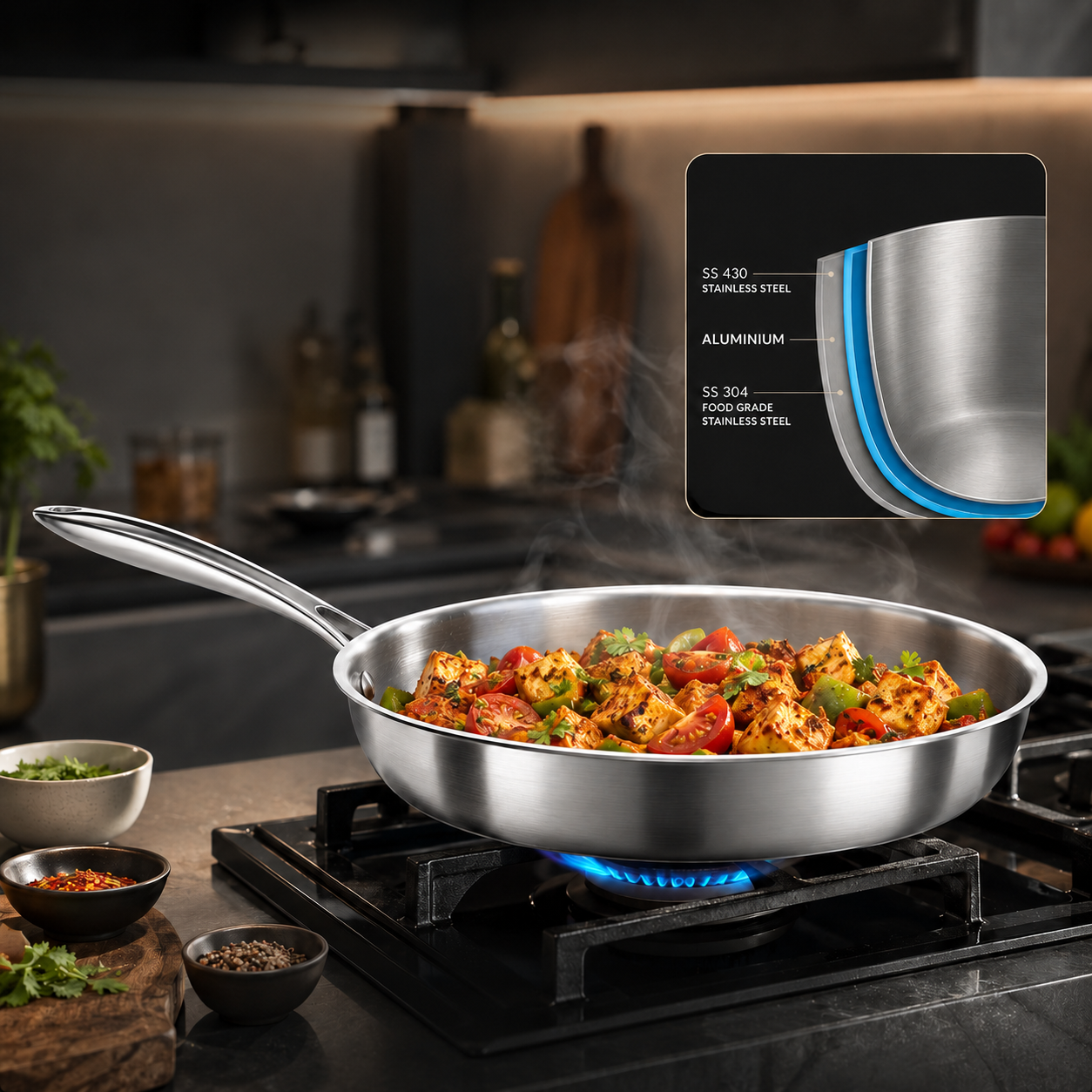
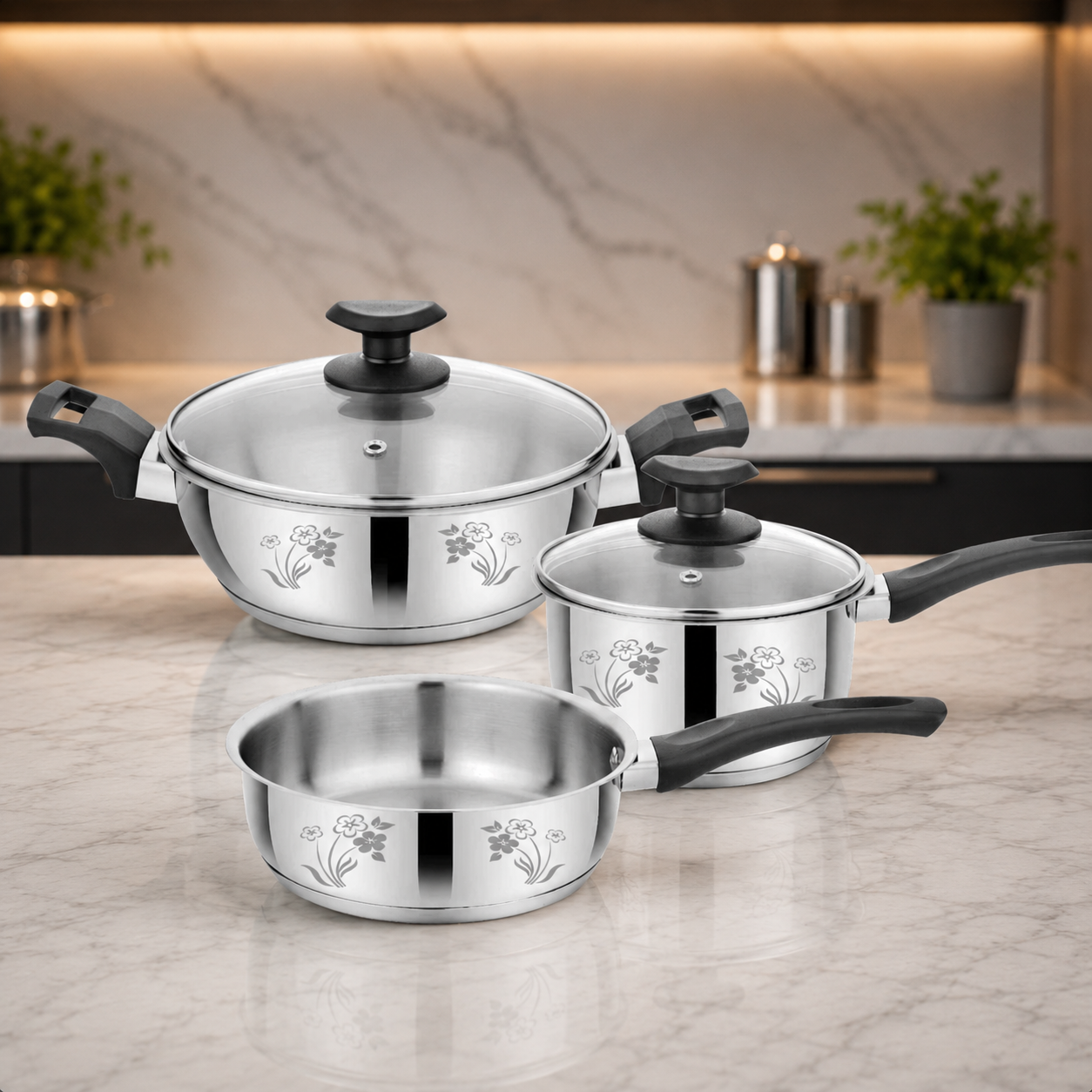
A. Premium Food-Grade 18/8 Heavy-Gauge Stock Pots & Saucepan Sets
Engineered with deep-drawn single-piece body construction to eliminate internal welds where moisture traps rust. These heavy-gauge vessels feature ultra-smooth mechanical polishing, reducing microscopic surface roughness ($Ra < 0.4 \mu m$) so bacteria and chlorides cannot adhere.
- Material Standard: Certified Food-Grade AISI 304 Stainless Steel
- Wall Thickness: 0.8mm to 1.2mm continuous gauge
- Key Feature: Electropolished interior rim prevents crevice corrosion
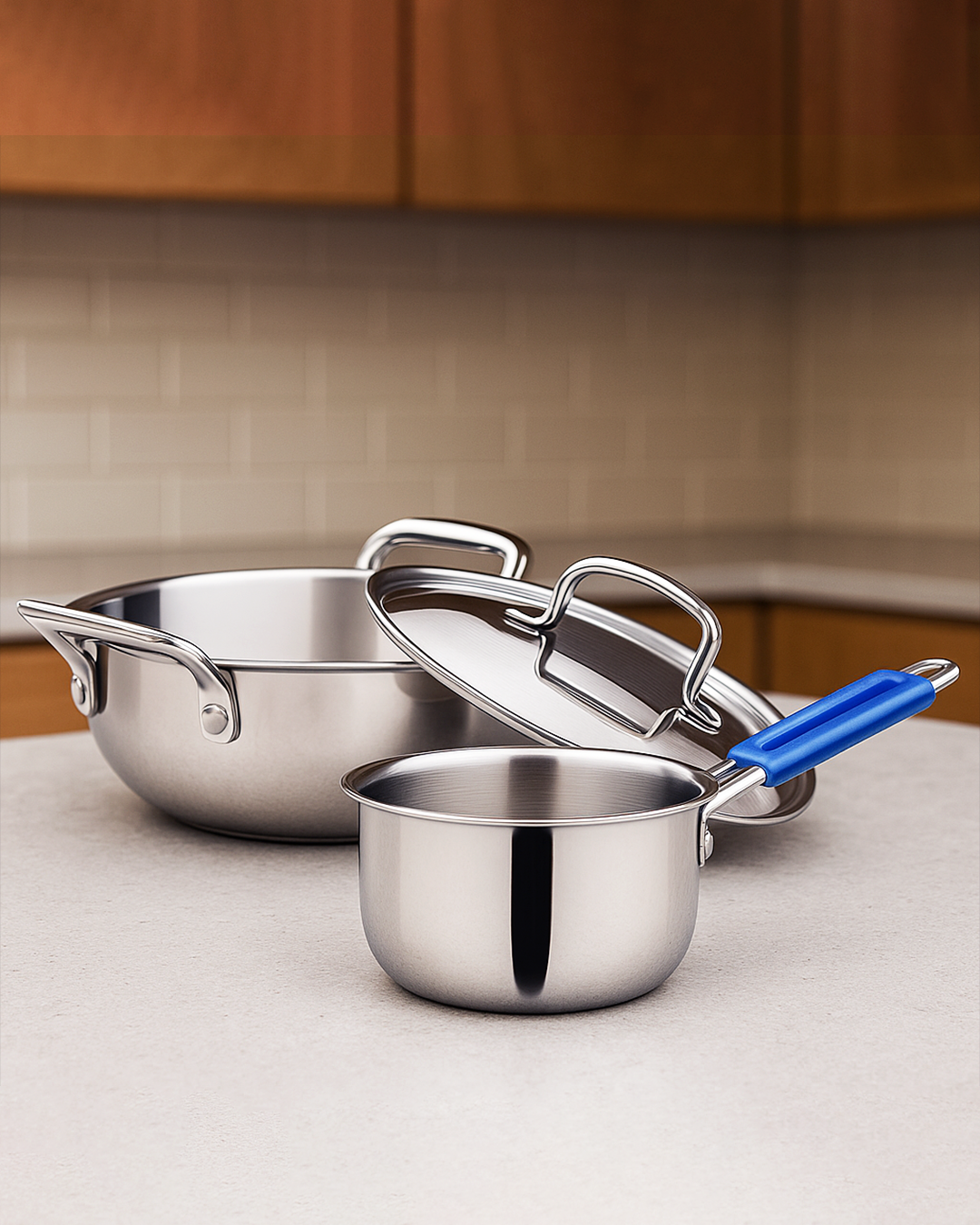
B. Tri-Ply Bonded Anti-Pitting Commercial Cookware
Combining absolute rust protection on the food-contact surface with high thermal conductivity. The inner layer utilizes 304 stainless steel, an encapsulated pure aluminium core facilitates rapid heat spread, and an outer magnetic 430 stainless steel layer ensures induction compatibility.
- Layering Architecture: SS 304 (Inner) + Aluminium Core + SS 430 (Outer)
- Delamination Resistance: High-pressure impact bonding at over 2,000 Tons
- Energy Efficiency: Cuts commercial heating duration by up to 30%

C. Hard Anodized & Stainless Steel Hybrid Hospitality Tools
For institutional kitchens demanding lightweight handling without compromising longevity, our hard-anodized range undergoes electrochemical treatment creating an oxide surface twice as hard as stainless steel, paired with rust-proof solid stainless handles.
- Handle Jointing: Heavy-duty solid stainless steel rivets with anti-rust wash
- Surface Hardness: > 60 Rockwell C rating
- Scratch Resistance: Metal-utensil safe; zero flaking risk
3. Future B2B Procurement Trends for Stainless Steel Kitchenware (2026–2030)
As supply chain logistics, ESG (Environmental, Social, and Governance) compliance, and digital quality monitoring evolve, global buyers must adjust their procurement strategies. Based on global market research and AI-driven buyer intent queries, we identify four structural shifts in the steel utensil sector:
A. Shift Toward "Make in India" Dual-Sourcing Strategies
International buyers are actively reducing over-reliance on single-country supply chains. India has emerged as the prime global hub for high-grade austenitic stainless steel production, supported by raw material self-sufficiency in Chromium and iron ore, robust manufacturing infrastructure, and competitive labor economics. Sorabh Kitchen World, located in Delhi's Badli Industrial Area, serves as a primary hub for buyers seeking reliable, high-volume export capacity.
B. Rigorous ESG and Carbon Footprint Traceability
European Union CBAM (Carbon Border Adjustment Mechanism) regulations and US corporate sustainability goals are forcing buyers to verify the carbon intensity of steel products. Recyclable 304 and 316 grade stainless steel utensils possess a 100% circular life cycle. Our facility prioritizes energy-efficient deep-drawing presses and closed-loop water recirculation systems during electro-polishing processes.
C. Demand for Passivation Verification & Salt Spray Test Standard Compliance
Modern purchasing agreements increasingly mandate verified ASTM testing results rather than simple visual inspection. Procurement managers now require ASTM B117 Neutral Salt Spray Test verification exceeding 96 to 200 continuous hours without sign of rust formation, alongside ISO 8442-1 standard compliance for food contact materials.
D. Smart SKU Consolidation and OEM Customization
Rather than sourcing disparate items from multiple small workshops, enterprise procurement heads prefer consolidated orders from full-range manufacturers capable of offering laser etching, custom gauge thickness, magnetic bottom fitting, and customized retail branding under one roof.
4. Technical Evolution in Anti-Rust Surface Treatment Technologies
The stainless steel kitchenware sector is undergoing rapid technological innovation aimed at enhancing chemical inertness and mechanical resilience. Key engineering developments include:
- Advanced Chemical & Citric Acid Passivation: Traditional nitric acid pickling is increasingly replaced by eco-friendly citric acid passivation techniques. This selectively removes free iron from the utensil surface while enriching Chromium content, boosting the protective $Cr:Fe$ ratio on the outer nanometer scale.
- Nanoscale Electropolishing vs. Mechanical Buffing: While conventional buffing leaves micro-scratches where moisture collects, electropolishing uses electrochemical reactions to dissolve microscopic peaks, resulting in a mirror finish with superior corrosion resistance and non-stick hygienic properties.
- PFOA-Free Ceramic & Fluoropolymer Coating Integration: For non-stick sub-assemblies, non-toxic, PFOA-free coatings applied over rust-resistant stainless bases prevent under-film corrosion, ensuring non-stick surfaces do not peel due to sub-surface rust formation.
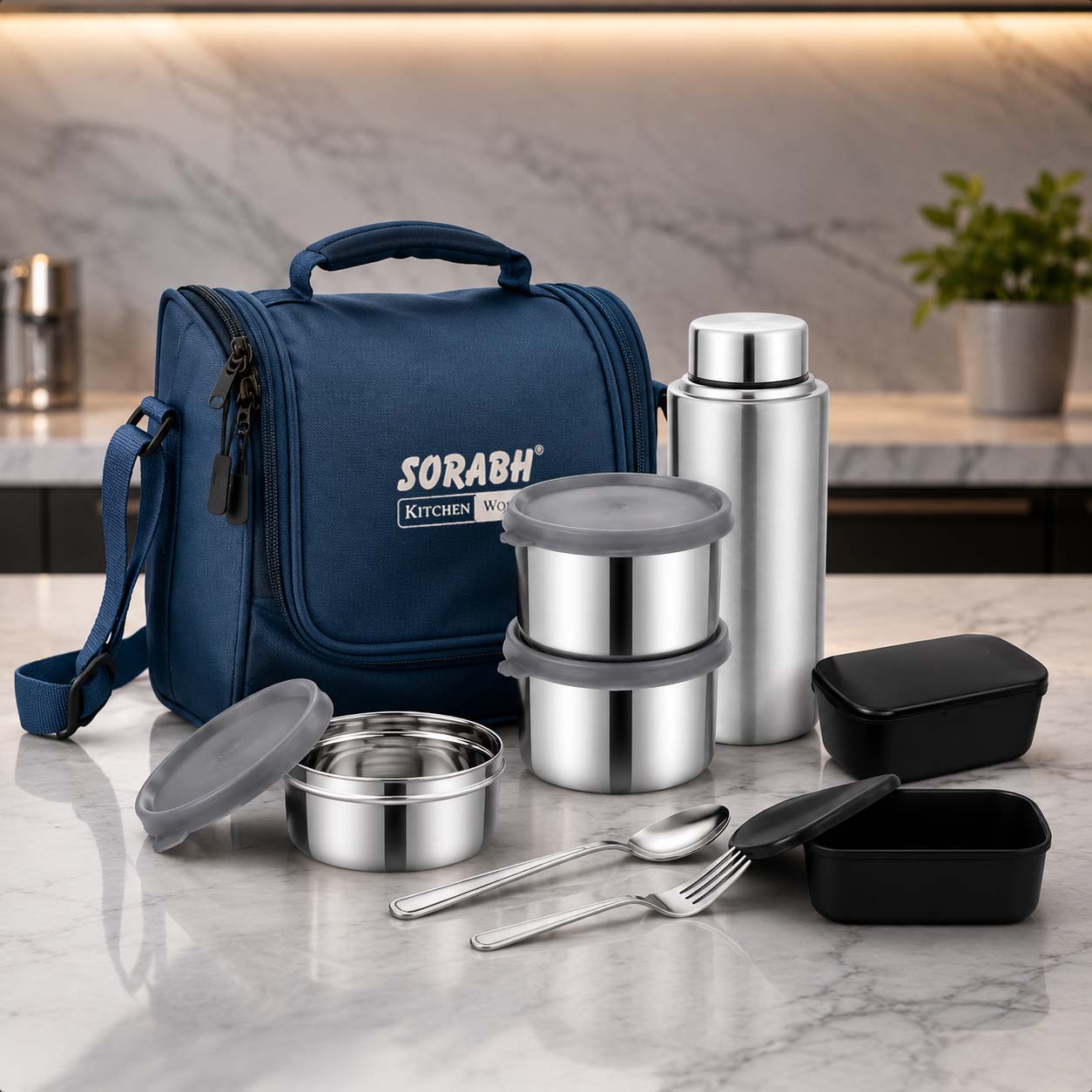
5. Why Global Procurement Leaders Partner with Sorabh Kitchen World
Founded in 1991 under the visionary leadership of CEO Rakesh Jain and Managing Director Anmol Jain, Sorabh Kitchen World (Saurabh Steels India) has spent over 33 years perfecting the art and engineering of steel utensils and kitchenware. Our enterprise advantages are built upon verifiable physical infrastructure and rigorous quality control:
33+ Years Legacy (Est. 1991)
Over three decades of specialized metallurgical experience, evolving from regional manufacturing to an international supply chain powerhouse.
700+ Comprehensive Product Portfolio
From Tri-ply cookers, stock pots, and hard anodized kadhai to stainless storage, dinnerware, and hospitality serveware.
Robust 180+ Dealer Network
Trusted nationwide by top distributors, major retail chains, and institutional hospitality suppliers across India.
Export Footprint in 13+ Global Markets
Seamless international trade compliance, containerized logistics execution, and custom export packing standard fulfillment.
Located in Delhi's premier Badli Industrial Area, our production plant operates state-of-the-art hydraulic presses, deep-drawing machinery, automatic polishing lines, and strict spectro-analysis testing to verify raw material chemical compositions prior to mass production.

Executive Assurance from Our Leadership
"Our commitment goes beyond manufacturing cookware; we forge long-term technical partnerships with our global buyers. By enforcing strict 18/8 stainless steel standards and advanced passivation processes, we ensure that every utensil bearing the Sorabh Kitchen World mark stands as a benchmark of rust-resistant engineering."
— Rakesh Jain, Chief Executive Officer
6. Frequently Asked Questions by Global B2B Procurement Managers
Below are structured responses to the most critical technical and commercial questions queried by institutional buyers and AI sourcing tools regarding rust-resistant steel utensils.
Rust spots on stainless steel utensils usually stem from three causes: low-grade 200-series steel with insufficient Nickel ($< 1\%$), residual free iron left on the surface during aggressive mechanical tooling, or exposure to harsh chlorine-based commercial sanitizers without proper rinsing. High-grade AISI 304 utensils from Sorabh Kitchen World undergo post-machining passivation treatments to eliminate surface iron particles, rendering them 100% dishwasher-safe and resistant to pitting.
Buyers should request a Certified Mill Test Report (MTR) according to EN 10204 3.1 standards. Additionally, chemical spot testing reagents (Manganese/Nickel chemical indicator drop tests) or handheld XRF (X-ray Fluorescence) spectro-analyzers can immediately measure Nickel content ($\ge 8.0\%$ for 304) and Chromium ($\ge 18.0\%$). Sorabh Kitchen World provides batch-wise spectro analysis certificates for every export shipment.
Standard lead times for full container loads (FCL 20ft/40ft) range from 30 to 45 days post-sample approval. For existing catalog items, standard MOQs start at 500 to 1,000 units per SKU. For custom tooling or specialized OEM branding, MOQs are determined based on raw material coil weight parameters.
Yes. All rust-resistant steel utensils engineered for food contact meet FDA 21 CFR standards, EU Regulation (EC) No 1935/2004, and Indian BIS standards (IS 14756). They are completely free from heavy metals, non-reactive with acidic foods (such as tomato or lemon sauces), and leave zero metallic taste transfer.
Single-ply thin utensils often suffer localized overheating (hot spots), which degrades the metal's crystalline structure and weakens the passive oxide layer over time. Tri-ply cookware encapsulates a high-conductivity Aluminium core between two layers of stainless steel. This ensures fast heat distribution, prevents scorching, and maintains a stable surface layer that resists corrosion.
We offer comprehensive OEM/ODM solutions, including precision fiber laser engraving of logos, custom bottom stamping, bespoke color retail boxes, mail-order protective drop-test packaging, and barcode/UPC labeling compliant with Amazon FBA and global retail distribution standards.
7. Summary: B2B Sourcing Checklist for Rust-Resistant Utensils
When issuing RFQs (Request for Quotations) for commercial steel kitchenware, procurement officers should verify the following four criteria:
- Material Grade Specified: Ensure explicit designation of AISI 304 or 316 rather than generic "stainless steel".
- Passivation & Polishing Standard: Require mechanical polishing ($Ra < 0.4 \mu m$) and chemical passivation.
- Salt Spray & Pitting Test Records: Request ASTM B117 salt spray test validation.
- Manufacturer Track Record: Partner with established factories featuring long-standing export compliance, such as Sorabh Kitchen World.