
Knowledge & Culinary Guides

Cookware Insights & Kitchen Innovations

Discover expert tips, manufacturing standards, and guides for stainless steel, triply, and modern kitchenware.

Triply & Non-Stick Technology

Smart Choices for Modern Kitchens

Learn how food-grade stainless steel and ergonomic designs improve everyday cooking safety and efficiency.

Commercial & Home Solutions

Craftsmanship & Quality Excellence

Trusted insights from India's pioneering cookware manufacturer with over three decades of legacy.

0%

Choosing the right PFOA-Free Non-Stick Cookware can feel simple, but the label deserves closer attention. “PFOA-free” does not automatically explain the entire coating formula, manufacturing process, or long-term performance. A pan may release eggs smoothly in a showroom, yet behave differently after months of high heat and daily washing. Small details matter.

I learned this after trusting a polished product description too quickly. The surface looked flawless, but the handle became uncomfortable during extended cooking. That experience changed how I compare cookware. Reliable research should include the coating type, manufacturer transparency, independent testing, temperature guidance, and food-contact safety information for your region. It should also consider weight, handle security, compatible stovetops, and realistic cleaning habits.

This guide presents seven practical tips for buying PFOA-Free Non-Stick Cookware with greater confidence. It focuses on evidence rather than attractive promises. Look beyond bold packaging claims. Check whether the brand explains what “PFOA-free” means and provides accessible product documentation. Consider whether the pan suits your cooking routine, from delicate fish to quick weekday vegetables.

No coating lasts forever.

Even premium cookware needs careful use. Avoiding unnecessary overheating, sharp utensils, and abrasive scrubbers can help preserve the surface. Still, product claims are not always perfectly clear, and some comparisons remain difficult without laboratory data. That uncertainty is worth acknowledging. A thoughtful purchase balances safety information, cooking performance, durability, maintenance, and price. These tips will help you ask better questions before placing an order.
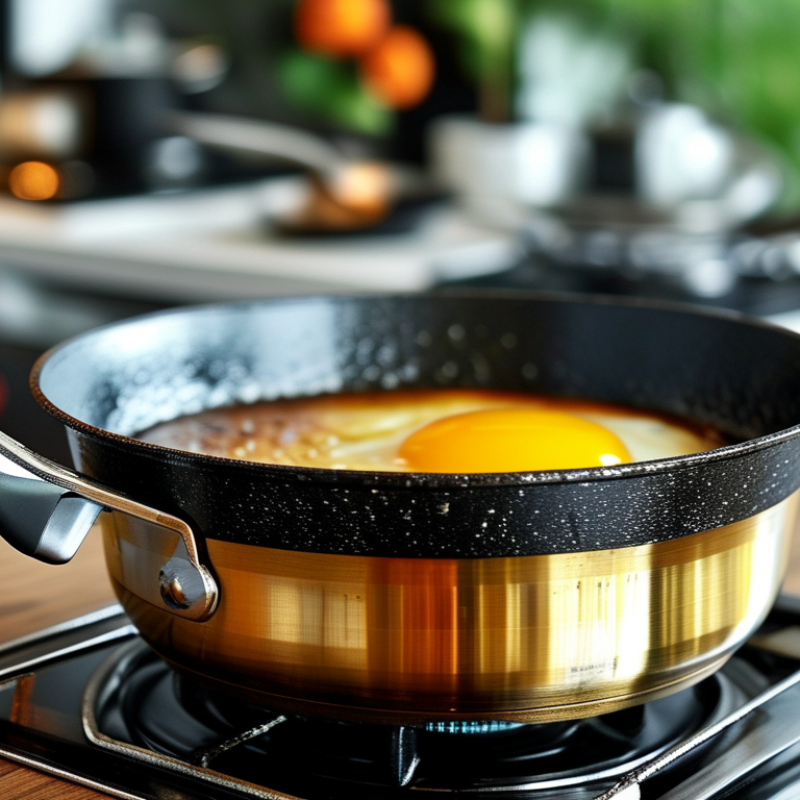
7 Tips for Buying PFOA Free Non Stick Cookware?

What PFOA-Free Nonstick Cookware Means

PFOA-free nonstick cookware does not mean chemical-free cookware. It means the product is made without intentionally using perfluorooctanoic acid, or PFOA. PFOA was historically associated with manufacturing certain fluoropolymer coatings. Today, many products state PFOA-free while using other coating materials. The label alone needs careful reading. Terminology can differ between regions and manufacturers.

I once assumed PFOA-free meant every PFAS was absent. That assumption was too simple. PFOA belongs to a larger chemical family called PFAS. A PFOA-free claim may not promise PFAS-free construction. Check whether the manufacturer identifies the coating, additives, and testing method. A written compliance statement is more useful than vague shelf language. Look for independent test details and clear regulatory information. Reliable food-safety guidance also separates chemical claims from safe-use instructions.

In my kitchen, I inspect the pan’s surface under bright light. Small scratches, peeling, or exposed metal change my decision. I avoid extreme heat and never preheat an empty nonstick pan. Ventilation matters, especially when a pan is accidentally overheated. A PFOA-free label does not prevent damage from misuse. The handle, base, and care instructions deserve equal attention. I still find some labels confusing. That uncertainty is a reason to verify, not guess.

How to Verify PFOA-Free Claims and Safety Standards

7 Tips for Buying PFOA-Free Non-Stick Cookware

A “PFOA-free” label is only a starting point. PFOA and PFAS are not identical terms, so check the exact claim. Some cookware may be PFOA-free while containing other fluorinated substances. Read the packaging carefully. Avoid vague wording such as “healthy coating” or “non-toxic” without supporting details.

Look for a written material declaration from the manufacturer. It should identify the cooking surface, coating layers, and substances intentionally used. Reliable documents may include food-contact compliance statements and recent laboratory test results. Check whether an independent laboratory performed the testing. ISO/IEC 17025 accreditation can make test results more credible, although it does not prove every safety claim.

Do not rely on a small icon alone. Scan the package code, visit the official documentation page, or contact customer service with specific questions. Ask whether the claim applies to the complete pan or only its coating. Ask when the testing occurred and which batch it covered. Details matter.

Care instructions also reveal quality. Use moderate heat, suitable utensils, and replace cookware with deep scratches or peeling. “PFOA-free” does not mean damage cannot affect performance. I have found safety labels difficult to interpret, even when they look professional. That is a warning sign, not proof of danger. Compare documents, not slogans, and remember that safety standards can differ between countries.

Which Nonstick Materials and Coatings to Consider

When shopping for PFOA-free nonstick cookware, start with the coating, not the label. PFOA-free does not always mean PFAS-free. Traditional PTFE is a fluoropolymer, and many modern products use it without PFOA. That distinction matters. The German Federal Institute for Risk Assessment states that properly used PTFE cookware presents minimal consumer risk, but empty pans should not be overheated. I still check the care instructions twice.

Ceramic sol-gel coatings are another option. They usually use silica-based materials and avoid fluoropolymer coatings. They feel smooth at first, but their release performance may decline faster under high heat, abrasive cleaning, or metal utensil use. Hard-anodized aluminum is different. It is a durable pan body, not automatically a nonstick surface. Some versions still use a PTFE topcoat, so read the technical specification carefully. Seasoned cast iron and carbon steel create low-stick performance through an oil-built surface. They need maintenance, but no synthetic nonstick layer. They are not effortless.

Market data shows strong consumer interest. Grand View Research estimated the global nonstick coatings market at about 1.65 billion dollars in 2023, with projected growth through 2030. That growth encourages broader material choices, but marketing language can remain vague. Look for the exact coating type, maximum temperature, metal restrictions, and replacement guidance. A pan can be PFOA-free and still be a poor fit for your cooking habits. Scratches, peeling, and repeated overheating are warning signs, regardless of the material.

7 Tips for Buying PFOA Free Non Stick Cookware? - Which Nonstick Materials and Coatings to Consider

Tip What to Check Material or Coating Evidence-Based Consideration Buying and Care Guidance
1 Read the exact product claim PFOA-free versus PFAS-free PFOA is one specific chemical in the broader PFAS family. A product labeled “PFOA-free” may still use another fluoropolymer coating, such as PTFE. If avoiding the wider PFAS category is important, look for a clear “PFAS-free” statement and review the care or materials information rather than relying only on “PFOA-free.”
2 Identify the coating type PTFE fluoropolymer coating Modern PTFE cookware can be manufactured without intentionally using PFOA. However, PTFE is still a fluoropolymer and can produce hazardous fumes if severely overheated. Use low to medium heat, avoid preheating an empty pan, and follow the manufacturer’s maximum-temperature guidance. Replace cookware when the coating is substantially damaged or peeling.
3 Consider PFAS-free alternatives Sol-gel ceramic coating Many ceramic nonstick surfaces use a silica-based sol-gel coating rather than a fluoropolymer. Their release performance may decrease over time, especially with high heat, abrasive cleaning, or dishwasher use. Choose gentle utensils, hand-wash when recommended, avoid cooking sprays that can leave residue, and use moderate temperatures to help preserve the surface.
4 Compare naturally low-stick surfaces Seasoned cast iron or carbon steel These cookware materials do not require a synthetic nonstick coating. A baked-on layer of cooking oil can improve food release, but the surface is not permanently nonstick. Preheat gradually, use sufficient cooking fat, dry thoroughly after washing, and maintain the seasoning. Acidic foods may weaken seasoning on newly prepared surfaces.
5 Check uncoated construction Stainless steel Uncoated stainless steel contains no nonstick layer and is generally durable, but food can stick if the pan is cold, overcrowded, or insufficiently lubricated. Preheat the pan, add oil before the food, avoid moving food too early, and select a fully clad or thick-based design for more even heating.
6 Verify durability and compatibility Base, handle, and cooktop design Heating performance depends on the pan’s construction, thickness, base design, and compatibility with the cooktop. Some cookware is not suitable for induction cooking. Confirm induction, oven, broiler, and dishwasher limits before purchase. Prefer stable bases, secure handles, and clear temperature instructions.
7 Use safe cooking and replacement practices Any coated cookware A nonstick coating’s service life is affected by heat, utensils, cleaning methods, stacking, and surface damage. Ingestion of small coating flakes is not generally expected to be toxic, but damaged cookware performs poorly and should be replaced. Avoid metal utensils unless specifically permitted, do not use abrasive cleaners, place protectors between stacked pans, and retire cookware with deep scratches, extensive peeling, or a warped base.

Key takeaway: “PFOA-free” does not automatically mean “PFAS-free.” Select the material according to your priorities for coating chemistry, heat tolerance, durability, maintenance, and cooktop compatibility.

How to Compare Cookware Quality, Durability, and Heat Performance

Buying PFOA-free non-stick cookware requires more than reading the label.
I compare the base, coating, weight, and heat response.
A flat, thick base should sit firmly on the burner. It reduces hot spots and protects delicate foods from scorching.
Check the coating under bright light. Uneven color, bubbles, or rough edges suggest weak finishing.
PFOA-free does not automatically mean PFAS-free, so request the material statement and independent test method.
That small document matters.

Durability also depends on construction, not weight alone.
I once chose a very heavy pan that heated unevenly. It looked strong, but the center browned food too quickly.
The U.S. Department of Energy estimates induction transfers about 85% of energy to cookware, compared with roughly 35% for gas. Test the pan on your own stovetop, if possible. Heat it slowly, then add a few water drops.
Even bubbling suggests better distribution. The USDA recommends heating leftovers to 165°F, so a reliable pan should reach that temperature without violent hot spots.
Check the handle temperature, lid fit, and edge stability after several uses.
Avoid metal tools and sudden cold-water rinsing. Consumer Reports’ cookware testing also shows that performance differences can appear between new and repeatedly used pans.
Marketing claims are not enough. Ask how many heating cycles the coating test covered.
Real kitchens are harsher than showroom shelves.

What Features to Check Before Buying PFOA-Free Cookware

Buying PFOA-free cookware requires more than reading the front label. Check whether the product is also free from other intentionally added PFAS. OECD’s 2021 report describes PFAS as a large and diverse chemical family, so “PFOA-free” is not the same as “PFAS-free.” Ask for a full coating description and an independent food-contact migration test. The U.S. FDA states that properly manufactured polymerized nonstick coatings have negligible migration when used as intended. Still, vague wording deserves caution.

Look closely at the construction. A thick, even coating should cover the cooking surface and rim without pinholes, bubbles, or exposed metal. Check the maximum temperature, because empty preheating can damage nonstick layers quickly. The U.S. EPA’s 2016 health advisory set 70 parts per trillion for combined PFOA and PFOS in drinking water, showing why trace-chemical control matters, although that value is not a cookware limit. Look for test dates, laboratory names, and clear sample details.

Handle design matters too. A loose rivet can create a greasy cleaning trap. Choose a stable base, an oven-safe handle, and care instructions you can realistically follow. Metal utensils may shorten coating life. I would avoid products promising “chemical-free” performance; that claim is scientifically weak. My own checklist is imperfect because labels and testing standards differ across markets. Ask questions before buying. A transparent supplier should answer them.

FAQS

What does “PFOA-free” mean on nonstick cookware?

It means PFOA was not intentionally used during manufacturing. It does not mean the cookware contains no chemicals.

Does PFOA-free also mean PFAS-free?

Not necessarily. PFOA belongs to the larger PFAS family. Check whether the documentation makes a separate PFAS claim.

What information should a trustworthy product declaration include?

It should identify the cooking surface, coating layers, and intentionally used substances. Recent laboratory results can add useful evidence.

Are small labels or package icons enough proof?

Usually not. Scan the package code or request official documents with specific testing details.

Should testing cover the entire pan?

Ask whether testing covers the complete pan or only the coating. The handle, base, and cooking surface may use different materials.

Does ISO/IEC 17025 accreditation prove every safety claim?

No. It can make laboratory results more credible, but it does not verify every statement about the product.

How can cookware condition affect daily use?

Inspect the surface under bright light. Deep scratches, peeling, or exposed metal may justify replacement.

How should PFOA-free nonstick cookware be used?

Use moderate heat and suitable utensils. Never preheat an empty pan, and keep the kitchen ventilated during accidental overheating.

What should someone do when the label remains confusing?

Compare written documents instead of slogans. Still uncertain? Do not guess; ask about the coating, test date, and covered batch.

Conclusion

Choosing PFOA-Free Non-Stick Cookware requires more than relying on a product label. PFOA-free means the cookware was made without perfluorooctanoic acid, but shoppers should still check the full materials list, manufacturer’s safety information, and any relevant testing or certification details. Compare coating types carefully, including ceramic, PTFE-based alternatives, and other nonstick surfaces, while considering how each material responds to heat, cooking habits, and regular cleaning.

Before buying, examine the cookware’s construction, thickness, weight, handle strength, lid fit, and compatibility with your cooktop. A durable base and even heat distribution can improve cooking results and reduce hot spots. Also review the recommended temperature limits, utensil guidance, cleaning instructions, and warranty terms. The best PFOA-Free Non-Stick Cookware should combine transparent safety information, reliable performance, comfortable handling, and a coating designed to remain effective with proper everyday use.

Ethan

Ethan

Ethan is a highly experienced marketing professional dedicated to helping customers understand the value, quality, and practical applications of our company’s products. With a strong background in market research, content strategy, and product communication, he combines industry insight with a......