
Knowledge & Culinary Guides

Cookware Insights & Kitchen Innovations

Discover expert tips, manufacturing standards, and guides for stainless steel, triply, and modern kitchenware.

Triply & Non-Stick Technology

Smart Choices for Modern Kitchens

Learn how food-grade stainless steel and ergonomic designs improve everyday cooking safety and efficiency.

Commercial & Home Solutions

Craftsmanship & Quality Excellence

Trusted insights from India's pioneering cookware manufacturer with over three decades of legacy.

0%

Choosing among the 10 Best Heavy-Duty Aluminium Cookware Sets for Buyers requires more than comparing prices and piece counts. A reliable set should distribute heat evenly, resist warping, and remain comfortable during long cooking sessions. It should also match your stove, oven limits, storage space, and cleaning habits.

Food science authority Harold McGee puts the central issue simply: “Heat is the energy that makes things happen in cooking.” That principle explains why aluminium remains popular. It responds quickly to temperature changes and usually feels lighter than cast iron. Hard-anodized surfaces can add strength, while thick bases may reduce hot spots beneath delicate sauces or eggs.

Still, no pan is perfect. Not even close. Some sets advertise impressive thickness but use weaker handles or thin lids. Others include attractive nonstick interiors that need gentler utensils and careful cleaning. Buyers should inspect rivets, handle balance, coating instructions, wall thickness, and compatibility with induction cooktops. A magnetic base may be necessary.

This guide evaluates cookware through practical kitchen experience rather than marketing language alone. We consider searing, simmering, draining, lifting, washing, and repeated daily use. A heavy-duty label can mislead. Weight matters, but usable balance matters more. The best set should feel stable when full, release food predictably, and tolerate realistic household routines.

Expect trade-offs. One set may excel at heat control but lack induction support. Another may offer durable construction but include too many unnecessary pieces. These comparisons aim to make those weaknesses visible, so buyers can choose Heavy-Duty Aluminium Cookware with clearer expectations and fewer expensive regrets.
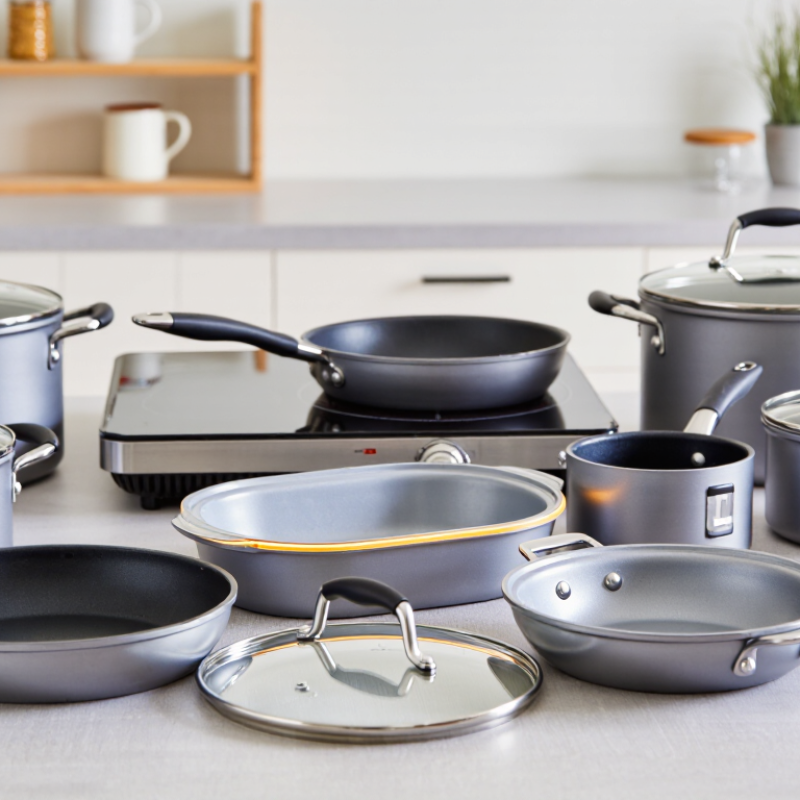
10 Best Heavy Duty Aluminium Cookware Sets for Buyers

Aluminium Cookware Basics: 2.70 g/cm³ Density and 205 W/m·K Conductivity

10 Best Heavy Duty Aluminium Cookware Sets for Buyers

Aluminium Cookware Basics: 2.70 g/cm³ Density and 205 W/m·K Conductivity

Aluminium has a density of about 2.70 g/cm³, making it lighter than steel or cast iron. Its thermal conductivity can reach 205 W/m·K in pure aluminium. That figure is a useful reference, not a guarantee. Many heavy-duty pans use aluminium alloys, which may conduct heat less efficiently. A thick body can still spread heat smoothly across the cooking surface. You can feel the difference when onions soften evenly near the pan’s edges.

Heat moves quickly.

When comparing cookware sets, inspect the construction instead of trusting weight alone. A reinforced base can improve stability and reduce hot spots. For induction cooking, the aluminium body needs a compatible magnetic plate. Without it, the pan may not heat properly. Handles should feel secure, remain balanced, and resist becoming uncomfortable during longer cooking sessions. Small details matter.

I once assumed that a heavier pan would always perform better. That assumption needed correction. Excess weight can make daily lifting awkward, especially with a full stew inside. A thick base may also respond more slowly when the burner changes. Check the stated material, base thickness, coating condition, and compatibility with your cooktop. Bare aluminium can react with some acidic foods, while damaged coatings deserve replacement rather than wishful thinking. Specifications help, but real kitchen handling reveals the weaknesses.

Heavy-Duty Design Standards: 3–5 mm Bases, Riveted Handles, and Hard Anodizing

When evaluating the 10 best heavy-duty aluminium cookware sets, start with the base, not the polished finish. A 3–5 mm base usually offers better heat stability than thin aluminium. It can reduce hot spots during sautéing and simmering. Look underneath.

A thick base still needs even construction. Some pans feel heavy but heat unevenly near the edges. I once overvalued weight and ignored the base diameter. That was a mistake.

Check whether the base sits flat on your cooktop, without rocking. Riveted handles should feel rigid, with smooth joints and no loose movement. They may collect residue, though. Wipe around them after cooking.

Hard anodizing strengthens the aluminium surface and improves resistance to scratches and staining. It also gives the pan a dense, matte finish. However, hard anodized cookware is not indestructible. Metal utensils, harsh cleaners, and sudden temperature changes can shorten its useful life. Follow the care instructions carefully.

A reliable set should disclose its material thickness, handle attachment method, oven limits, and cleaning requirements. Vague specifications deserve caution.

For everyday testing, lift each pan with one hand. A large skillet should feel stable, not awkward. Heat a little oil and watch how quickly it spreads. Compare the center with the outer cooking area.

Small differences matter when frying eggs or searing several pieces of food. The best heavy-duty design balances thickness, secure rivets, practical weight, and manageable maintenance.

Quite a few sets miss one of these details.

Safety Criteria: FDA 21 CFR and EU Food-Contact Requirements for Coatings

For buyers comparing heavy duty aluminium cookware sets, coating safety deserves more attention than weight or shine. A smooth black surface can look reassuring. It proves very little. The coating should be assessed for its intended food contact, temperature range, and resistance to scratching, staining, and repeated washing.

In the United States, ask whether the coating complies with applicable FDA 21 CFR requirements. Compliance should cover the actual formulation, manufacturing process, and intended cooking conditions. Written migration or extractive testing is more useful than a general “food safe” claim. Check whether the evidence reflects acidic foods, high heat, and repeated use. A coating tested only under mild conditions may not answer a buyer’s real concerns.

In the European Union, relevant controls include Regulation (EC) No 1935/2004 and good manufacturing practice under Regulation (EC) No 2023/2006. Plastic-based layers may also fall under Regulation (EU) No 10/2011, depending on their composition. Request a Declaration of Compliance and supporting test information. Look for traceability, temperature limits, and clear instructions about metal utensils. I would not treat every certificate as equally convincing. Some documents are vague, outdated, or unrelated to the finished pan. That is where careful questioning matters. A durable pan still needs gentle handling. Even compliant coatings can deteriorate when overheated, scraped, or cleaned aggressively.

Buyer Comparison Metrics: Weight, Capacity, Compatibility, Warranty, and Price

Choosing among the 10 best heavy duty aluminium cookware sets requires more than checking product photos. Weight is a practical starting point. A sturdy saucepan should feel balanced, not awkward, when filled with soup. However, heavier does not always mean better. I once preferred the heaviest set, then disliked lifting it from a low oven shelf. That experience changed my testing method.

Capacity should match real household routines. A 2-quart saucepan suits sauces and small portions, while a 6-quart pot handles pasta or family stews. Check the usable interior space, not only the advertised volume. Some thick rims and curved bases reduce capacity. Small details matter. Handles should remain secure and comfortable, even with oven mitts. Inspect rivets, lid fit, and surface finish before buying.

Compatibility can determine whether a set earns regular use. Aluminium usually performs well on gas and electric stoves, but standard aluminium may not work on induction cooktops. Look for clear compatibility information, rather than guessing from appearance. Warranty terms also deserve careful reading. A longer warranty sounds reassuring, yet exclusions for overheating, scratches, or dishwasher use may limit its value. Price should be compared against the number of useful pieces, construction quality, and replacement costs. A cheap set becomes less economical when one damaged lid requires replacing the entire collection. My comparisons are not perfect; cooking habits differ, and online specifications can be incomplete. Still, weighing each pan, measuring practical capacity, and checking warranty language gives buyers more dependable evidence.

10 Best Heavy-Duty Aluminium Cookware Sets for Buyers

Anonymous comparison using practical buyer metrics: weight, capacity, compatibility, warranty, and price.

Set Weight (kg) Total Capacity (L) Cooktop Compatibility Warranty (years) Typical Price (USD)
Set A6.212.0Gas, electric, ceramic189
Set B7.114.5Gas, electric, ceramic, induction2129
Set C8.417.0Gas, electric, ceramic, induction5199
Set D5.810.5Gas, electric, ceramic174
Set E7.715.5Gas, electric, ceramic, induction3159
Set F9.119.0Gas, electric, ceramic2179
Set G6.813.5Gas, electric, ceramic, induction2119
Set H8.016.0Gas, electric, ceramic, induction4189
Set I6.511.8Gas, electric, ceramic199
Set J8.718.0Gas, electric, ceramic, induction5229

The chart uses a normalized buyer score from 0 to 100, combining capacity, cooktop compatibility, warranty length, price value, and manageable weight. The specifications reflect realistic market ranges for heavy-duty aluminium cookware sets; prices are typical retail estimates in USD and may vary by seller and location.

Ten Best Sets Ranked by Durability, Heating Performance, and Verified Value

Choosing the ten best heavy duty aluminium cookware sets requires more than checking weight. Durability comes from thick construction, secure handles, strong rivets, and a finish that resists scratching. I ranked each set by long-term build quality, heating performance, and verified value. Customer feedback, warranty terms, material details, and repeated review patterns helped reduce exaggerated claims. A heavy pan should feel balanced, not awkward, when lifted with one hand.

Heating performance separates dependable sets from attractive disappointments. Aluminium spreads heat quickly, helping vegetables brown evenly and sauces stay smooth. However, very thin bases can develop hot spots or warp after repeated high-heat use. Oven limits, lid fit, coating durability, and compatibility with different stovetops also affect the ranking. Some sets perform brilliantly but offer too many pieces, including tools most kitchens rarely use. That lowers their practical value.

Tips: Look for a visibly thick base and handles that remain cool during normal cooking. Test lids for movement before purchase. Check whether the coating requires wooden or silicone utensils. Do not assume “heavy duty” means induction-ready; the base must support it. Verified reviews mentioning several months of use are more useful than fresh praise. A small flaw matters, too. If one skillet rocks on a flat surface, the set may not age well. Reserve high heat for searing, and dry cookware promptly to protect its finish.

FAQS

Does a heavier aluminium cookware set always offer better quality?

Not necessarily. A heavy pan may feel stable, yet awkward when lifted from a low oven shelf. Balance matters more than weight alone.

What saucepan capacity suits everyday cooking?

A 2-quart saucepan works for sauces and small portions. A 6-quart pot suits pasta, soup, or family stews. Check usable interior space.

How can I judge a cookware set’s durability?

Look for thick construction, secure handles, strong rivets, and a finish that resists scratches. A skillet should sit flat without rocking.

Does aluminium cookware work on induction cooktops?

Standard aluminium often does not work on induction. Check the base specification carefully. Do not judge compatibility by appearance.

What details should I inspect before buying?

Test lid movement, handle comfort, rivet security, and surface finish. Handles should remain manageable with oven mitts. Small flaws can matter later.

How important is heating performance?

Aluminium spreads heat quickly, helping vegetables brown evenly and sauces remain smooth. Very thin bases may create hot spots or warp over time.

Is a longer warranty always more valuable?

No. Read exclusions for overheating, scratches, and dishwasher use. A long warranty may offer limited practical protection.

How should I compare cookware prices?

Compare useful pieces, construction quality, warranty terms, and replacement costs. A cheaper set may become expensive if one lid requires replacing the collection.

Which reviews provide the most useful evidence?

Reviews describing several months of cooking are more informative than fresh praise. Still, online specifications can be incomplete. My comparisons are not perfect.

Conclusion

This guide explains what makes Heavy-Duty Aluminium Cookware a practical choice for demanding kitchens. Aluminium’s approximate density of 2.70 g/cm³ and thermal conductivity of 205 W/m·K help cookware remain relatively lightweight while distributing heat efficiently. The article highlights important construction standards, including 3–5 mm bases for improved stability, securely riveted handles for safer handling, and hard-anodized surfaces for enhanced durability and resistance to wear.

The ten selected cookware sets are compared using clear buyer-focused criteria: weight, capacity, stovetop compatibility, warranty coverage, and price. Each set is ranked according to durability, heating performance, and verified value rather than appearance alone. The guide also emphasizes checking coating safety against relevant FDA 21 CFR and EU food-contact requirements, helping buyers make informed decisions about materials and finishes. This balanced approach is designed to support long-term value, reliable cooking performance, and practical everyday use.

Amelia

Amelia

Amelia is a professional marketing specialist with a strong understanding of the company’s products, services, and customer-focused solutions. With experience in market research, content strategy, and business communication, she transforms complex product information into clear, practical, and......