Discover expert tips, manufacturing standards, and guides for stainless steel, triply, and modern kitchenware.
Learn how food-grade stainless steel and ergonomic designs improve everyday cooking safety and efficiency.
Trusted insights from India's pioneering cookware manufacturer with over three decades of legacy.
Choosing the best Commercial Hospitality Serveware in 2026 requires more than following design trends. Hotels, restaurants, caterers, and event venues must balance appearance, durability, hygiene, cost, and daily handling. A porcelain plate may elevate a breakfast buffet, while stainless steel performs better beside a busy carving station. Melamine can reduce breakage, but it may not deliver the same premium impression.
Hospitality leader Danny Meyer once said, “Hospitality is almost impossible to teach. Either you have it or you don’t.” His observation also applies to serveware. The right platter supports that feeling through weight, texture, temperature control, and easy service. A tray should feel stable in one hand. A bowl should resist chipping during repeated washing. Small details matter.
This guide examines the leading Commercial Hospitality Serveware types for 2026, including porcelain, ceramic, melamine, glass, stainless steel, wood, and carefully selected sustainable alternatives. It considers buffet presentation, table service, outdoor dining, banquets, and high-volume operations. Material performance will remain central, but aesthetics still influence guest perception.
There is no perfect material.
A lightweight option may look less refined. A luxury finish may increase replacement costs. Even “sustainable” choices require careful review of lifespan, cleaning demands, and disposal systems. Some recommendations may need reconsideration after real-world testing. The most reliable decision combines supplier documentation, staff feedback, washing trials, and the venue’s actual service conditions.
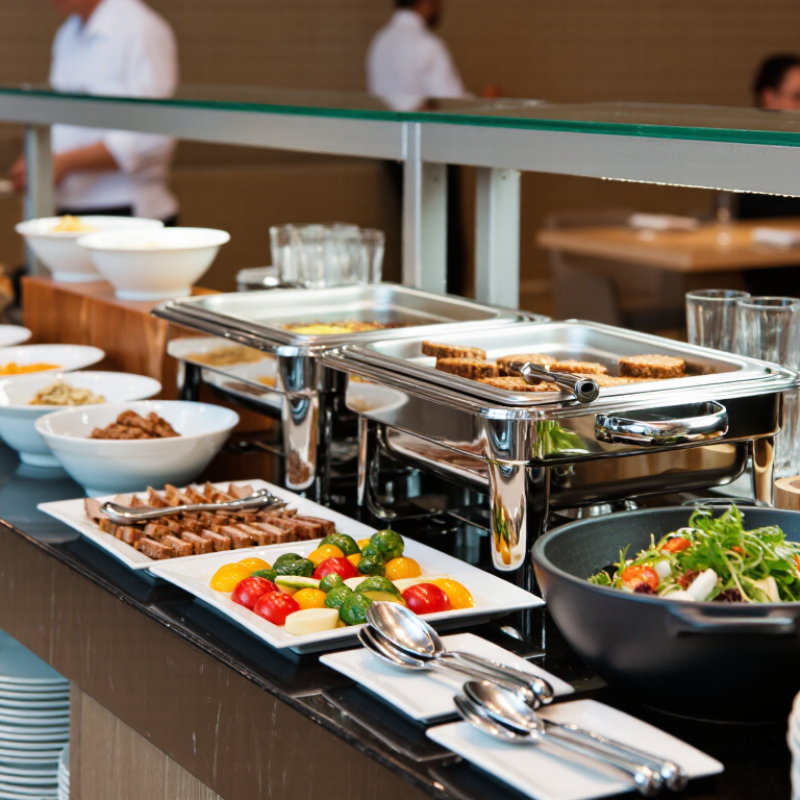
2026 Best Commercial Hospitality Serveware Types
Commercial hospitality serveware supports more than presentation. It controls portion flow, protects food temperature, and shapes the guest’s dining experience. Its scope includes plates, bowls, platters, trays, serving utensils, buffet vessels, and room-service pieces. Each item must suit its setting, from a busy breakfast counter to a formal banquet table.
Purpose should guide selection. High-use plates need strong edge resistance and stable stacking. Buffet dishes should tolerate heat, frequent handling, and quick cleaning. Trays require balanced weight, secure grips, and enough space for real service conditions. Test pieces with wet hands and crowded tables. Small flaws often appear only during peak hours. No selection is perfect. Teams should also review replacement costs, storage space, washing systems, and material performance over time.
Tips: Build a simple trial set before ordering. Ask servers to carry it, stack it, and clean it repeatedly. Check whether guests can lift it comfortably. Record chips, stains, wobbling, and awkward shapes. Choose fewer practical forms when storage is limited. Sustainability matters, but durability must be measured honestly. A reusable item is not automatically efficient if it breaks quickly.
Hotels, restaurants, and catering operations need a practical core range. It usually includes dinner plates, side plates, bowls, platters, trays, cups, glasses, and cutlery. Durable porcelain or vitrified ceramic works well for daily dining. Stackable plates reduce storage pressure during busy service. Deep bowls suit soups, grains, and breakfast stations. Wide platters help teams present shared dishes without crowding the table.
Details affect workflow. A plate with a slightly raised rim gives servers a safer grip and protects sauces from spills. Lightweight trays reduce strain during room service and large events. Banquet operations also need consistent tray sizes for faster table setup. At breakfast, stackable bowls and easy-clean cups support rapid table turnover. Cutlery should feel balanced, resist corrosion, and remain comfortable during long meals.
Appearance still matters. A simple neutral shape keeps food visually clear and fits different dining concepts. However, a heavier piece may look premium while slowing service. That trade-off is easy to underestimate. Very delicate serveware can also increase replacement costs during transport. Teams should test sample pieces through washing, stacking, carrying, and repeated service before placing a large order. The best choice is not always the most attractive one. It is the one staff can handle confidently, guests can use comfortably, and operations can replace without disruption.
Professional serveware must survive heat, impact, repeated washing, and constant handling. The FDA Food Code 2022 requires food-contact surfaces to be smooth, durable, corrosion-resistant, nonabsorbent, and easily cleanable. These requirements make stainless steel, vitrified porcelain, and certified food-grade polymers practical choices. Stainless steel resists rust and heavy kitchen use. Vitrified porcelain offers a refined appearance with lower water absorption. Polymer trays reduce breakage, but heat limits and surface scratching require attention.
Safety is not only about material selection. The World Health Organization estimates that contaminated food causes about 600 million illnesses and 420,000 deaths worldwide each year, according to its 2015 burden report. Serveware cannot remove every risk. It can reduce avoidable contact hazards through correct design, cleaning, and storage. NSF/ANSI 2 evaluates commercial food equipment construction, materials, and cleanability. Buyers should request current compliance documents, not vague “food-safe” claims.
Durability needs evidence. Ask for thermal-shock testing, dishwasher-cycle performance, edge-impact results, and replacement guidance. A heavy plate may feel stronger, but weight alone proves little. Hairline cracks can hide beneath decorative finishes. I have seen attractive pieces fail because stacking pressure was ignored. That mistake is costly. Staff also need clear separation between damaged items and service-ready stock. The best 2026 choices will balance appearance, measurable performance, worker handling, and documented food-contact safety.
Commercial hospitality serveware should follow the dining format, not fashion alone. A hotel breakfast needs stackable plates, wide bowls, and heat-resistant cups for fast self-service. A fine-dining menu needs lighter plates with controlled rim space for precise plating. For banquets, identical shapes improve table speed and reduce replacement confusion.
The National Restaurant Association’s 2024 industry report projected U.S. restaurant sales above $1 trillion. That scale makes durability and workflow essential. In high-volume service, melamine or strengthened ceramic can reduce breakage risk. However, weight still matters. Heavy plates slow clearing and strain staff during long shifts. Small details matter.
Menu structure should guide size and shape. Saucy noodles need deeper bowls, while grilled items benefit from broad plates that separate protein, garnish, and sauce. For room service, covered trays and non-slip surfaces protect presentation during elevator travel. The 2024 International Food Information Council Food and Health Survey found that 66% of consumers consider convenience important in food choices. Serveware must support that expectation without making food feel disposable.
Service style changes the choice again. Family-style dining needs generous platters and serving spoons. Cocktail service requires compact, stable pieces that guests can hold with one hand. I have seen attractive pieces fail because they were difficult to stack. That mistake is easy to repeat. Test serveware during a busy service, with real portions, wet sauces, and rushed clearing. Maryland State University’s hospitality research also links operational consistency with stronger guest perceptions, so matching every piece to its task remains practical, not cosmetic.
| Serveware Type | Best-Fit Dining Formats | Menu Applications | Recommended Service Style | Typical Commercial Specifications | Operational Advantages | Important Considerations |
|---|---|---|---|---|---|---|
| Commercial Porcelain Plates | Full-service restaurants, hotels, banquets, fine-casual dining | Plated entrées, appetizers, desserts, tasting portions | À la carte, plated banquet, room service | Common sizes include 20–28 cm dinner plates, 16–22 cm side plates, and 20–28 cm coupe plates; vitrified or strengthened body preferred | Professional appearance, stable stacking, suitable for commercial dishwashers, broad menu compatibility | Heavier than melamine; chipped edges should be removed from service; confirm thermal-shock and rack compatibility |
| Melamine Plates and Bowls | Buffets, outdoor dining, pool service, cafés, institutional foodservice | Salads, sandwiches, casual entrées, cold desserts, children’s meals | Self-service, counter service, high-volume casual service | Common sizes include 18–28 cm plates and 400–700 ml bowls; food-contact-grade melamine with non-porous surfaces | Lightweight, break-resistant, easy to handle, and suitable for fast table turnover | Generally not intended for microwave use; avoid direct flame and prolonged exposure to very high heat; inspect for surface wear |
| Stoneware Bowls and Platters | Bistros, cafés, sharing restaurants, contemporary casual dining | Grain bowls, pasta, ramen-style dishes, roasted vegetables, shared sides | Family-style, sharing plates, casual plated service | Common capacities range from 500–1,000 ml for bowls; dense ceramic body with glazed, food-safe finish | Retains heat well, provides a handmade visual style, and supports generous portions | Can be heavy and bulky; verify stacking height, glaze durability, and resistance to thermal shock |
| Stainless-Steel Serving Trays | Hotels, banquets, catering operations, room service, event venues | Canapés, plated meals, breakfast service, beverages, pastries | Tray service, banquet service, assisted buffet replenishment | Food-contact stainless steel, commonly with raised edges and sizes from approximately 30 × 20 cm to 60 × 40 cm | Durable, corrosion-resistant, easy to sanitize, and suitable for repeated transport | Metal surfaces may transfer heat; select non-slip liners where appropriate and avoid abrasive cleaning that can scratch finishes |
| Chafing Dishes | Breakfast buffets, wedding banquets, conference catering, all-day dining | Hot entrées, vegetables, rice, sauces, breakfast items | Buffet, self-service, attended food station | Common formats include full-size pans of about 8–9 L and half-size pans of about 4 L; compatible with water pans and controlled heat sources | Maintains presentation and serving temperature during scheduled service; standardized pan sizes simplify replenishment | Requires temperature monitoring, safe fuel or electric operation, regular cleaning, and protection against dry heating |
| Gastronorm Food Pans | Central kitchens, buffets, catering, quick-service and high-volume operations | Hot and cold prepared foods, salads, sauces, mise en place, desserts | Buffet, batch cooking, prep-to-service workflows | Standard GN 1/1 format is approximately 530 × 325 mm; common depths range from 20 to 200 mm; stainless steel or heat-resistant polycarbonate | Interoperable with many counters, transport systems, refrigerators, and hot-holding units | Choose depth according to food volume and holding time; use covers for hygiene, moisture control, and transport |
| Wood or Bamboo Serving Boards | Gastropubs, cafés, casual restaurants, hotel lounges | Charcuterie, cheese, sandwiches, flatbreads, pastries, shared appetizers | Family-style, grazing, table sharing, display service | Common lengths range from 30–60 cm; use sealed, food-contact-safe surfaces and stable, non-splintering construction | Creates a casual presentation, supports shareable menus, and separates serving displays from dining plates | Usually requires hand washing and thorough drying; avoid prolonged soaking, excessive heat, and cross-contamination between food categories |
| Cast-Iron Serving Pieces | Steakhouses, regional cuisine restaurants, brunch venues, rustic casual dining | Sizzling dishes, baked eggs, skillet meals, roasted meats, hot desserts | Plated-to-table, tableside presentation, specialty entrée service | Common diameters range from 15–30 cm; high thermal mass with heat-resistant handles or bases | Excellent heat retention and strong visual impact for hot, portion-controlled dishes | Very heavy and remains hot after service; requires underliners, burn-risk procedures, careful drying, and rust prevention |
| Glass Serving Bowls and Dispensers | Breakfast buffets, dessert stations, beverage service, cafés | Fruit, yogurt, cereals, salads, desserts, infused water and cold beverages | Self-service buffet, display service, beverage station | Common capacities range from 1–5 L for bowls and 3–8 L for dispensers; use thick, food-safe glass with stable bases | Improves product visibility, supports attractive displays, and does not retain food odors | Breakable and relatively heavy; monitor for chips and cracks, and allow hot glass to cool before washing |
| Serving Utensils and Portion Tools | All hospitality formats, especially buffets, catering, and high-volume service | Salads, sauces, vegetables, pasta, desserts, beverages, condiments | Self-service, assisted buffet, plated preparation, table sharing | Food-safe stainless steel or heat-resistant polymer; ladles commonly range from 30–120 ml, with varied tong and spoon lengths | Improves portion consistency, reduces direct hand contact, and speeds up replenishment and service | Match tool length to container depth; provide separate utensils for allergen-sensitive foods and replace damaged tools promptly |
Selection principle: Prioritize food safety, heat performance, break resistance, stackability, cleaning requirements, portion control, and compatibility with the operation’s service workflow.
2026 Best Commercial Hospitality Serveware Types
Commercial hospitality serveware must survive constant washing, stacking, and rapid table turnover. Stainless steel trays resist dents, while porcelain plates support a refined dining experience. Melamine remains practical for outdoor service because it is lightweight and chip resistant. Small details matter. Choose pieces that match your kitchen’s actual workload, not only the dining room concept.
Maintenance costs often begin with poor handling. Look for smooth surfaces, reinforced rims, and dishwasher-safe construction. Staff should inspect chipped plates, loose handles, and stained serving bowls during each shift. Deep storage shelves can reduce breakage, but unstable stacks create hidden risks. Use dividers for fragile items and label shelves by size. This saves seconds during service and prevents unnecessary replacement orders. Still, even durable serveware needs routine review.
Sustainability requires more than selecting recyclable materials. A long-lasting item can create less waste than a cheaper product replaced every few months. Compare expected lifespan, washing temperature, water use, packaging, and transport weight. Reusable options usually need careful cleaning and efficient loading to perform well. Cost should include labor, breakage, storage space, and disposal, not just purchase price. Procurement teams sometimes overestimate durability. That mistake deserves attention. Trial a small quantity for four weeks, record damage and cleaning time, then adjust the final order.
It includes plates, bowls, platters, trays, cups, glasses, cutlery, and buffet vessels. Each item supports a specific service setting.
Choose plates with strong edges, stable stacking, and a comfortable grip. Raised rims can help prevent sauce spills during carrying.
Buffet dishes should tolerate heat, frequent handling, and quick cleaning. Deep bowls suit soups and grains, while wide platters hold shared dishes.
Stackable plates and bowls reduce storage pressure. They also help staff prepare tables faster during breakfast and large events.
Test sample pieces with wet hands, crowded tables, repeated washing, and frequent stacking. Ask servers to carry and clean them repeatedly.
Lightweight trays reduce strain during delivery. Balanced weight, secure grips, and enough space support safer handling in real service conditions.
No. A simple, neutral shape often suits different dining concepts. Heavy or delicate pieces may look premium but slow service or increase breakage.
Measure chips, stains, wobbling, washing performance, and replacement costs over time. Reusable serveware is not automatically efficient if it breaks quickly.
Cutlery should feel balanced, resist corrosion, and remain comfortable in the hand. Some details may seem minor, but guests notice awkward weight.
No option wins every test. Teams must balance appearance, handling, storage, cleaning, durability, and replacement needs. Trade-offs remain.
Commercial Hospitality Serveware is the foundation of efficient, attractive, and consistent food presentation in hotels, restaurants, and catering operations. This guide explains the purpose and scope of professional serveware, covering plates, bowls, trays, platters, serving utensils, drinkware, buffet equipment, and specialized pieces. It also outlines how to select products according to menu requirements, dining formats, guest expectations, service speed, and operational volume.
Material choice, durability, heat resistance, food safety, and ease of cleaning are essential considerations in professional environments. The article also examines how serveware supports table service, buffet presentation, banquets, room service, and outdoor catering. Practical guidance on maintenance, storage organization, replacement planning, sustainability, and total cost helps businesses balance appearance with long-term value. By matching serveware to the menu, service style, and workflow, hospitality teams can improve presentation, reduce waste, and deliver a more reliable guest experience.