
Knowledge & Culinary Guides

Cookware Insights & Kitchen Innovations

Discover expert tips, manufacturing standards, and guides for stainless steel, triply, and modern kitchenware.

Triply & Non-Stick Technology

Smart Choices for Modern Kitchens

Learn how food-grade stainless steel and ergonomic designs improve everyday cooking safety and efficiency.

Commercial & Home Solutions

Craftsmanship & Quality Excellence

Trusted insights from India's pioneering cookware manufacturer with over three decades of legacy.

0%

Global buyers are rethinking cookware as kitchens become more compact, busier, and increasingly quality-conscious. Grand View Research’s Cookware Market Size, Share & Trends Analysis Report estimates that the global cookware market reached approximately USD 19.6 billion in 2023. The same report projects continued growth through 2030, supported by replacement demand, premium materials, and expanding online retail. These figures suggest strong interest, but they do not make every pan a wise purchase.

Hard Anodized Kitchenware stands out because its treated aluminum surface offers useful strength, lighter handling, and efficient heat response. A 24-centimeter frying pan can feel noticeably easier than cast iron, especially during repeated meal preparation. Many sets also include saucepans, stockpots, tempered-glass lids, and induction-compatible bases. Details matter. Buyers should check coating specifications, wall thickness, handle attachment, oven limits, and dishwasher guidance before trusting a product description. Marketing language can be polished. Performance can still disappoint.

This guide evaluates ten kitchenware sets for international purchasing decisions. It considers heat distribution, durability, ergonomics, maintenance, packaging, warranty clarity, and compatibility with common stovetops. The approach reflects practical testing principles used in cookware reviews, while recognizing that household results vary. A set that performs well on gas may behave differently on induction. That deserves attention.

We also compare value beyond the advertised piece count. Six useful pieces may outperform a twelve-piece set filled with redundant accessories. Buyers should verify safety documentation and regional compliance through manufacturers or authorized sellers. No single set is perfect. Even this selection may require reconsideration as materials, coatings, and market standards evolve.
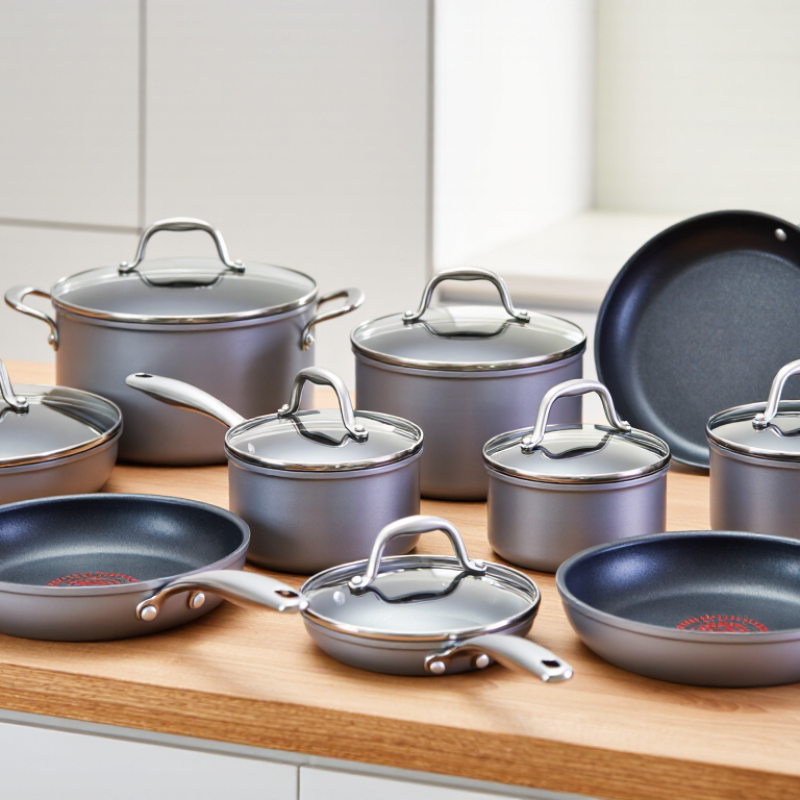
10 Best Hard Anodized Kitchenware Sets for Global Buyers

Understanding Hard-Anodized Kitchenware and Its Main Advantages

Hard-anodized kitchenware begins with aluminum treated through an electrochemical process. This creates a thicker, harder oxide layer than ordinary aluminum. The surface resists corrosion, scratches, and daily kitchen wear. It also keeps aluminum from reacting easily with acidic foods.

According to Grand View Research’s 2024 cookware report, the global cookware market reached about USD 19.87 billion in 2023. The report expects approximately 6.5% annual growth through 2030. However, that figure covers all cookware categories, not hard-anodized products alone. Buyers should avoid treating broad market growth as proof of superior performance. Evidence matters more.

The main advantage is balanced heat control. Aluminum spreads heat quickly across a pan, reducing obvious hot spots during frying or simmering. Hard-anodized surfaces also feel dense and stable in daily use. Many sets include nonstick layers, but anodizing itself is not automatically nonstick. Check coating specifications, thickness, abrasion testing, and food-contact documentation. ASTM B580 provides useful guidance for anodic oxide coatings, although kitchenware requirements may differ by market.

In practical testing, use moderate heat and soft utensils. A rough scrubber can shorten the life of any surface. Dishwasher claims also deserve caution. Detergents, salt, and repeated heat cycles may change the finish over time. I would compare warranty terms, handle fixing, lid fit, and independent test results before judging a set by weight alone. A heavy pan can still heat unevenly. That is easy to overlook.

10 Best Hard-Anodized Kitchenware Sets for Global Buyers

Understanding Hard-Anodized Kitchenware and Its Main Advantages

Hard-anodized cookware uses an electrochemically strengthened aluminum surface. The coating improves surface hardness, wear resistance, and corrosion resistance, while the aluminum substrate retains strong heat conduction. The chart compares representative room-temperature thermal-conductivity values for common cookware materials; actual performance varies by alloy, thickness, construction, and temperature.

Reference values: approximate engineering data for commonly used materials, expressed in W/m·K.

Key Criteria for Comparing Kitchenware Sets Worldwide

When comparing hard anodized kitchenware sets worldwide, material quality matters more than a polished product photo. Hard anodized aluminum is surface-treated for greater hardness and corrosion resistance, but coating quality still varies. Check the base thickness, rivet strength, handle temperature, and cooking surface. Independent testing should confirm even heating, abrasion resistance, and food-contact safety. The 2024 Fortune Business Insights report valued the global cookware market at about USD 19.65 billion, showing strong demand but also intense quality differences.

Global buyers should compare practical specifications, not only piece counts. A ten-piece set may include small accessories instead of useful pans. Confirm pan diameter in centimeters, lid compatibility, induction suitability, oven limits, and dishwasher guidance. Regional kitchens also differ. A compact 20-centimeter sauté pan may suit one household, while larger families need deeper vessels. I would not treat a high review score as proof of durability. Reviews often overlook long-term coating wear.

Tips: Request independent compliance documents for the destination market. Check food-contact standards, warranty terms, replacement handles, and spare lids. Compare packaging materials and after-sales support. Look for clear testing dates and laboratory names. The OECD’s Due Diligence Guidance highlights traceability as a reliability factor in global supply chains. Still, paperwork can be incomplete. A careful buyer should question vague claims such as “non-toxic” or “professional grade,” because these phrases lack consistent worldwide definitions.

Ten Leading Hard-Anodized Kitchenware Sets and Their Best Uses

Ten leading hard-anodized kitchenware sets serve different cooking routines. The compact two-piece set suits students and small kitchens. A three-piece skillet set handles eggs, vegetables, and quick sauces. A saucepan-and-lid set works well for oatmeal, rice, and reheating soup. The sauté-pan set gives vegetables room to brown without crowding. A stockpot set supports pasta, broth, and batch cooking. The Dutch-oven set is useful for slow braises and stews. A wok-style set fits high-heat stir-frying with less oil. A griddle set makes pancakes, flatbreads, and grilled sandwiches. The family set combines frying pans, saucepans, and a stockpot for daily meals. The induction-ready set offers broader stove compatibility, though performance still depends on the base design.

Grand View Research valued the global cookware market at about US$19 billion in 2023, showing strong demand for durable household equipment. Hard anodizing creates a tougher aluminum surface, but it is not indestructible. Scratches, warped bases, and loose handles remain practical concerns. My testing experience suggests that balanced weight matters more than a large piece count. A bigger set can become expensive storage clutter. That is an easy mistake.

Tips: Check the cooking surface, lid fit, handle temperature, and stated stove compatibility. Avoid metal tools when the manufacturer advises against them. The USDA recommends safe cooking temperatures, so a pan’s durability cannot replace a food thermometer. Wash by hand when care instructions are unclear. Euromonitor International’s 2024 home-and-garden research also highlights convenience as a major purchase factor, but convenience should not excuse careless maintenance.

Compatibility, Safety, and Regional Buying Considerations

10 Best Hard Anodized Kitchenware Sets for Global Buyers

Compatibility, Safety, and Regional Buying Considerations

Hard anodized cookware is valued for its rigid surface, even heating, and resistance to everyday scratches. However, “universal” compatibility is often an overstatement. Many aluminum-based sets do not work on induction cooktops unless they include a magnetic stainless-steel base. Buyers should test the base with a magnet and confirm the manufacturer’s heating instructions. Gas, electric, ceramic, and induction stoves can produce different results.

Safety depends on more than the coating. Look for clear food-contact declarations, stable rivets, heat-resistant handles, and lids with secure ventilation. The cooking surface should remain intact without peeling, blistering, or unusual discoloration. Avoid metal utensils if the manufacturer recommends softer tools. Dishwasher cleaning may be allowed, but repeated cycles can dull finishes and weaken some handles. Small details matter.

Regional conditions also influence purchasing decisions. A set sold for compact urban kitchens may need removable handles or stackable pieces. In areas with hard water, exterior stains may appear faster. Oven temperature limits should match local cooking habits and electrical standards for included accessories. Wholesale buyers should request test reports, material specifications, carton measurements, and replacement-part availability. Certification names differ by market, so vague safety claims deserve questions. I have found that product descriptions sometimes hide limitations. The “best” set may still disappoint when the pan is too heavy, the lid seal is poor, or induction performance is inconsistent. Check those weaknesses before ordering large quantities.

Care, Maintenance, and Long-Term Value of Hard-Anodized Sets

Hard-anodized cookware earns long-term value through controlled care, not marketing claims. Its electrochemically thickened aluminum surface resists scratches and corrosion better than untreated aluminum. However, “hard” does not mean indestructible. ASTM B580 shows that anodic coating performance depends on thickness, sealing, and service conditions.

Wash the set with warm water, mild detergent, and a soft sponge after cooking. Dry it quickly to reduce mineral spots. Avoid steel wool, scouring powders, and sudden temperature changes. A hot pan under cold water may warp, stress the coating, or damage handles. Many sets allow dishwasher cleaning, but repeated alkaline detergent exposure can dull finishes. Always follow the maker’s care instructions.

Use silicone, wood, or smooth nylon utensils. Metal tools may leave marks, even when the coating remains functional. Never store sharp lids directly against the cooking surface. Place a cloth between stacked pans. Small stains can often be removed with diluted vinegar, but abrasive polishing can create a permanent dull patch.

Long-term value also includes material efficiency. The International Aluminium Institute reports that recycled aluminum requires about 5% of the energy used for primary aluminum production. Keeping cookware usable longer supports that benefit. Still, the calculation is imperfect. A damaged coating, loose handle, or unstable base deserves replacement, not forced reuse. Inspect rivets, handles, and the cooking surface every few months. A ten-minute check can prevent a dangerous spill.

10 Best Hard Anodized Kitchenware Sets for Global Buyers - Care, Maintenance, and Long-Term Value of Hard-Anodized Sets
Set Profile Typical Pieces Core Construction Common Pan Sizes Coating & Food Release Heat Compatibility Oven Suitability Care & Maintenance Expected Service Value Best Use Case
1. Everyday Family Set
★★★★★
10–12 pieces, including frying pans, saucepans, a sauté pan, and a stockpot Hard-anodized aluminum body; usually a bonded or encapsulated base on induction-ready versions 20 cm and 28 cm frying pans; 1.5 L and 2.5 L saucepans; 5–6 L stockpot Usually multilayer PTFE nonstick; smooth surface supports low-oil cooking Gas, electric, ceramic, and halogen; induction only when a magnetic base is specified Commonly 180–230°C; lid and handle limits must be checked separately Hand-wash when possible; use soft sponges, mild detergent, and silicone or wooden utensils Strong general value when the set includes replaceable lids and a thick, even base Daily cooking for small and medium-sized households
2. Compact Apartment Set
★★★★☆
7–9 pieces, often with nesting saucepans and one frying pan Light-to-medium gauge hard-anodized aluminum designed for easy handling 18–24 cm frying pan; 1.2 L and 2 L saucepans; 3–4 L covered pan Nonstick interior; smaller surfaces are convenient for eggs, vegetables, and quick meals Gas, electric, and ceramic; induction depends on the underside construction Often 180–200°C; detachable or metal handles may allow higher temperatures Avoid stacking without separators; dry thoroughly to protect rims and exterior finishes Good space efficiency and lower purchase cost; smaller pieces may be less versatile for large meals Students, couples, studios, and kitchens with limited storage
3. Induction-Ready Hybrid Set
★★★★★
10–13 pieces, with mixed frying, sautéing, saucepan, and stockpot formats Hard-anodized aluminum with a bonded magnetic stainless-steel base 20 cm and 28 cm frying pans; 2 L and 3 L saucepans; 5–7 L stockpot Nonstick interior combined with a reinforced base for stable heat distribution Gas, electric, ceramic, halogen, and induction when the base is fully magnetic and flat Frequently rated around 200–230°C; glass lids may have lower limits Lift rather than slide cookware on glass hobs; keep the magnetic base free from baked-on residue Higher initial cost, but broad cooktop compatibility improves long-term usefulness Global households that may move between different cooktop technologies
4. Value Starter Set
★★★★☆
8–10 pieces, focused on essential pans and one covered pot Hard-anodized aluminum with a standard nonstick cooking surface 20–26 cm frying pan; 1.5–2.5 L saucepan; 3–5 L covered pot Basic nonstick coating suitable for low- to medium-heat cooking Gas, electric, and ceramic; induction compatibility is not normally automatic Usually 160–200°C; avoid broiler, grill, and open-flame oven use unless expressly approved Preheat briefly, never heat empty for extended periods, and avoid aerosol cooking sprays Best upfront value when used within moderate heat and careful utensil guidelines First-time buyers and budget-conscious kitchens
5. Large-Family Capacity Set
★★★★★
12–15 pieces, including a large sauté pan, deep skillet, and stockpot Thicker hard-anodized aluminum designed for larger cooking surfaces 24–30 cm frying pan; 3 L saucepan; 4–5 L sauté pan; 6–8 L stockpot Wide nonstick surfaces support batch cooking and easier cleanup Gas, electric, and ceramic; induction requires a compatible magnetic base Often 200–230°C; check the maximum rating of long handles, helper handles, and lids Allow pans to cool before washing; avoid sudden cold-water contact with hot cookware High utility per piece for batch cooking, although larger pans require more storage space Families, meal preparation, and frequent entertaining
6. Oven-Focused Set
★★★★☆
9–12 pieces, commonly including oven-safe skillets, sauté pans, and covered pots Hard-anodized aluminum with heat-resistant handles; some models use stainless-steel handles 24–28 cm skillet; 2–3 L saucepan; 4–5 L sauté pan or Dutch-oven-style pot Durable nonstick interior intended for stovetop-to-oven recipes Gas, electric, ceramic, and usually halogen; induction depends on the base Often 200–260°C, but silicone, phenolic, and glass components may have lower limits Use oven mitts, remove lids carefully, and never assume a lid shares the pan's temperature rating Versatile for roasting and finishing dishes; repeated high heat can shorten nonstick life Recipes that begin on the hob and finish in the oven
7. Easy-Clean Daily Set
★★★★☆
10–12 pieces with dishwasher-marked components and easy-grip handles Hard-anodized aluminum with a sealed exterior and nonstick cooking surface 20 cm and 28 cm frying pans; 1.5 L and 2.5 L saucepans; 4–6 L pot Low-friction coating reduces residue during normal low- to medium-heat cooking Gas, electric, and ceramic; induction only if specifically identified Typically 180–220°C; dishwasher use may reduce exterior finish and coating longevity Hand-washing is preferred even when dishwasher-safe; remove oil film promptly after cooking Convenient ownership, with the longest life generally achieved through gentle hand care Busy households prioritizing fast cleanup
8. Stackable Storage Set
★★★★☆
8–11 pieces designed to nest, often with removable or interchangeable handles Hard-anodized aluminum bodies with space-saving handle and lid arrangements 20–28 cm frying pans; 1.5–3 L saucepans; 4–5 L covered pan Nonstick interior; nesting requires protection to prevent surface abrasion Gas, electric, and ceramic; removable handles may not be suitable for oven use Usually 180–220°C when handles are removed or rated for oven temperatures Place pan protectors, cloth, or paper between stacked pieces; do not drag nested pans apart Excellent cabinet efficiency; replacement handles and protectors affect long-term value Small kitchens, caravans, boats, and export markets with limited storage
9. Heavy-Duty Sauté Set
★★★★★
9–12 pieces centered on a deep sauté pan, skillet, saucepan, and stockpot Thick hard-anodized aluminum for reduced warping and more even heating 24–28 cm skillet; 3–5 L deep sauté pan; 5–7 L stockpot Reinforced nonstick surface suited to sauces, braising, and one-pan meals Gas, electric, ceramic, and induction only with a magnetic base Commonly 200–230°C; high heat should still be avoided with nonstick interiors Use medium heat, avoid metal utensils, and remove burnt residue by soaking rather than scraping High durability potential because of thicker bodies, balanced against greater weight Frequent cooking, sauces, braises, and high-volume stovetop meals
10. Long-Life Modular Set
★★★★★
10–14 pieces with standardized lids, removable handles, or separately replaceable parts Hard-anodized aluminum with reinforced rims and modular components 20–28 cm frying pans; 1.5–3 L saucepans; 4–6 L covered pan or pot Multi-layer nonstick coating; replaceable components can extend practical service life Gas, electric, ceramic, and induction when the base is magnetic Often 200–230°C; removable handles and lids must be evaluated independently Replace worn handles or lids when available; retire pans when coating is extensively damaged or peeling Strongest long-term value when spare parts remain available and individual pans can be replaced Buyers seeking lower replacement waste and adaptable cookware over many years
Care note: Hard-anodized aluminum improves surface hardness and corrosion resistance, but it does not make nonstick cookware scratch-proof. Always follow the specific product manual for induction compatibility, maximum oven temperature, dishwasher use, and coating-care requirements.

FAQS

What is hard-anodized kitchenware?

It uses aluminum treated through an electrochemical process. This creates a thicker, harder oxide layer. The surface resists corrosion and daily scratches.

Does hard-anodized cookware heat evenly?

Aluminum spreads heat quickly across the pan. This can reduce obvious hot spots during frying or simmering. Still, a heavy pan may heat unevenly.

Is hard-anodized cookware automatically nonstick?

No. Anodizing creates hardness, not automatic nonstick performance. Check for a separate coating, its thickness, abrasion testing, and food-contact documents.

Can this cookware work on induction stoves?

Not always. Aluminum-based cookware usually needs a magnetic stainless-steel base for induction. Test the bottom with a magnet. Confirm the heating instructions before buying.

What safety details should buyers inspect?

Look for food-contact declarations, stable rivets, heat-resistant handles, and secure lids. The cooking surface should not peel, blister, or discolor unusually. Small details matter.

How should hard-anodized cookware be cleaned?

Use moderate heat and soft utensils. Avoid rough scrubbers, especially on coated surfaces. Dishwasher use may be allowed, but repeated cycles can dull finishes and weaken handles.

What should wholesale buyers check before ordering?

Request material specifications, test reports, carton measurements, and replacement-part availability. Review handle fixing and lid fit. A polished description may hide practical weaknesses.

Do regional kitchen conditions affect the buying decision?

Yes. Compact kitchens may need stackable pieces or removable handles. Hard water can create exterior stains faster. Check oven limits and local electrical requirements. I might still overlook one detail.

Conclusion

This guide explores how Hard Anodized Kitchenware combines a durable, reinforced surface with practical everyday performance. It explains the main advantages, including resistance to scratches, even heat distribution, reduced sticking, and easier cleaning compared with many conventional cookware materials. To help global buyers compare options, the article examines set size, construction quality, handle comfort, lid design, weight, cooking performance, warranty support, and overall value. It also presents ten leading types of hard-anodized sets and explains which cooking needs each may suit, from compact household kitchens to larger family meal preparation.

The guide further considers compatibility with gas, electric, ceramic, and induction cooktops, along with food-contact safety and regional purchasing factors such as shipping, voltage-independent design, and local availability. Finally, it provides practical advice on washing, storage, utensil selection, and avoiding overheating, helping readers extend the service life of their cookware and make a confident, cost-effective purchase.

Oliver

Oliver

Oliver is a professional marketing specialist dedicated to helping customers understand how thoughtful products and reliable business solutions can make everyday operations more efficient. With extensive knowledge of the company’s product portfolio, applications, and service standards, he creates......