Choosing Stainless Steel Water Bottles for wholesale requires more than comparing prices and polished product photos. Buyers must assess material quality, insulation performance, factory reliability, and customer expectations. A bottle may look premium online, yet feel too heavy or develop a loose lid after repeated use. These details can damage a retailer’s reputation quickly.
Experienced wholesalers usually examine stainless steel grades, wall construction, capacity, finish, and sealing components. Food-contact materials should be clearly specified and supported by reliable testing documents. Double-wall vacuum insulation can keep drinks cold during a summer delivery or warm through a long commute. However, performance claims should be verified rather than accepted blindly. Ask for samples. Test the bottle in daily conditions.
Small details matter.
A practical evaluation should also include packaging strength, logo accuracy, order flexibility, production consistency, and communication speed. Suppliers with stable quality controls are often more valuable than factories offering the lowest quote. Still, no supplier is perfect, and even experienced buyers can overlook issues such as paint scratches, odor retention, or difficult cleaning. That is why a structured checklist and sample approval process are essential. This guide explains how to compare Stainless Steel Water Bottles for wholesale with clearer standards, realistic expectations, and dependable purchasing decisions.
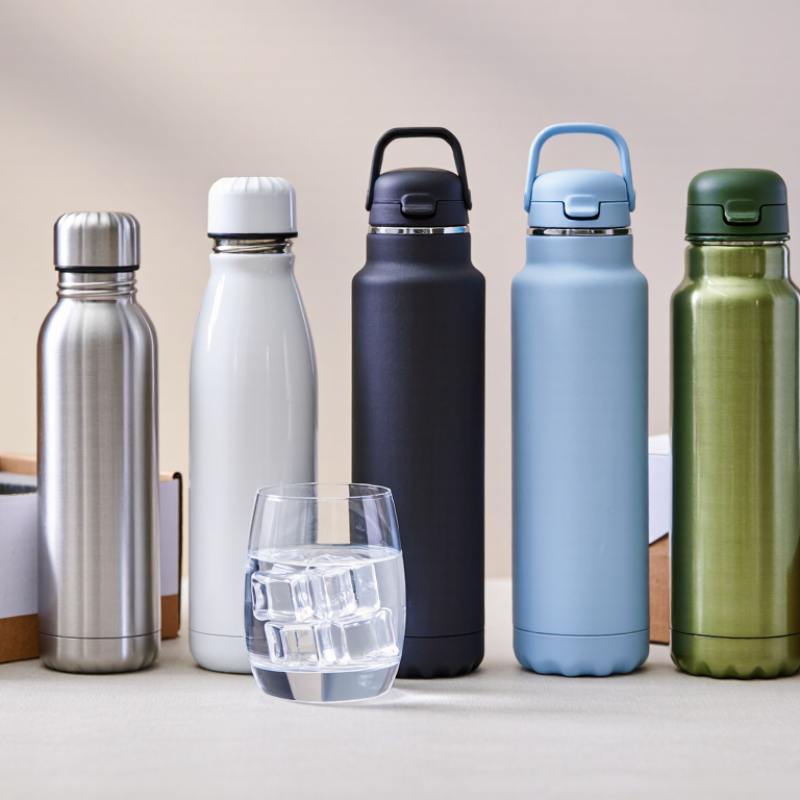
When choosing stainless steel water bottles for wholesale, begin with the steel grade, not the printed finish. Type 304, often called 18/8, offers reliable corrosion resistance for everyday water and beverage use. Type 316 resists salt and acidic environments better, although its higher cost may not suit every market. Type 201 can reduce purchasing costs, but it generally needs stricter quality control and moisture testing. Ask for material certificates, independent food-contact test reports, and relevant market compliance documents. Paperwork matters.
Bottle construction also changes performance. A single-wall bottle is light, economical, and suitable for short-term use. A double-wall vacuum bottle keeps drinks hot or cold longer, but welding quality becomes critical. Inspect the neck, base, cap threads, and silicone seal for uneven gaps or sharp edges. A weak seal can cause leakage during carton transport. It happens. For wholesale orders, compare capacity, mouth opening, weight, and packing dimensions, not only unit price. A wide mouth is easier to clean, while a narrow mouth may reduce spills.
Finishes deserve equal attention. Powder coating can improve grip and color consistency, but adhesion should be tested after washing and abrasion. Avoid assuming every stainless steel claim means the same thing. Some suppliers describe the liner accurately but say little about the lid, straw, or spring. Request samples from different production batches. Check odor, taste transfer, vacuum retention, and deformation after repeated use. No checklist is perfect. Review supplier inspection records and corrective-action history before placing a large order.
| Bottle Type | Typical Construction | Common Stainless Steel Material | Insulation Performance | Main Advantages | Limitations | Suitable Wholesale Applications | Key Quality Checks |
|---|---|---|---|---|---|---|---|
| Single-Wall Bottle | One stainless steel wall with no vacuum gap; may be straight-sided or shaped. | Food-contact 304 stainless steel is commonly used; 201 stainless steel may be selected for cost-sensitive products. | Low. It does not provide meaningful vacuum insulation, so the exterior can become hot or cold. | Lightweight, generally lower production cost, easy to print or engrave, and suitable for everyday hydration. | Limited temperature retention; condensation may form on the outside of cold bottles. | Promotional items, event merchandise, gyms, schools, and entry-level retail collections. | Check wall consistency, smooth inner seams, stable base construction, leak-resistant threading, and material documentation. |
| Double-Wall Vacuum Bottle | Two stainless steel walls with an evacuated space between them to reduce heat transfer. | 304 stainless steel is widely used for the inner and outer walls; 316 may be specified for enhanced corrosion resistance. | High. Vacuum insulation helps maintain hot or cold beverage temperatures for extended periods, depending on design and filling conditions. | Strong thermal performance, durable construction, premium appearance, and reduced exterior condensation. | Heavier and usually more expensive than single-wall models; vacuum integrity must be controlled during manufacturing. | Outdoor products, travel collections, corporate gifting, premium retail, and year-round drinkware programs. | Check vacuum retention, lid sealing, weld quality, base stability, interior cleanliness, and performance testing under defined conditions. |
| Insulated Tumbler-Style Bottle | Double-wall vacuum body, often with a wider opening and a cylindrical or tapered profile. | Usually 304 stainless steel; food-contact components may include polypropylene, silicone, or other tested materials. | High when the vacuum seal and lid fit are properly designed. | Wide-mouth access, convenient cleaning, compatibility with ice cubes, and strong appeal for daily use. | Wider openings can increase spill risk if the lid design is weak; some models are less compact in cup holders. | Fitness, commuting, travel, hospitality, and lifestyle-oriented wholesale ranges. | Check mouth diameter, gasket fit, lid ventilation, cup-holder compatibility, coating adhesion, and dishwasher-care instructions. |
| Wide-Mouth Bottle | Single-wall or double-wall body with an opening wide enough for easier filling and cleaning. | Commonly 304 stainless steel; 316 can be considered for more demanding environments. | Depends on whether the bottle is single-wall or vacuum insulated. | Easy to fill, clean, and add ice; suitable for thicker beverages and cleaning brushes. | More exposed liquid surface area can increase spill potential; the lid and gasket require careful design. | Outdoor activities, sports, meal-preparation users, and reusable hydration programs. | Check thread smoothness, gasket compression, opening dimensions, odor retention, and ease of disassembly for cleaning. |
| Narrow-Mouth Bottle | Single-wall or double-wall body with a smaller drinking opening designed to control flow. | 304 stainless steel is a common choice for the bottle body. | Depends on the wall structure; a narrow opening alone does not create insulation. | Controlled drinking flow, reduced splash during movement, and compatibility with many standard bottle designs. | More difficult to clean manually and less convenient for adding ice or thick drinks. | Commuter, office, school, and general-purpose retail products. | Check drinking comfort, internal accessibility, leak resistance, cap alignment, and compatibility with cleaning tools. |
| Sports Cap Bottle | Bottle fitted with a push-pull, flip-top, or bite-valve closure, commonly with a carry loop. | 304 stainless steel body with food-contact plastic and silicone lid components. | Available in both single-wall and vacuum-insulated versions. | Fast one-handed access, convenient for movement, and suitable for cycling, training, or outdoor activities. | More components create additional cleaning points and replacement-part requirements. | Sports, school, cycling, outdoor, and fitness-oriented wholesale channels. | Test one-handed operation, valve closure, leak resistance, gasket durability, and replacement-part availability. |
| Screw-Cap Bottle | Threaded cap seals directly against the bottle neck with a silicone or elastomer gasket. | 304 stainless steel body; cap may be stainless steel, polypropylene, or a combination of materials. | Available in single-wall and vacuum-insulated constructions. | Simple structure, reliable sealing potential, easy customization, and generally straightforward maintenance. | Requires both hands to open; cross-threading or worn gaskets can cause leakage. | General retail, travel, office, promotional, and outdoor product lines. | Check thread precision, gasket compression, cap torque, leak testing, and resistance to repeated opening and closing. |
| 304 Stainless Steel | Austenitic stainless steel commonly identified as 18/8 stainless steel because it contains approximately 18% chromium and 8% nickel. | 304 or equivalent food-contact stainless steel. | Material grade does not determine insulation; insulation depends on the bottle construction. | Good general corrosion resistance, formability, weldability, and broad suitability for beverage containers. | Less resistant than 316 to certain chloride-rich or highly corrosive environments. | Most everyday reusable water bottles and mainstream wholesale programs. | Request material declarations, verify surface finish, inspect welds, and confirm suitability for intended food contact. |
| 316 Stainless Steel | Austenitic stainless steel containing molybdenum in addition to chromium and nickel. | 316 or equivalent corrosion-resistant stainless steel. | Material grade does not determine insulation; vacuum construction and lid design remain the main thermal factors. | Improved resistance to pitting and corrosion in chloride-containing environments compared with 304. | Typically higher material cost; the added corrosion resistance may not be necessary for ordinary drinking-water use. | Premium collections, marine or coastal environments, and buyers prioritizing enhanced material resistance. | Verify the stated grade, material traceability, weld quality, and whether the performance benefit justifies the added cost. |
| 201 Stainless Steel | Austenitic stainless steel that uses more manganese and less nickel than 304 in its typical composition. | 201 or equivalent grade, subject to the applicable product specification. | Material grade does not determine insulation; construction and vacuum quality are the relevant factors. | Can support a lower-cost product position and may provide adequate performance for controlled, everyday applications. | Generally offers lower corrosion resistance than 304, especially in demanding or chloride-rich conditions. | Budget-focused products where application, maintenance, and material specifications are clearly communicated. | Confirm the actual grade, conduct corrosion and surface checks, avoid misleading “18/8” claims, and define care requirements. |
Identify your sales channel, target price, capacity, colors, and reorder cycle. A 500 ml bottle may suit gift shops, while fitness stores may need larger sizes and carrying loops.
Review past sales, seasonal peaks, storage space, and available cash. A spreadsheet can mislead. Start with a smaller sample order before placing a large shipment.
Inspect wall thickness, lid sealing, surface finish, cleaning instructions, and internal seams. Also test carton strength, product weight, labeling, and carton counts.
Choose food-contact stainless steel with documented material grades, such as 304 or 316. Request material traceability and migration test results. Smooth surfaces are easier to clean.
Check drop-test results, wall deformation, thread accuracy, and lid cycle performance. A bottle may survive shipping but leak after fifty openings. That is not durable enough.
Ask for hot and cold retention results after six, twelve, and twenty-four hours. The testing conditions must be stated. Otherwise, comparisons become unreliable.
A 500–750 ml bottle often fits bags and supports daily carrying. Wide mouths clean more easily, but they may spill during movement. Narrow mouths can be inconvenient to clean.
Leave room for changing preferences and slow-moving colors. Request documented specifications and independent laboratory reports. I may still misjudge demand. A smaller first order is safer than thousands of unwanted bottles.
Choosing Stainless Steel Water Bottles for wholesale requires a clear understanding of product types, materials, and intended use. Buyers should compare single-wall, double-wall, insulated, and reusable models while considering steel grade, capacity, shape, lid design, and user preferences. Defining the target market, sales channel, expected order volume, and budget will help narrow the selection and prevent unnecessary inventory risks. Safety, durability, leak resistance, temperature retention, ease of cleaning, and appearance should all be evaluated before making a decision.
A reliable supplier should provide transparent information about product specifications, testing, certifications, pricing, minimum order quantities, and customization options. Requesting samples is essential for checking workmanship, finish quality, sealing performance, insulation, and overall usability. Wholesale purchasers should also review quality-control procedures, logo or packaging requirements, carton protection, production schedules, payment terms, and delivery conditions. By comparing suppliers systematically and confirming every detail before placing a bulk order, businesses can secure consistent products, control costs, and build a dependable supply process.