Discover expert tips, manufacturing standards, and guides for stainless steel, triply, and modern kitchenware.
Learn how food-grade stainless steel and ergonomic designs improve everyday cooking safety and efficiency.
Trusted insights from India's pioneering cookware manufacturer with over three decades of legacy.
Choosing Food-Grade Stainless Steel Utensils requires more than checking a polished surface. The label “food grade” is not one universal alloy category. Buyers should examine the steel grade, manufacturing finish, weld quality, and supplier documentation. The World Stainless Association reported approximately 58.4 million tonnes of stainless steel crude production in 2023. This scale shows the material’s importance, but it does not prove every utensil is suitable for food contact. Quality still varies.
Professional standards offer a clearer starting point. The FDA Food Code 2022 emphasizes smooth, corrosion-resistant, and easily cleanable food-contact surfaces. NSF/ANSI 2 also evaluates materials and equipment used in commercial food operations. Grades such as 304, often marketed as 18/8 or 18/10, provide strong corrosion resistance for everyday kitchen use. Grade 316 can perform better around salt, acids, and harsh cleaning conditions. However, alloy numbers alone are not enough. A poorly finished edge can trap residue, even when the steel grade is appropriate.
Look closely. The handle should feel secure, not hollow or loose. Seams should appear even. Scratches, deep pits, and rust-colored spots deserve attention. Supplier test reports, traceability records, and food-contact declarations add practical confidence. Yet documents can be incomplete, outdated, or difficult to verify. That is an uncomfortable reality. Experienced buyers can still miss weak welds or misleading marketing terms. Comparing certificates with the actual utensil remains essential. A reliable choice balances material chemistry, hygienic design, durability, and transparent evidence—not appearance alone.
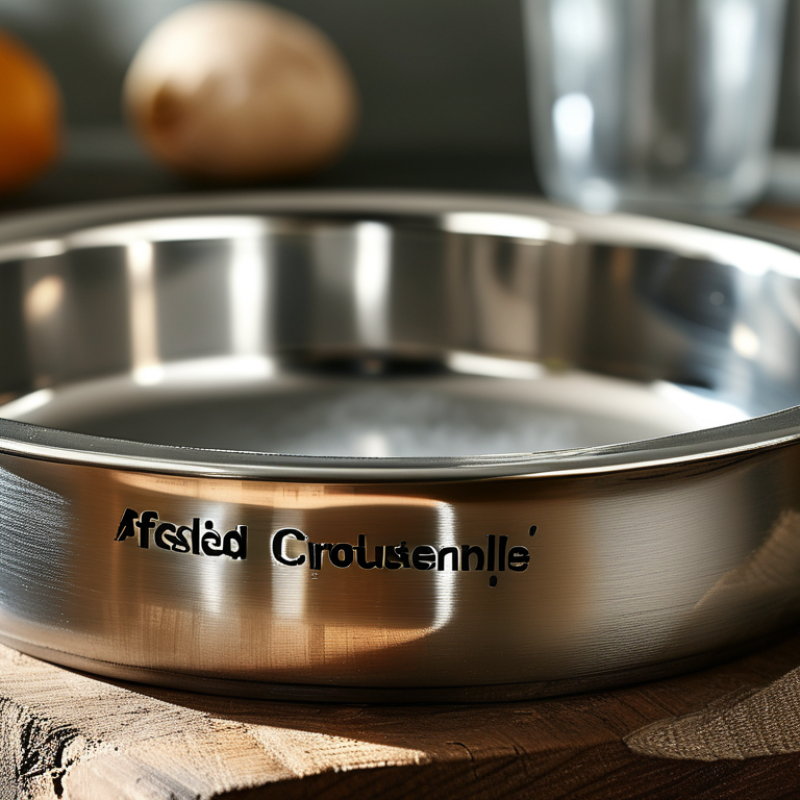
Food grade stainless steel is not a single, universal metal grade. It describes steel intended for contact with food under specified conditions. The real meaning depends on composition, manufacturing quality, and local food-contact requirements. Common kitchen grades resist rust because chromium forms a thin protective surface. Some grades also contain nickel, which can improve durability and shine. A polished finish feels smooth, but appearance alone proves little.
When choosing utensils, check the material description and food-contact documentation. Reliable sellers should identify the steel grade or applicable safety standard. “Stainless steel” without further details is less useful. In daily kitchen use, inspect spoons and tongs near welds, seams, and edges. Rough spots can trap food residue. Deep scratches and tiny pits deserve attention. They may appear after harsh cleaners, salt exposure, or repeated contact with acidic foods.
A magnet test is only a rough clue. It cannot confirm food safety or steel quality. Some genuine stainless steels are magnetic, while others are not. I would also avoid utensils with flaking coatings or unexplained discoloration. Wash new pieces before use, then dry them instead of leaving them in a wet sink. This small habit helps prevent surface staining. Still, no utensil lasts forever. I have found that attractive polishing can hide minor finishing flaws, so a close inspection under bright light is worth the extra minute.
Choosing food grade stainless steel begins with the grade, not the shine. The surface may look identical, but its composition affects corrosion resistance, durability, and food-contact performance.
Grade 304 Grade 304 is a common choice for spoons, bowls, cookware, and preparation tables. It usually contains chromium and nickel, often described as 18/8 or 18/10. These numbers are useful clues, but they do not prove quality alone.
Grade 316 Grade 316 offers stronger resistance to salt, acids, and harsh cleaning conditions. It can suit seafood preparation or kitchens near the coast. However, it usually costs more.
Grade 430 contains chromium but little or no nickel. It resists everyday corrosion reasonably well and may work for dry utensils or outer surfaces. It can perform poorly when exposed to salty water for long periods.
Grade 201 is another lower-cost option, but its performance varies with manufacturing quality and use conditions. I would avoid judging it from price alone.
Look for clear grade markings, smooth welds, and a clean, even finish. Scratches, pits, and rough edges can trap food residue. Test the utensil after washing, not only when it is new.
A faint metallic smell is not a reliable safety test. Food-contact compliance also depends on manufacturing, surface treatment, and cleaning practices.
No grade is perfect. Even 304 needs proper care. Rinse salt and acidic foods soon, dry the surface, and replace utensils with deep corrosion or peeling coatings.
How to Choose Food Grade Stainless Steel Utensils?
Utensil construction matters before appearance. Check whether the handle is firmly welded, fully sealed, and free from hidden gaps. A loose joint can trap food residue and moisture. Look closely at the bowl, rim, and handle connection. Thin edges may bend under daily pressure. A slightly heavier utensil often feels more stable, though weight alone proves nothing.
The International Stainless Steel Forum notes that stainless steel requires at least 10.5% chromium for its protective surface layer. Ask suppliers for the steel grade and material certificate, rather than trusting “food grade” wording. The FDA Food Code 2022 emphasizes smooth, easily cleanable, and corrosion-resistant food-contact surfaces. Deep scratches, pinholes, and rough welds fail that practical test. They also make cleaning less reliable.
Finish can mislead the eye. A mirror surface looks clean, but it may hide poor construction. Run a clean fingertip along the rim and inspect it under strong light. A satin finish is acceptable when it is even and free from pits. The NSF/ANSI 2 food equipment standard also focuses on cleanability and corrosion resistance, not shine alone. I would still test a sample repeatedly, because one showroom inspection is not enough. This is where my judgment can be imperfect. Real durability appears after washing, stacking, and repeated handling.
Choosing food grade stainless steel utensils requires more than checking a polished surface. The term “food grade” can be broad and unclear. Ask for the exact steel designation, such as 304 or 316, and confirm its intended food-contact use. A magnet test is not enough. Some acceptable stainless steels may react slightly to magnets.
Reliable documentation matters. Look for a declaration of compliance covering food contact, temperature, acidity, and use conditions. The document should identify the manufacturer, material, testing date, and applicable regulations. Independent migration testing is more convincing when performed by an ISO/IEC 17025-accredited laboratory. Check whether the certificate matches the actual product, not just a similar model. Batch or lot traceability adds useful evidence.
Inspect the utensil closely. Smooth edges, clean welds, and an even finish reduce places where food residue can remain. Deep scratches and rough seams deserve attention. I once assumed a heavier spoon was safer, but weight proved nothing about nickel release or corrosion resistance. Testing should consider salt, vinegar, heat, and repeated washing. Certificates can also expire, or cover only one production batch. That is easy to overlook. Ask practical questions about coating, recycled content, and cleaning limits before purchase. If the seller avoids specific answers, treat that uncertainty as part of the evaluation.
| Evaluation Dimension | What to Check | Relevant Standard or Evidence | Practical Evaluation | Recommended Decision |
|---|---|---|---|---|
| Stainless Steel Grade | Confirm the declared steel designation, such as 304, 316, or 430. | Request a material certificate, mill test certificate, or independent alloy-composition test. | Type 304 is commonly used for food-contact utensils because of its good corrosion resistance. Type 316 contains molybdenum and generally offers better resistance to chlorides and salty environments. Type 430 is magnetic and can be suitable for certain dry-food or lower-corrosion applications. | Prefer verified 304 or 316 |
| Unknown or Lower-Cost Alloy | Look for vague descriptions such as “premium steel” or “food-safe metal” without a grade. | No identifiable alloy designation, material certificate, or test report. | Steel grade cannot be reliably confirmed by appearance or magnetism alone. Some grades may be suitable for food contact, but the absence of traceable material information increases uncertainty. | Use caution |
| Food-Contact Compliance | Check whether the finished utensil, not only the raw steel, is suitable for direct food contact. | For the United States, documentation may reference applicable FDA food-contact requirements, including 21 CFR provisions relevant to the material and intended use. For the European Union, relevant frameworks include Regulation (EC) No 1935/2004 and Regulation (EC) No 2023/2006. | Compliance should cover the complete product, including welds, coatings, handles, decorative parts, and any adhesives or plating. | Require product-specific documentation |
| Third-Party Certification | Verify the certificate number, product scope, issuing body, validity period, and manufacturing site. | NSF/ANSI 51 is a recognized standard for food equipment materials used in commercial food-service applications. Other market-specific conformity documents may also apply. | A certificate should identify the actual product category or material. A general factory certificate or unrelated management certificate does not automatically prove food-contact safety. | Prefer independently verified certification |
| Migration and Extractables Testing | Review testing for metal release under intended conditions of use. | Look for a laboratory report identifying the test method, food simulant or extraction solution, temperature, contact time, detection limits, and results. | Testing should reflect realistic use, including hot, acidic, salty, or alkaline foods when relevant. A passing result is meaningful only when the tested sample matches the supplied product. | Check conditions and test sample identity |
| Nickel and Chromium Release | Assess whether the utensil may release metals during repeated contact with food. | Request a relevant migration or release test, particularly for products intended for acidic or salty foods. | Stainless steel commonly contains chromium and may contain nickel. The presence of these elements does not by itself establish a safety problem; release under actual use conditions is the more relevant factor. | Evaluate release data, not composition alone |
| Surface Finish | Inspect for a smooth, uniform, non-porous surface without pits, deep scratches, flaking, or exposed base metal. | Visual inspection, surface-finish specification, and quality-control records. | Smooth surfaces are easier to clean and less likely to retain food residues. Rough polishing marks, pits, and crevices can increase hygiene risks and localized corrosion. | Choose smooth and defect-free surfaces |
| Welds and Joints | Check whether welds are continuous, clean, sealed, and free from cracks or sharp edges. | Manufacturing inspection records and visual examination of welded areas. | Unsealed or poorly finished joints may trap food, moisture, and cleaning chemicals. Weld discoloration should be properly cleaned and passivated where required. | Avoid crevices and unfinished welds |
| Passivation and Corrosion Resistance | Determine whether the surface has been properly cleaned and passivated after fabrication. | Manufacturer process records or an independent corrosion-resistance test appropriate to the product. | Passivation helps restore a protective chromium-rich oxide layer after machining or welding. It does not turn an unsuitable alloy into a food-grade material. | Confirm process control for fabricated parts |
| Handles and Additional Materials | Review plastic, silicone, wood, coatings, rivets, adhesives, and decorative elements. | Separate food-contact declarations and test reports for each material that may touch food. | The metal body may be compliant while a handle coating, adhesive, or insert is not. Multi-material products require a complete food-contact assessment. | Evaluate every food-contact component |
| Intended Use Conditions | Match the utensil to temperature, acidity, salt exposure, dishwasher use, and storage conditions. | Product instructions, temperature limits, cleaning guidance, and test conditions in the technical file. | Even corrosion-resistant stainless steel can be damaged by prolonged exposure to chlorides, strong cleaners, stagnant moisture, or high heat beyond the product’s design limits. | Follow documented use limitations |
| Cleaning and Hygiene Design | Look for rounded edges, accessible surfaces, sealed hollow sections, and minimal food-trapping features. | Hygienic-design inspection and cleaning instructions. | Food-contact safety includes cleanability. A chemically compliant material can still create hygiene problems if the utensil is difficult to wash or dry thoroughly. | Select easy-to-clean designs |
| Traceability | Confirm batch numbers, production dates, supplier declarations, and a clear link between the product and test reports. | Declaration of compliance, batch records, certificate of analysis, and quality-control documentation. | Traceability supports recall, complaint investigation, and verification that the tested material is the same as the purchased product. | Require traceable documentation |
| Claims That Do Not Prove Safety | Be cautious with claims such as “non-toxic,” “eco-friendly,” “medical grade,” or “BPA-free.” | These claims are not substitutes for food-contact compliance, alloy verification, or migration testing. | ISO 9001 certification demonstrates a quality-management system, but it is not, by itself, a food-contact safety certification. A magnet test also cannot identify the complete alloy or prove food safety. | Do not rely on marketing claims alone |
| Documentation Quality | Check the report date, laboratory accreditation, test standard, product description, sample photographs, and result conclusions. | Prefer reports from competent or accredited laboratories with a clearly defined scope. | Generic, expired, altered, or incomplete documents should not be treated as proof of compliance. The report should correspond to the exact utensil, material, finish, and intended market. | Verify authenticity and scope |
Choosing food grade stainless steel utensils begins with the cooking task. A deep ladle needs a stable handle and a bowl that resists bending. A frying spatula should have a thin, smooth edge for lifting food without scraping the pan aggressively. For daily cooking, 304 stainless steel is commonly suitable because it handles moisture, heat, and ordinary kitchen acids well. In coastal homes or kitchens using salty ingredients often, 316 stainless steel may offer better resistance to chloride corrosion.
Serving utensils require different details. Look for rounded edges, balanced weight, and polished surfaces without pits. A salad server should feel comfortable during repeated lifting. Tongs need firm spring tension, but they should not pinch your fingers. For soup or sauce, choose a handle long enough to keep your hand away from steam. Small details matter.
Check the joints carefully. Food can collect around rough welds, loose rivets, or decorative grooves. I once chose a beautiful spoon with a hollow handle, then found it difficult to clean completely. That mistake changed my buying habits. Now I inspect the surface under bright light and avoid unclear coatings. Utensils should carry reliable food-contact information from the seller or manufacturer. “Stainless steel” alone is not enough. Thickness, alloy quality, finishing, and cleaning instructions all affect service life. Some pieces still discolor after harsh washing, so practical care matters as much as the material.
It means the steel is intended for food contact under specific conditions. Composition, manufacturing, surface treatment, and cleaning all matter. “Stainless steel” alone is vague.
Grade 304 is common for spoons, bowls, cookware, and preparation surfaces. Grade 316 handles salt and acidic conditions better. Grade 430 may suit dry utensils or outer surfaces. Grade 201 can vary greatly with manufacturing quality.
No. Polishing mainly affects appearance and smoothness. A bright surface can still hide rough welds or tiny pits. Inspect it under strong light.
No. A magnet gives only a rough clue. Some suitable stainless steels react to magnets, while others do not. It cannot confirm food-contact safety.
Ask for the exact steel grade and food-contact declaration. The document should mention temperature, acidity, and intended use. It should identify the manufacturer, testing date, and applicable requirements. Batch traceability is useful, though often overlooked.
Rough areas can trap food residue and moisture. Deep scratches and small pits may worsen corrosion. Run a clean finger along the edge. It should feel smooth.
Rinse away salt, vinegar, and acidic food soon after use. Wash the utensil, then dry it instead of leaving it in a wet sink. Harsh cleaners can damage the surface. I sometimes underestimated drying.
Replace it when deep corrosion, peeling coatings, or persistent pits appear. Unexplained discoloration deserves inspection, not panic. A faint metallic smell is not a reliable safety test. No utensil lasts forever.
Choosing Food-Grade Stainless Steel Utensils starts with understanding what makes stainless steel suitable for kitchen use. Food-grade materials should be corrosion-resistant, durable, easy to clean, and stable when exposed to common foods, heat, and moisture. Common options such as 304 and 316 stainless steel are often valued for their resistance to rust and staining, while the appropriate choice depends on the cooking environment and the types of food prepared. Buyers should also examine the utensil’s construction, including thickness, balance, handle attachment, weld quality, and surface finish. A smooth, polished surface is generally easier to clean and less likely to trap food particles.
It is also important to review available safety standards, testing information, and product certifications that verify suitability for food contact. Consider the utensil’s intended purpose, such as cooking, baking, grilling, serving, or handling acidic and salty foods. By matching the steel grade, design, durability, and certification information to daily kitchen needs, consumers can select reliable utensils that offer safe, practical, and long-lasting performance.