Top Trusted Hard Anodized Pressure Cooker Supplier & Exporters
Engineering High-Durability Commercial Pressure Vessels, Tri-Ply & Anodized Cookware Solutions for International Brands & Enterprise Distributors Since 1991
Industrial Catalog Showcase
Engineered Heavy-Duty Cookware & Pressure Vessels
Discover our enterprise-grade range of hard anodized, heavy cast iron, and induction-compatible pressure cookers engineered for maximum thermal distribution, corrosion resistance, and safety compliance.
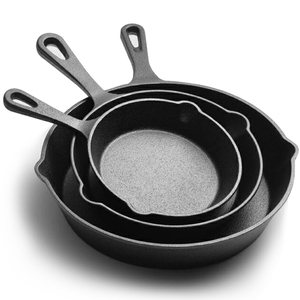
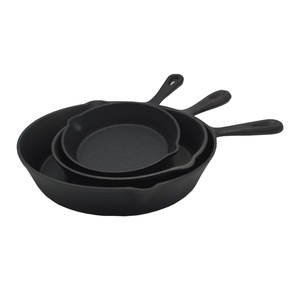
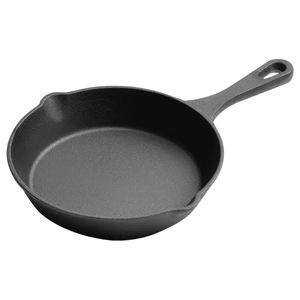
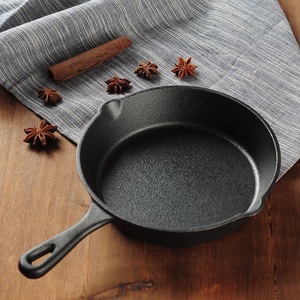
Heavy-Duty Cast Iron
Modern Kitchen Cast Iron Non-Stick Skillet 14/16/20cm Frying Pot
Multi-size ergonomic skillet engineered for induction and open flame. High thermal retention.
Material Science: The Electrochemical Transformation in Hard Anodization
In modern commercial cookery and industrial pressure cooking systems, material integrity determines performance longevity, energy efficiency, and consumer safety. Hard Anodized Pressure Cookers represent a major evolution over raw aluminum and standard stainless steel vessels. The hard anodization process is an advanced electrochemical oxidation procedure that fundamentally alters the molecular structure of the substrate metal.
Submerging high-grade aluminum alloys (predominantly AA3003 or AA6063 formulations) into an electrolytic bath of low-temperature sulfuric acid (0°C to 4°C) under high electrical current densities (2.5 to 3.5 A/dm²) induces controlled anodic oxidation. This process converts the outer aluminum layer into a crystalline lattice of Aluminum Oxide (Al₂O₃), bonded directly to the underlying structural core.
Technical Metric Insight: Standard anodizing produces an oxide coating of 10 to 15 microns. In contrast, heavy-duty commercial hard anodization reaches a depth of 50 to 60 microns. This micro-structural transformation yields a surface hardness rating of up to 600 HV (Vickers Hardness Scale)—exceeding structural stainless steel (approx. 200 HV) and making the cookers completely non-reactive to acidic, alkaline, and saline food components.
Thermal Dynamics & Conductivity Coefficients
One of the core search intents for B2B kitchenware importers and institutional procurement teams is thermal performance. Hard anodized pressure cookers leverage aluminum's exceptionally high thermal conductivity (225 W/m·K) compared to standard austenitic 304 stainless steel (16 W/m·K).
Rapid Heat Transfer
Distributes thermal energy 14 times faster than stainless steel, eliminating hot spots and preventing localized scorching during intense pressure cycles.
Energy Conservation
Reduces total pressurization time by up to 45%, translating to measurable gas and electricity savings across commercial kitchens.
Passivated Non-Reactivity
The inert Al₂O₃ skin prevents trace metallic leaching, maintaining organoleptic purity even during long cooking cycles with acidic sauces.
As a global supplier and exporter, manufacturing hard anodized pressure cookers involves strict adherence to international safety protocols. Pressure cookers operate under internal operating pressures ranging from 0.9 to 1.1 kg/cm² (13 to 16 PSI), generating internal temperatures upwards of 120°C (248°F). Structural failure is unacceptable.
Triple-Stage Safety Mechanisms
Sorabh Kitchen World's pressure vessel designs incorporate three redundant safety barriers to protect users in high-volume, commercial environments:
Precision Calibrated Weight Valve (PWV): Regulates steam buildup by venting pressure once it hits the standard 1.0 kg/cm² operating threshold, maintaining dynamic equilibrium.
Gasket Release System (GRS): In the event of vent tube blockage, the engineered lid slot allows the food-grade silicone gasket to bulge outwards, releasing excess steam safely downwards away from the operator.
Metallic Safety Plug (MSP): A secondary alloy plug containing a low-melting-point fusible core that melts instantly if temperatures exceed 130°C due to liquid dry-out, discharging internal pressure safely.
Thermal Impact Bonding for Induction Compatibility
Historically, anodized aluminum cookware was restricted to gas flame heating due to non-magnetic material properties. Modern procurement trends require full induction compatibility across commercial kitchens. Our engineering team utilizes a 2,000-ton hydraulic impact-bonding process to fuse a 430-grade magnetic stainless steel plate to the base of the hard anodized vessel core. This eliminates air gaps, prevents plate detachment during thermal expansion, and ensures seamless operation across induction, gas, halogen, and ceramic cooktops.
Technical Sourcing Matrix: Material & Performance Comparison
To assist B2B procurement managers, hotel supply executives, and import agencies in making informed sourcing decisions, the following data table compares key operational metrics across major commercial cookware materials:
Performance Attribute
Hard Anodized Aluminum
Tri-Ply Stainless Steel
Raw Cast Iron
PTFE Non-Stick Coatings
Surface Hardness (Vickers HV)
HV 550 - 600
HV 180 - 220
HV 350 - 450
HV 20 - 40
Thermal Conductivity (W/m·K)
225 W/m·K
16 - 45 W/m·K
52 W/m·K
150 W/m·K (Base Dependent)
Acid & Salt Corrosion Resistance
Exceptional (Passivated)
High (304 Grade)
Low (Requires Seasoning)
Moderate (Fails when scratched)
Thermal Shock Resistance
High
High
Moderate (Risk of cracking)
Low (Thermal degradation >260°C)
Scratch & Abrasion Tolerance
Metal Utensil Safe
High
High
Low (Plastic/Wood Only)
Lifespan in Commercial HORECA
10+ Years
10+ Years
15+ Years
1 - 2 Years
Global Procurement Trends & B2B Market Analysis (2025–2030)
The international commercial cookware market is experiencing a structural pivot. Importers, regional distributors, and hospitality buying groups are re-evaluating inventory models due to shifting regulatory mandates and consumer health awareness.
1. Transition Away from Fluoropolymer (PFAS/PFOA) Non-Stick Surfaces
Tightening environmental regulations across North America (US EPA actions) and the European Union (REACH restrictions on PFAS "forever chemicals") are accelerating the phase-out of traditional PTFE coatings in high-heat applications. Hard anodization provides an inherently stick-resistant, non-toxic surface without synthetic chemical films. This makes hard anodized pressure cookers a future-proof inventory choice for international retailers.
2. Demand for Private Labeling & OEM Customization
Global cookware brands increasingly seek reliable manufacturing partners capable of delivering custom dimensioning, proprietary lid-locking mechanisms, laser-etched capacity markings, and color-anodized exterior accents. Flexible production lines that accommodate both small-batch specialized orders and high-volume container shipments are outperforming rigid legacy suppliers.
3. Growth in High-Altitude & Commercial Pressure Cooking
Rising commercial restaurant operational costs have made cooking time reduction a prime financial KPI. Pressure cooking reduces energy consumption by up to 70% compared to open braising while preserving nutrients. Commercial-grade hard anodized units (ranging from 5-liter up to 30-liter capacity) are witnessing surging demand across Latin America, the Middle East, South Asia, and Africa.
Established in 1991, Sorabh Kitchen World (Saurabh Steels India) has operated as an industry pioneer for over three decades. Headquartered at S-85, Phase-1 Badli Industrial Area, Delhi-110042, India, our state-of-the-art manufacturing infrastructure seamlessly blends metallurgical engineering with precision craftsmanship.
33+ Years Metallurgical Expertise
Over three decades of specialized experience in stainless steel, hard anodization, and heavy-gauge aluminum manufacturing. Our engineering facility maintains strict quality control at every stage from ingot melting to anodizing bath chemistry monitoring.
700+ SKU Portfolio & 13+ Global Markets
Servicing an extensive network of 180+ domestic distributors and exporting to 13+ international markets. Our production capacity accommodates large-scale enterprise contracts, custom private labeling, and regional wholesale orders.
Rigorous Quality Assurance Standards
Every pressure vessel batch undergoes hydrostatic bursting pressure testing up to 6.0 kg/cm², salt spray corrosion testing (ASTM B117 standards), and food contact safety verification under FDA, LFGB, and BIS guidelines.
End-to-End OEM/ODM Solutions
From 3D prototype modeling and custom die creation to final laser etching, specialized handles, and export-compliant drop-test packaging, we deliver comprehensive OEM manufacturing solutions tailored to brand specifications.
B2B Sourcing & Technical Procurement FAQ
Q:
What distinguishes Hard Anodized Pressure Cookers from standard raw aluminum pressure cookers?
Hard anodization converts raw aluminum into an oxidized layer that is 50+ microns thick and 600 HV hard. Unlike raw aluminum, hard anodized pressure cookers are totally non-reactive to acidic and salty foods, will not pit or tarnish, feature twice the surface hardness of stainless steel, and offer a much longer operational life in demanding commercial kitchens.
Q:
Are your hard anodized pressure cookers compatible with induction cooktops?
Yes. We offer specialized induction-compatible hard anodized lines equipped with a thermal-impact-bonded AISI 430 magnetic stainless steel base plate. This plate is permanently fused to the anodized aluminum vessel bottom using high-tonnage hydraulic presses, enabling effortless operation across both induction and traditional gas/flame cooktops without delamination risk.
Q:
What safety certifications and pressure compliance standards do your cookers meet?
Our pressure cookers are manufactured in compliance with international safety standards, including Bureau of Indian Standards (BIS IS:2347), US FDA 21 CFR food contact guidelines, and European CE/LFGB directives. Every vessel features a triple-stage safety architecture (Precision Weight Valve, Gasket Release System, and Metallic Safety Plug) and undergoes hydrostatic burst testing before export clearance.
Q:
What is the typical minimum order quantity (MOQ) for OEM/ODM private label orders?
Standard OEM/ODM orders for custom branding, specialized lid handles, or custom packaging typically start at 500 to 1,000 units per model SKU. For standard catalog items, we offer flexible MOQ structures to support growing importers and regional distributors. Contact our sales team to discuss custom production runs.
Q:
Can metal utensils be used with hard anodized cookware without causing surface damage?
Yes. Because the anodized aluminum oxide surface rates at 600 HV on the Vickers scale, it resists scratching from standard stainless steel spatulas, spoons, and whisks. Unlike synthetic PTFE non-stick coatings, the anodized surface does not chip, flake, or peel under metal utensil contact.
Q:
How does thermal efficiency in hard anodized vessels compare to tri-ply stainless steel?
Aluminum has a thermal conductivity coefficient of approximately 225 W/m·K, compared to 16 W/m·K for stainless steel. This allows hard anodized pressure cookers to absorb and distribute heat significantly faster, reducing pressurization time and energy consumption during commercial batch cooking operations.
Q:
What custom branding and packaging options are available for global exporters?
We offer complete OEM customization services, including custom laser logo etching on the vessel body, custom brand embossing on the lid, personalized handle molds, multi-language instruction manuals, and export-grade 5-ply corrugated gift boxes designed to pass ISTA drop tests.
Q:
What is the factory location and primary shipping export hub?
Our primary manufacturing facility is located at S-85, Phase-1 Badli Industrial Area, Delhi-110042, India. Sea freight shipments are routed through major Indian commercial container ports (such as ICD Tughlakabad, Delhi / Nhava Sheva, Mumbai), ensuring streamlined logistics handling for worldwide destinations.
Partner with India's Premier Cookware Exporters
Looking for reliable OEM/ODM hard anodized pressure cooker manufacturing, bulk wholesale distribution, or custom institutional supply? Connect directly with our enterprise export division today.