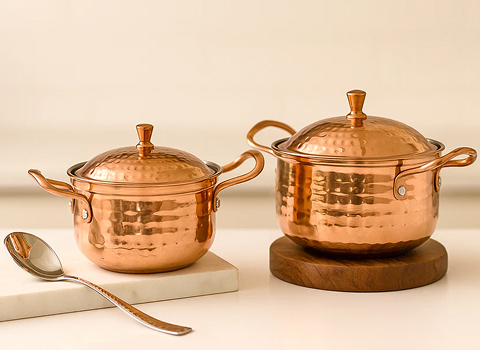
Engineered for high-volume commercial importers, private label brand owners, and global distributors demanding superior thermal retention and non-reactive food contact safety.
The global demand for high-performance enamel-coated Dutch ovens has transformed cast iron cookware manufacturing from a traditional foundry process into a precision engineering discipline. A top-tier enamel Dutch oven relies on the synergy between a high-density grey iron substrate (HT150 to HT200 standards) and a multi-layered vitreous enamel coating fused at temperatures exceeding 800°C (1,472°F).
Vitreous enamel is essentially a specialized form of molten glass permanently bonded to the cast iron surface. During the firing phase, the borosilicate frit melts, flows, and chemically reacts with the iron substrate to form an intermediate oxide transition zone. This microscopic anchor layer prevents mechanical flaking, resists thermal shock, and shields the porous iron against corrosive organic acids found in tomatoes, wines, and citrus braises.
Manufacturing Insight: Tier-1 OEM Dutch oven factories utilize DISA vertical green sand molding systems to ensure uniform wall thickness (typically 4.0mm to 4.5mm). Uniformity eliminates structural hot spots, reducing internal stress during high-temperature baking and preventing enamel crazing over extended lifecycle usage.
Modern automated factories execute a 3-coat, 2-bake or 2-coat, 2-bake enamel application process to guarantee structural integrity and color vibrancy:
For B2B buyers, procurement managers, and brand owners, selecting a reliable contract manufacturer requires rigorous auditing of factory testing standards. Below is a comparative technical framework utilized by global buyers to differentiate top-tier factories from budget foundries:
| Evaluation Parameter | Tier 1 OEM Master Factory | Mid-Tier Regional Manufacturer | Low-Cost Budget Foundry |
|---|---|---|---|
| Molding Technology | Automated DISA Vertical Sand Lines | Semi-Automated Jolt-Squeeze Machines | Manual Floor Sand Casting |
| Enamel Chemistry | 100% Imported Lead/Cadmium Free Frit | Domestic Standard Glass Frit | Uncertified Low-Temp Enamels |
| Thermal Shock Resistance | Delta T 220°C Quench Test (No Cracking) | Delta T 180°C Quench Test | Delta T <140°C (High Crazing Risk) |
| Acid Resistance Rating | Class AA (ISO 2742 Citric Acid Test) | Class A / Class B | Class C (Dulls quickly with acid) |
| Compliance Certification | FDA 21 CFR 175.300, LFGB, REACH, ISO9001 | Basic FDA / Domestic Standards | No Third-Party Compliance Docs |
A distinctive benchmark of a premium Dutch oven factory is the design engineering of the lid condensation system. Professional braising relies on continuous, closed-loop moisture retention. During cooking, vapor rises from the food, condenses on the underside of the lid, and drips back down onto the ingredients.
Leading factories incorporate computer-simulated micro-spikes, concentric rings, or teardrop nodes on the lid interior. This redistributes moisture evenly across the entire cooking surface—creating a self-basting "rain effect"—rather than allowing moisture to run down the sidewalls. Factories with advanced R&D capabilities custom-engineer these nodes to optimize drip density by up to 35% compared to smooth-lid alternatives.
Combining over 30 years of industrial metalworking expertise with continuous investment in automated enameling automation.
We source primary pig iron and refined steel scrap with strict control over carbon (3.2%-3.5%) and silicon contents. This prevents microscopic surface blowholes, guaranteeing an ultra-smooth iron body for enamel bonding.
Our vitreous enamel coatings are certified 100% PFOA-free, Lead-free, and Cadmium-free. All products comply with FDA, LFGB, DGCCRF, and California Proposition 65 food-contact directives.
From 3D CAD modeling and prototype sand-casting tooling to custom Pantone color-matching enamel glazes and private-label gift packaging, we deliver fully customized B2B manufacturing solutions.
As consumer demand shifts toward sustainable, non-toxic, and heirloom-quality kitchen tools, the global supply chain for cast iron cookware is undergoing three major technical evolutions:
Historically, heavy weight was considered an unavoidable tradeoff for heat retention. Advanced factories are now introducing high-pressure melt-injection techniques that reduce wall thickness by up to 20% while maintaining equal structural density. This produces a lighter Dutch oven that heats up faster, reduces shipping costs for B2B distributors, and caters to ergonomic consumer preferences.
While traditional cream-colored glossy interiors remain popular for braising visual inspection, matte black enamel interiors are rapidly gaining market share. Matte enamel features a slightly micro-porous surface structure that fosters natural oil seasoning over time, providing superior high-temperature searing performance without the staining risks associated with light glazes.
Top-tier factories are converting electric and gas kilns to closed-loop heat recovery systems. By capturing waste kinetic heat from the 850°C firing stage and redirecting it to pre-dry the wet enamel spray coats, forward-thinking manufacturers are cutting carbon emissions by 25-30% per unit produced—helping global brands meet Scope 3 sustainability mandates.
Partner with an established OEM manufacturer providing high-purity cast iron casting, vitreous enameling, and complete private label packaging services.
Get Catalog