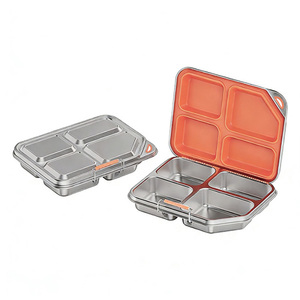
Top China Thermal Insulated Stainless Steel Lunch Box Factories & Supplier

Technical B2B Procurement Whitepaper, Vacuum Metallurgy Insights & International OEM/ODM Manufacturing Guide

OEM / ODM Product Catalog

Featured Commercial Thermal Lunch Box Solutions

Precision-engineered 304/316 vacuum insulated containers built for high thermal retention, leakproof reliability, and rigorous international food safety compliance.
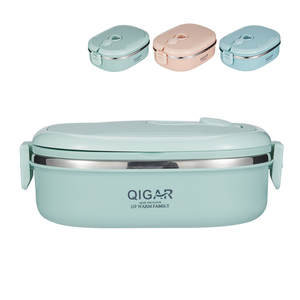
Custom Toddler Stainless Steel Compartments Vacuum Thermos Lunch Box

Custom Toddler Stainless Steel Compartments Vacuum Thermos Snack Bento Lunch Box Insulated Food Hot/Cold Back School Heatable

Grade: SUS 304 Inner / Food-Grade PP Features: Multi-Compartment, Heatable Base Compliance: FDA, LFGB, CPC Certified
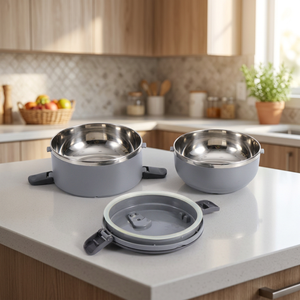
Promotional Insulated Food Warmer Container 304 Stainless Steel

Promotional Insulated Food Warmer Container Portable 304 Stainless Steel Lunch Box Kids Lunch Box

Insulation: Double-Wall Vacuum Layer Application: School, Promotional Gift Sealing: Leakproof Silicone Ring
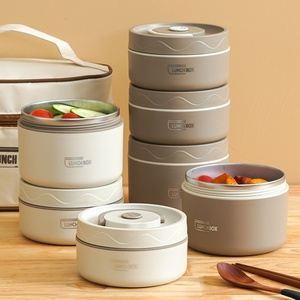
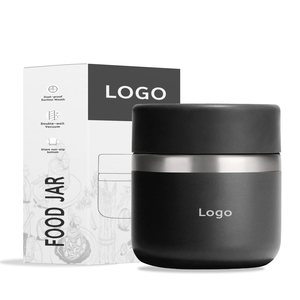
Portable Thermal Lunch Box for Adults Stainless Steel Food Jar

Portable Thermal Lunch Box for Adults Insulated 410/304 Stainless Steel Food Jar with Carry Bag for Work & Travel

Retention: Hot 12 Hrs / Cold 24 Hrs Accessories: Insulated Thermal Tote Bag Capacity: 1.5L - 2.2L Commercial Range
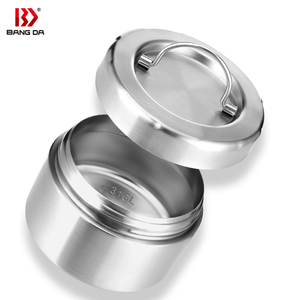
Superior Quality Thermo Box Stainless Steel Bento Lunch Box 600ML

Superior Quality Thermo Box Stainless Steel Bento Lunch Box Modern 600ML Food Container Box

Volume: 600ML Compact Ergonomic Finish: Electropolished Mirror Interior Design: Modern Minimalist Aesthetic
All Steel 316 Stainless Steel Insulated Lunch Box with Thermal Bag

All Steel 316 Stainless Steel Insulated Lunch Box with High Quality Thermal Bag for Food Storage BPA Free

Material: Marine-Grade SUS 316 Steel Safety: 100% BPA Free & Phthalate Free Durability: Anti-Corrosion Heavy Duty
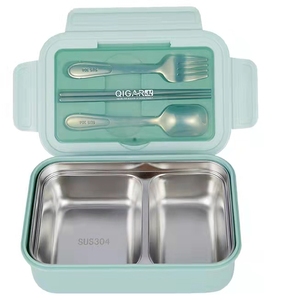
Food Grade 304 Stainless Steel Lunch Box with Cutlery

Food Grade 304 Stainless Steel Lunch Box Food Container Thermal Bento Box With Cutlery

Includes: Integrated SS Cutlery Set Lid System: Dual-Side Lock Buckles Usages: Office Lunch, Outdoor Camping
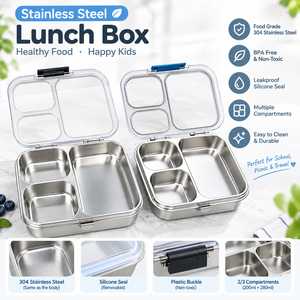
LFGB CPC 304 Stainless Steel Kid Partition Bento Box 1200ml

LFGB CPC 304 Stainless Steel Kid Partition Bento Box with Seal Buckle 1200ml 4 Compartment Lunch Box Food Container for Children

Layout: 4 Isolated Leakproof Zones Volume: 1200ml Large Kids Capacity Standard: Strict EU LFGB / US CPC
Reusable Vacuum Hot Keep Thermal Soup Insulated Food Jar

Reusable Vacuum Hot Keep Thermal Soup Insulated Food Jar Stainless Steel Lunch Box Food Container

Specialty: Pressure Relief Valve Cover Thermal Loss: < 2°C per Hour Retention Mouth: Extra Wide Cavity for Soups

Manufacturing Benchmark & Global Supply Reach

Delivering certified quality, high volume capacity, and engineered durability for global importers and distributors.

31+
Years Industry Excellence
700+
Active Cookware SKUs
180+
Global Distributor Partners
13+
Export Nations Reached

1. Technical Metallurgy & Double-Wall Vacuum Insulation Physics

In the competitive global supply chain for consumer food hardware, selecting premium China thermal insulated stainless steel lunch box factories & suppliers requires a thorough technical understanding of material composition, vacuum evacuation physics, and thermal transfer mitigation. Thermal performance in stainless steel lunch boxes is strictly governed by the thermodynamics of conduction, convection, and thermal radiation.

Leading manufacturers achieve sub-2°C hourly temperature loss by implementing a high-vacuum double-wall barrier. Between the inner vessel (food contact zone) and outer protective shell, the air gap is depressurized down to 10⁻⁴ Pa (Pascals) inside specialized high-temperature vacuum evacuation kilns. This high-vacuum environment eliminates convective and conductive heat exchange across the air cavity.

Information Gain Insight: Superior thermal retention relies heavily on internal thermal radiation barriers. Leading OEM factories apply a micro-thin, electrolytic copper coating to the outer surface of the inner 304/316 steel vessel. This copper layer acts as an infrared mirror, reflecting back up to 95% of radiant heat waves into the food contents, thereby extending thermal retention beyond 12 to 24 hours.

Austenitic Stainless Steel Grade Comparison for B2B Sourcing

Not all stainless steel lunch boxes offer equal chemical resistance or structural integrity. Importers must evaluate raw material specs to avoid corrosion, pitting, and heavy metal migration issues under acidic or saline food storage conditions:

Steel Grade Metallurgical Composition Corrosion Resistance Pitting Resistance (PREN) Recommended Target Application
SUS 316 (18/10) 16-18% Cr, 10-14% Ni, 2-3% Mo Exceptional (Marine Grade) > 23.0 High-end infant products, acidic/salted hot soup jars, hospital & pharmaceutical food containers.
SUS 304 (18/8) 18-20% Cr, 8-10.5% Ni High (Food-Grade Standard) 19.0 - 20.0 Standard multi-compartment bentos, adult work lunchboxes, daily student meal kits.
SUS 201 16-18% Cr, 3.5-5.5% Mn, 1% Ni Moderate (Prone to Acid Attack) < 14.0 Outer container housing only (non-food contact shell), budget promotional gift outer layers.
  • Electropolished Inner Cavities: Premium OEM suppliers utilize reverse electrolytic polishing to remove surface microscopic burrs, ensuring non-porous surfaces that resist bacterial bio-film accumulation and spice discoloration.
  • Tritan & PP5 Polymer Components: Lids and sub-dividers must employ 100% virgin Polypropylene (PP5) or Eastman Tritan™ co-polyester, strictly certified free of Bisphenol-A (BPA), Bisphenol-S (BPS), and phthalates.
  • Food-Grade Silicone Gaskets: High-tensile, platinum-cured silicone sealing rings maintain elasticity across extreme thermal ranges (-40°C to +220°C), ensuring leakproof integrity without compression set deformation over time.

2. Global Procurement & Industry Trends (2026–2030)

As global environmental regulations tighten and consumer preferences shift toward sustainable lifestyle products, commercial buyers must align their sourcing strategies with key emerging trends in thermal food container manufacturing:

A. Eco-Compliance & Single-Use Plastic Elimination

With the European Union’s Packaging and Packaging Waste Regulation (PPWR) and expanded plastic bag and container bans across North America, retail buyers are rapidly replacing plastic meal-prep containers with reusable 304/316 stainless steel bento systems. Importers sourcing from certified Chinese manufacturing plants gain significant competitive advantage by presenting 100% recyclable, zero-plastic food contact solutions.

B. Hybrid Heatable & Modular Bento Innovations

Modern consumers demand versatility. Next-generation lunch boxes feature multi-layered modular inserts with bottom-basin water injection warming channels. Users can pour hot water into the outer non-toxic PP shell to gently reheat food stored in the upper 304 stainless steel tray via thermal conduction, offering a safer alternative to microwave heating.

C. Smart Seals & Atmospheric Pressure Relief

A classic failure point in traditional thermal food jars is vacuum locking—where cooling air inside a sealed container contracts, making the lid nearly impossible to unscrew. Advanced OEMs now integrate silicone steam release valves and push-button pressure equalizers into food jar lids, guaranteeing effortless opening even when storing scalding soups.

3. Enterprise Manufacturing Standards & Quality Protocols

Leveraging over 31 years of metallurgical production legacy (rooted in established industrial hubs since 1991), top-tier Chinese stainless steel manufacturers utilize fully automated production lines to deliver consistent precision at scale. Commercial buyers evaluating potential OEM/ODM partners should mandate the following quality control protocols during factory audits:

Hydroforming & Seamless Stamping

Utilizing high-pressure hydraulic forming allows deep drawing of complex multi-compartment stainless steel trays without wall thinning or structural stress fractures, preserving structural integrity under heavy drops.

Automated Robotic Laser Welding

Precision fiber-laser welding creates ultra-clean, micro-narrow seam joints between container rims and outer shells, eliminating micro-gaps where moisture could breach the vacuum cavity.

100% Online Infrared Thermal Auditing

Every individual vacuum vessel passes through automated infrared thermal imaging conveyors. Containers displaying heat leak anomalies are automatically ejected from the assembly line.

International Compliance & Certification Framework

To pass customs clearance seamlessly across North America, Europe, and the Asia-Pacific region, imported stainless steel food hardware must maintain verifiable third-party testing documentation:

  • EU LFGB & Regulation (EC) No 1935/2004: Strict chemical testing verifying non-detection of heavy metals (Lead, Cadmium, Extractable Nickel, Chromium, Manganese) during thermal acid simulant testing.
  • US FDA 21 CFR 175.300 & CPG Sec. 545.400: Direct food contact safety certification for interior metals, silicone seals, and plastic closures.
  • Children’s Product Certificate (CPC) & ASTM F963: Mandatory for kid-targeted partition bento boxes, certifying round edge radiuses, drop resistance, small part safety, and non-toxic powder coating finishes.

5. Frequently Asked Questions (B2B Procurement FAQ)

Addresses critical procurement considerations for corporate buyers, brand managers, and global supply chain directors.

Q: What is the typical Minimum Order Quantity (MOQ) for custom OEM thermal lunch box production?
Standard factory MOQs for catalog models with custom laser logo engraving start at 1,000 units per SKU. For custom Pantone powder coating or bespoke mold development, MOQs generally range between 2,000 and 5,000 units depending on tool complexity.
Q: How do manufacturers verify vacuum insulation retention standards before shipment?
Factories adhere to international standard EN 12546-1. Containers are filled with >95°C water at ambient room temperature (20°C). To pass Grade-A inspection, water temperatures must remain above 65°C after 6 hours and above 50°C after 12 hours.
Q: What surface treatment methods offer the best scratch resistance for retail brands?
Electrostatic Powder Coating provides superior durability, tactile grip, and scratch resistance compared to traditional spray painting. For premium branding, 3D UV printing and fiber laser engraving ensure wear-resistant logo presentation.
Q: Can stainless steel thermal lunch boxes be safely washed in commercial dishwashers?
Uncoated SUS304/316 interior vessels are 100% dishwasher safe. However, for vacuum insulated double-wall bodies with external powder coating or decorative graphics, hand-washing is recommended to preserve bottom vacuum sealing caps and outer paint integrity over prolonged wash cycles.
Q: What are the lead times for custom mold prototyping versus bulk OEM delivery?
3D CAD design and prototype sample creation require 7–10 days. Steel mold tooling fabrication takes 25–35 days. Once pre-production samples are approved, mass production lead times typically average 30–40 days upon deposit confirmation.
Q: How do multi-compartment lunch boxes prevent cross-leakage between soup and solid food sections?
Factories utilize custom-molded food-grade silicone lid liners engineered with individual perimeter seal channels that mirror the partition walls of the stainless steel tray beneath. Under buckle compression, each zone creates an independent leakproof seal.

Partner with China's Premier Stainless Steel Lunch Box Manufacturer

Ready to scale your retail lineup or source certified OEM thermal food containers? Contact our engineering and sales consultancy team today to request catalog specs, custom mold quotes, or factory audit documentation.
Contact Us