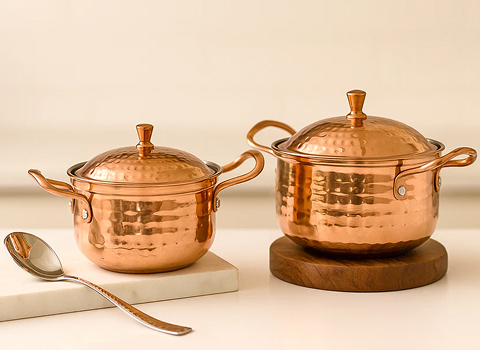
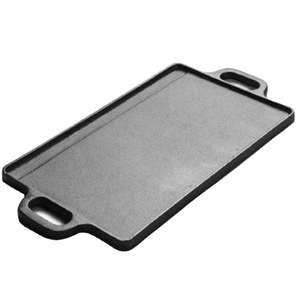
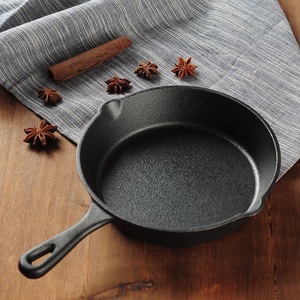
Explore our flagship heavy-duty cookware engineered for high-volume foodservice operations, ghost kitchens, and hospitality procurement projects.
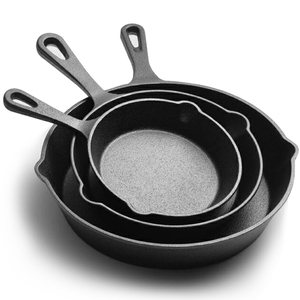
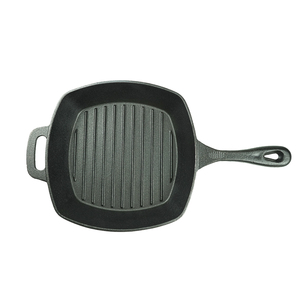
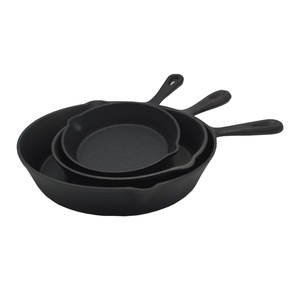
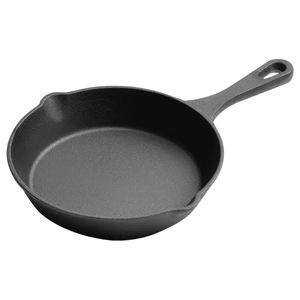
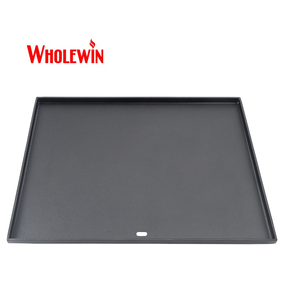
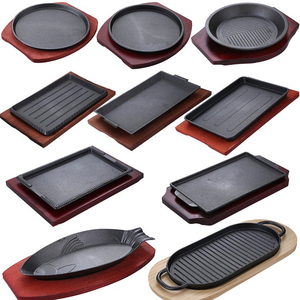
Leveraging over three decades of metallurgical innovation, automated sand casting, and precision forging to deliver restaurant-grade durability.
Manufactured using food-safe, toxin-free grey iron, 304/316 grade stainless steel, and heavy-gauge aluminium. Fully certified non-toxic coatings compliant with global FDA and LFGB chemical safety standards.
Complete private-label customization including laser-engraved bottom logos, custom mold shaping, ergonomic helper handle designs, precise dimensional calibration, and branded retail packaging solutions.
Every commercial batch undergoes extreme thermal shock resistance tests, wall thickness uniformity checks, drop impact evaluations, and non-stick surface abrasion testing to ensure zero failure rates.
In the modern global foodservice and hospitality sector, procurement executives face an increasingly complex set of challenges. Sourcing commercial-grade culinary tools is no longer merely a task of item purchasing; it requires rigorous technical evaluations of alloy composition, structural fatigue limits, thermal conductivity profiles, and compliance with stringent international health codes. As a premier manufacturer established in 1991 under the heritage of Sorabh Kitchen World (Saurabh Steels India), our manufacturing ecosystems are optimized to meet the high-volume demand of commercial kitchens, hotel chains, distributor networks, and private-label cookware brands across 13+ global export markets.
Information Gain Benchmark: Restaurant-grade cookware must withstand up to 14 hours of continuous thermal cycles daily without warping, surface delamination, or handle rivet loosening. Learn how our tri-ply bonding and high-density grey sand casting redefine durability metrics.
Selecting the optimal substrate material directly impacts kitchen operational efficiency, energy consumption, and long-term capital expenditure. Below is an engineering overview comparing the primary material classifications produced within our OEM facilities:
| Material Classification | Metallurgical Composition | Thermal Retention & Distribution | Commercial Cookware Applications | Maintenance & Lifespan |
|---|---|---|---|---|
| Pre-Seasoned Cast Iron | High-density Grey Iron Alloy (2.5-4% Carbon, 1-3% Silicon) | Exceptional heat retention, gradual even radiant heat release. | Steak houses, sizzling sizzler platters, outdoor BBQ, stovetop-to-oven baking. | Requires periodic seasoning re-application; virtually indestructible lifetime lifespan. |
| Tri-Ply Bonded Steel | SS304 (Interior) + Pure Aluminium Core + SS430 Magnetic Base | Instant thermal transfer across 100% of vessel surface; zero hotspots. | High-volume sautéing, sauce reduction, induction cooktop operations. | 100% dishwasher safe, corrosion-proof, minimal maintenance; 10+ year lifespan. |
| Hard Anodized Aluminium | Electrochemically Hardened Aluminium Substrate (Twice as hard as steel) | Rapid thermal response, uniform heat conduction. | Commercial frying pans, egg pots, high-turnover breakfast stations. | Scratch-resistant, non-reactive to acid foods; excellent operational lifespan. |
As the commercial catering and restaurant sector adapts to rapid technological updates and changing operational constraints, procurement leaders must anticipate key industrial shifts over the coming decade:
1. Universal All-Stovetop & Induction Compatibility: The transition toward energy-efficient induction cooking lines in commercial kitchens demands cookware equipped with high-permeability magnetic bases. Our modern cast iron skillets and tri-ply stainless cookware feature micro-ground flat bases designed for maximum energy coupling on induction surfaces.
2. Chemical Transparency & PFOA-Free Eco-Coatings: Regulators globally are tightening bans on legacy non-stick chemical compounds. Modern OEM procurement mandates natural pre-seasoned vegetable oil finishes for cast iron cookware and ceramic-infused, PBT/PFOA-free coatings for light metal utensils.
3. Integrated Ergonomics & Helper-Handle Mechanics: Reducing chef fatigue and kitchen liability risks has elevated handle engineering. Commercial pans now feature dual-spout pour channels, cast stainless steel handles with thermal breaks, and counter-balancing helper handles designed to handle heavy batch cooking.
4. Modular & Stackable Inventory Formats: Commercial kitchens, particularly urban ghost kitchens and cruise lines, demand space-efficient storage. Nesting utensil designs and standardized lid diameters significantly reduce storage footprints and freight transport costs during large-scale global shipments.
To provide distinct operational advantages for hospitality buyers, our product engineering teams continually refine structural design standards:
Micro-Textured Cast Surface Finishing: Traditional rough cast iron surfaces require extensive seasoning cycles before non-stick performance is achieved. Our advanced sand-casting molding processes produce ultra-smooth, micro-porous iron surfaces that lock in vegetable oils during automated factory seasoning, delivering immediate out-of-the-box non-stick performance for commercial frying.
Heavy-Duty Stainless Riveting & Seamless Joints: Spot-welded handles often succumb to structural failure under heavy thermal shock or weight load. We utilize heavy-gauge solid stainless steel rivets set with hydraulic pressure, ensuring handles remain permanently secure under grueling kitchen conditions.
Multi-Size Utility Sets: Modern commercial purchasing favors matched multi-piece configurations (such as 6-inch, 8-inch, and 10-inch skillet sets). These matched sets streamline portion management, standardized cooking times, and kitchen operational consistency.
Detailed answers to technical, commercial, and logistical questions for global buyers, wholesale distributors, and OEM partners.
For custom logo laser engraving or embossed bottom branding on standard cast iron and tri-ply cookware shapes, our baseline MOQ starts at 500 units per SKU. For custom tool engineering or bespoke pan dimensions, MOQs typically range from 1,000 to 2,000 units depending on mold complexity.
Yes. Our cast iron products undergo factory seasoning using 100% natural, non-GMO vegetable oils. They are completely free of lead, cadmium, PFOA, PTFE, and synthetic additives, fully meeting US FDA, EU LFGB, and ISO food contact compliance standards.
Absolutely. All featured cast iron skillets, griddles, and tri-ply utensils feature flat-ground ferromagnetic bases, making them 100% compatible with induction cooktops, gas ranges, electric ceramic tops, and open-flame commercial grills up to 500°F (260°C).
We provide complete OEM packaging support including custom printed 5-ply corrugated mailer boxes, full-color sleeve wraps, protective drop-test-certified inner foam inserts, eco-friendly kraft paper wraps, and custom barcode packaging labels ready for immediate retail fulfillment.
Every item is treated with an initial high-temperature factory oil seasoning bake, followed by hermetically sealed moisture-vapor-barrier poly-bagging with food-grade desiccant packets inside heavy export carton master cases to guarantee 100% corrosion-free delivery worldwide.
Standard lead time for catalog orders is 20 to 30 days post-deposit confirmation. Custom OEM orders requiring new mold creation take approximately 35 to 45 days, which includes prototype sample validation and final mass production runs.
When sourcing commercial cookware from Sorabh Kitchen World (Saurabh Steels India), commercial buyers gain direct access to a vertically integrated manufacturing infrastructure established over 31 years ago in 1991. Our facilities integrate high-capacity foundry casting, hydraulic stamping, automated polished finishing, and multi-stage quality assurance under one roof.
Our expansive distribution network spans over 180+ domestic dealers and an expanding footprint across 13+ global export destinations. With an active inventory of more than 700+ commercial culinary SKUs, we offer unmatched agility, custom mold fabrication, and strict adherence to international metallurgical standards.
Partnering with a proven OEM manufacturer ensures supply chain security, consistent wall thickness tolerances, verified material chemistry, and competitive factory-direct pricing for your brand.