OEM Stock / Custom
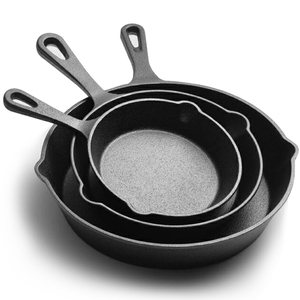
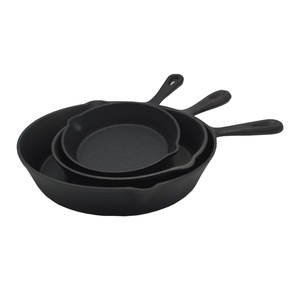
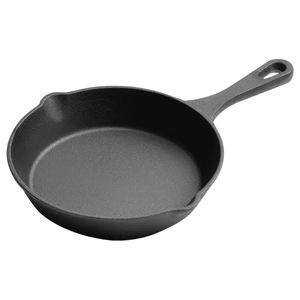
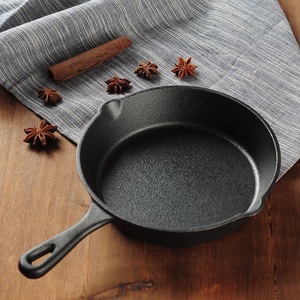
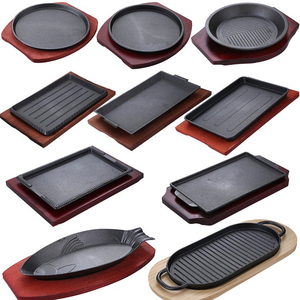
Modern Kitchen Non-Stick Skillet 14/16/20cm Frying Pot
- Dual-Spout Pouring System
- Induction & All-Stovetop Ready
- High Density Surface Finish

Wholesale grade cast iron, clad tri-ply cookware, and commercial pans engineered for extreme thermal efficiency and heavy-duty kitchen environments.
In the high-stakes world of commercial kitchenware procurement and global cookware retail, the term "Triply Stainless Steel Saute Pan" represents the absolute golden mean of thermal dynamics, mechanical longevity, and hygienic food contact compliance. As global consumer markets shift rapidly away from single-layer encapsulated disc bottoms toward full-body clad cookware, commercial buyers must navigate complex material specifications, metallurgical bonding methods, and international compliance frameworks when evaluating OEM/ODM manufacturing partners in China and Asia.
This technical whitepaper provides B2B procurement directors, brand owners, and wholesale importers with a comprehensive analysis of multi-clad sauté pan construction, factory quality verification metrics, future supply chain trends, and cost-efficiency parameters required for scalable private-label manufacturing.
Unlike standard stainless steel sauté pans that feature an encapsulated aluminum disc welded strictly to the base, a true premium triply clad sauté pan utilizes high-pressure roll-bonding technology to fuse three distinct metallic layers across the entire vessel geometry—from the center base straight up to the top flared pouring rim.
Acts as the non-reactive food contact surface. High nickel content (8-10%) prevents corrosion against acidic foods, salt brine, and harsh commercial dishwashing determents.
Boasting a thermal conductivity coefficient of ~225 W/m·K, the continuous aluminum core eliminates lateral hot-spots, ensuring instant lateral heat dispersion up the vertical walls.
Provides structural integrity and magnetic permeability necessary for high-efficiency induction cooktop coupling, preserving flatness under intense thermal shock.
Key Technical Advantage: Triply sauté pans reduce localized thermal scorch marks by over 68% compared to single-ply pans with impact-bonded bases, resulting in superior commercial culinary outcomes and energy efficiency.
When placing purchase orders with Chinese export factories, buyers should specify exact material gauges, surface treatment processes, and handle attachment protocols. Below is a detailed matrix representing benchmark OEM export configurations:
| Parameter / Dimension | Standard Commercial Spec | Premium Executive Spec | Testing & Compliance Standard |
|---|---|---|---|
| Total Clad Wall Thickness | 2.2mm - 2.5mm | 3.0mm - 3.5mm Heavy Duty | Micrometer Precision Gauge (±0.05mm) |
| Cladding Material Ratio | 15% SS304 / 70% Alu / 15% SS430 | 20% SS304 / 60% Pure Alu / 20% SS430 | Metallurgical Spectrometer Scan |
| Handle Riveting Standard | Dual Solid SS Rivets (Pneumatic) | Triple Solid Heavy SS Rivets + Backing Plate | Shear Force Pull Test (>350kg) |
| Rim Treatment | Cut & Deburred Edge | Sealed / Rolled Non-Drip Pouring Rim | Corrosion Exposure Testing (Salt Spray 48H) |
| Surface Polish Finish | Satin Interior / Mirror Exterior | Electro-Polished Satin / High-Mirror Polishing | Surface Roughness Ra < 0.4 µm |
| Stovetop Compatibility | Induction, Gas, Electric, Ceramic | All Stovetops + Oven Safe up to 260°C (500°F) | Thermal Deformation Warp Test |
Established manufacturing facilities, leveraging decades of metallurgical development (such as our 31+ year operational foundation established in 1991), deploy advanced deep-drawing hydroforming presses and automated robot-arm polishing lines. The transformation of raw clad coil stock into a finished high-performance sauté pan involves several critical engineering checkpoints:
The global cookware import ecosystem is undergoing structural shifts driven by evolving health regulations, supply chain transparency requirements, and consumer demand for durable kitchen assets. Procurement officers should integrate the following macro trends into their purchasing strategies:
With aggressive legislative bans on persistent fluorinated compounds across North America and the European Union, cookware brands are transitioning toward physical non-stick alternatives. China factories are pioneering micro-etched laser honeycomb grids on triply sauté pans. These laser-etched raised stainless ridges protect recessed non-stick or ceramic cavities from metal utensil abrasion, offering 5x the lifespan of conventional soft coatings.
Logistics costs and ESG reporting requirements have prompted factories to develop optimized multi-clad compositions—such as Triply Anodized Aluminum-Core Hybrids—that deliver 3.0mm thermal performance while reducing net shipping weight by 14-18%, yielding substantial container freight savings during transpacific shipments.
Importers no longer request standard brown-box master cartons. Modern OEM exporters now offer comprehensive retail-ready packaging services, including drop-test certified ISTA-6A color gift boxes, laser-engraved QR codes for digital warranty registration, and FSC-certified recyclable internal cardboard suspension trays.
Direct technical answers for commercial buyers, importers, and brand sourcing specialists regarding OEM orders and factory processes.
Standard factory MOQs for custom triply cookware usually start at 500 to 1,000 pieces per size for existing tooling molds. For fully customized shapes, specialized handle casting, or custom color-box retail packaging, MOQs generally sit at 1,500 to 2,000 pieces. Sample prototyping production runs can be arranged upon technical drawing approval.
A sauté pan features vertical, straight side walls (90° relative to the base) and a wider flat surface area, designed to hold liquids, braise meats, and prevent splashing during shallow frying. A frying pan (skillet) features sloped, curved walls designed for rapid pan-flipping and spatulas. Sauté pans also include a helper handle on larger diameters (28cm-32cm) due to higher fluid capacity.
Reputable factories conduct certified raw material batch testing via independent labs (SGS, TUV, Intertek). Stainless steel 304/316 alloys undergo X-ray fluorescence (XRF) spectroscopy to ensure zero heavy metal leaching (lead, cadmium, nickel thresholds compliant with EU 1935/2004 and FDA 21 CFR 175.300 standards).
Yes, comprehensive OEM/ODM customization is standard. Options include hollow cast stainless steel handles, stay-cool silicone over-molded handles, laser-etched bottom logos, electro-etched capacity scale marks inside the pan, and tempered glass lids with stainless steel rims (flat Euro-style or high-dome vent lids).
Standard export QC protocols involve: (1) Thermal Shock Resistance Test (heating pan to 250°C and quenching in cold water to check base flatness), (2) Rivet & Handle Torque Shear Test, (3) Salt Spray Anti-Corrosion Chamber Testing (24-48 hours), (4) Coating Cross-Hatch Adhesion Test (for non-stick hybrid variants), and (5) ISTA Package Drop Tests.
Once pre-production samples and artwork proofs are approved, standard mass production lead time is 35 to 45 days for initial OEM orders. Repeat orders with established packaging workflows can be turned around in 25 to 30 days. Peak shipping quarters (Q3-Q4) may require an additional 10-day buffer.
Access our complete 700+ SKU catalog, request technical CAD specs, factory audit certifications, and direct FOB wholesale price quotes today.
Get Catalog & Wholesale Pricing