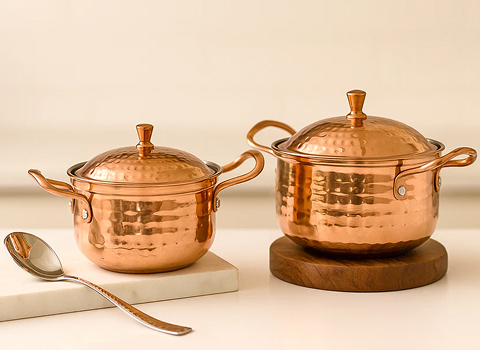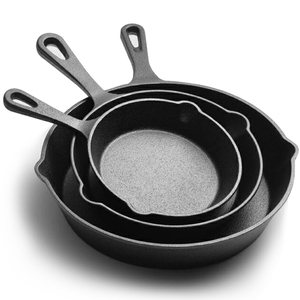
Modern Non-Stick Skillet & Grill Pan (14/16/20cm)
- Material: Heavy-Gauge Anodized Core
- Base: Full Induction Stainless Disk
- Size Range: 14cm, 16cm, 20cm
- Application: Breakfast Egg & Searing

Engineered for global wholesale buyers, brand owners, and commercial hospitality distributors. Featuring electrochemical hard-anodized aluminum and heavy-duty cast iron architectures.
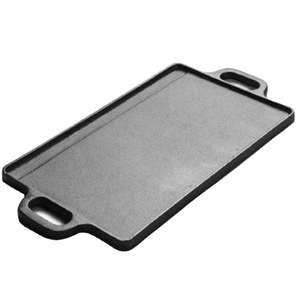
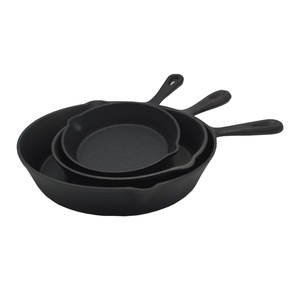
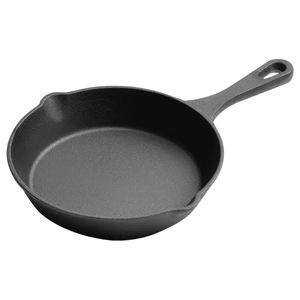
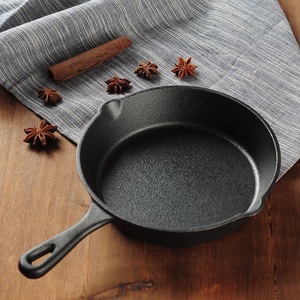
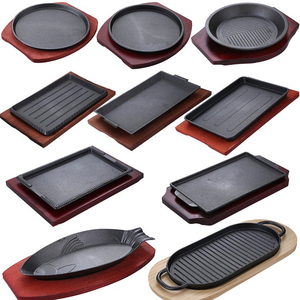
Building on over 31+ years of cookware manufacturing mastery since 1991, our global production infrastructure connects advanced metallurgical engineering with volume wholesale requirements across 13+ tier-1 international markets.
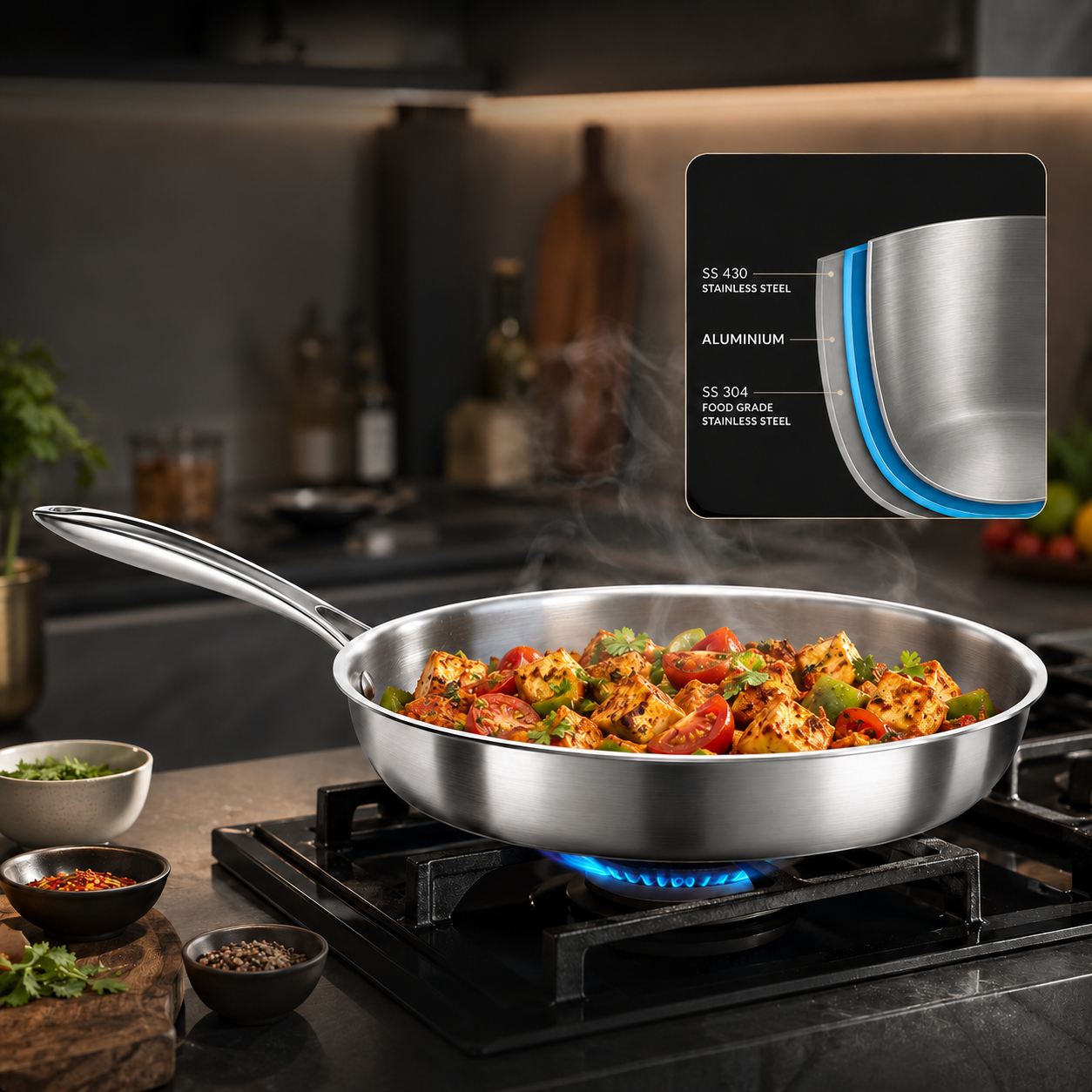
Electrochemically converted aluminum oxide surfaces reaching Vickers hardness rating of HV450–HV500, twice as durable as stainless steel.
Designed for high-intensity commercial kitchens, withstand thermal deformation up to 450°C without warp or structural fatigue.
In-house CAD/CAM tooling facility supporting rapid prototyping, deep rib profile engineering, and custom induction plate cold-bonding.
Understanding the electrochemical conversion process, thermal dispersion physics, and why hard-anodized aluminum is replacing traditional metals in commercial and premium retail sectors.
Unlike standard non-stick aluminum pans that rely solely on top-coat paint adhesion, a hard anodized grill pan undergoes sulfuric acid bath electrolysis at near-freezing temperatures (0°C–5°C) under high electrical current density (2.5–3.0 A/dm²).
This process transforms the raw aluminum substrate (AA3003 or AA5052 alloy) into an oxidized sapphire-like ceramic layer (Al₂O₃) integrated directly into the metal matrix. The resultant surface exhibits an ultra-dense molecular lattice with layer depths ranging between 45 to 50 micrometers.
Commercial culinary performance hinges on high heat conductivity and precise moisture evaporation. Aluminum possesses a thermal conductivity rating of 218 W/m·K, significantly outpacing cast iron (52 W/m·K) and tri-ply stainless steel (16 W/m·K).
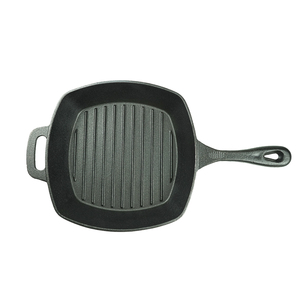
Our engineered raised grill ribs (height: 4.5mm; pitch angle: 60°) elevate protein away from rendered fats, creating localized contact searing points that trigger the Maillard reaction without boiling meats in trapped liquids.
When sourcing hard-anodized grill pans from China suppliers, verified buyers must differentiate between standard (Type II) anodizing (15–20µm coat depth) and true Type III Industrial Hard Anodizing (>40µm depth). Type III surfaces exhibit resistance to alkaline detergent pitting in commercial dishwashers and sustain thermal cycling without micro-cracking.
Data compiled from lab stress tests across commercial kitchen environments.
| Performance Vector | Hard Anodized Aluminum | Cast Iron Cookware | Tri-Ply Stainless Steel | Carbon Steel Pan |
|---|---|---|---|---|
| Thermal Conductivity (W/m·K) | 218 W/m·K (Ultra-Fast) | 52 W/m·K (Slow Response) | 16-25 W/m·K (Moderate) | 67 W/m·K (Moderate) |
| Surface Hardness (Vickers) | HV 450 - HV 550 | HV 180 - HV 220 | HV 200 - HV 240 | HV 160 - HV 200 |
| Weight Ratio (30cm Grill) | 1.2 kg (Ergonomic) | 3.8 kg (Extremely Heavy) | 1.8 kg (Medium) | 1.9 kg (Medium) |
| Acid/Alkali Corrosion | Superior (Oxide Sealed) | Poor (Prone to Rusting) | Excellent (Passivated) | Poor (Requires Seasoning) |
| Induction Efficiency | High (With Steel Disk) | Native High | Native High | Native High |
| OEM Production Tooling Cost | Moderate / Modular Molds | High Casting Sand Molds | Extremely High Stamping | Moderate Stamping |
Anticipating regulatory shifts, technological enhancements, and consumer market demands shaping the B2B supply chain over the next decade.
Global environmental mandates (EU REACH, US EPA stewardship program, California Assembly Bill 1200) are accelerating the phase-out of traditional fluoropolymer coatings.
Future-ready China exporters are combining Type III hard-anodized substrates with Sol-Gel Silicon-Ceramic Matrix coatings and Plasma-sprayed titanium underlayers to offer 100% PFOA/PFAS-free non-stick surfaces capable of withstanding 400°C dry-burn tests.
Historical hard anodized pans faced limitations on induction stovetops due to non-magnetic aluminum properties. Advanced manufacturing now incorporates 2,500-ton cold-forged impact-bonded stainless steel (AISI 430) bottom plates.
This design prevents plate detachment during thermal expansion and optimizes electromagnetic induction coupling efficiency above 90%.
Institutional procurement divisions in Europe and North America increasingly evaluate the Scope 3 carbon footprint of their suppliers.
Leading China manufacturers are shifting to 75%+ certified post-industrial recycled aluminum alloys, utilizing closed-loop acid recovery systems during anodization to reduce water consumption by 60% and lower embodied energy by 40% per unit produced.
From custom rib height engineering to private-label retail packaging, our production pipelines adapt to your market positioning.
Tailored square, round, or oblong geometry. Rib depth adjustable between 2.5mm and 5.0mm. Custom corner pour spout radius to optimize mass-market packaging volume.
Options including cast stainless steel, stay-cool hollow handles, ergonomic silicone-wrap grips, and detachable wood handles for space-saving flat shipping.
Precision fiber-laser etching on anodized side walls, high-pressure die-stamping on induction bases, and custom color sleeve packaging with FSC certification.
Technical clarity on quality assurance, order terms, manufacturing standards, and export logistics for hard anodized grill pans.
Our standard MOQ for custom hard anodized grill pans is 1,000 units per SKU for standard sizes. For custom dimension molds or proprietary handle designs, initial production runs start at 2,000 units. Sample evaluation batches can be prepared within 7–10 days upon drawing approval.
We utilize eddy-current coating thickness gauges (ISO 2360 compliant) to verify oxide layer depth (>45µm for Type III). Each production lot undergoes neutral salt spray testing (ASTM B117) exceeding 200 hours without corrosion, alongside cross-hatch adhesion testing (ISO 2409).
Yes. By applying a cold-forged, high-pressure impact-bonded AISI 430 magnetic stainless steel bottom disk (thickness: 0.6mm–0.8mm), our hard-anodized grill pans operate seamlessly across induction, gas, electric glass, and ceramic cooktops.
All raw materials and non-stick/ceramic finish coatings strictly comply with US FDA 21 CFR 175.300, European Regulation (EC) No 1935/2004, German LFGB Sections 30 & 31, and California Proposition 65. Comprehensive SGS, TUV, or Intertek test reports are provided per shipment.
Hard anodized aluminum offers equivalent surface hardness and scratch resistance while weighing approximately 65% less than cast iron. Additionally, hard anodized aluminum heats up 4x faster, does not rust when exposed to acidic food ingredients, and requires no periodic oil seasoning maintenance.
Yes. We supply 304-grade cast stainless steel or cold-forged solid aluminum handles secured with heavy-duty aircraft-grade rivets. These configurations are rated oven-safe up to 260°C (500°F). Soft-touch silicone or Bakelite handles are available for retail-oriented cookware sets (oven safe to 180°C).
Standard manufacturing lead time is 35 to 45 days following deposit receipt and artwork approval. For repeat orders utilizing active molds, production schedules can be compressed to 25–30 days. FOB, CIF, DDP, and EXW shipment terms are fully supported.
We implement ISTA 3A approved transit packaging standards. Each grill pan is enclosed in a protective non-woven bag, fitted with custom-molded corner EPE foam bumpers, and housed within 5-ply double-wall corrugated mailer boxes designed to withstand 1.2-meter drop tests.
Connect directly with our engineering and export team for technical specs, custom mold quotes, OEM samples, and tiered wholesale pricing structures.