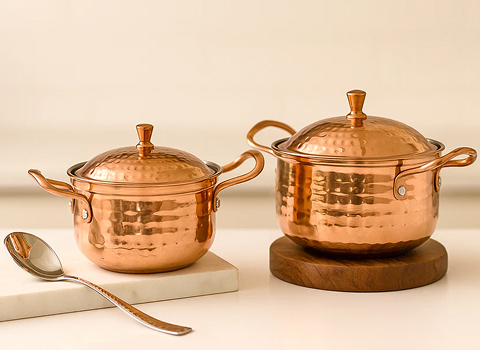
Direct-from-factory catalog engineered for high-volume commercial kitchens, wholesale brand owners, and international hospitality distributors. Featuring high-grade stainless steel passivated alloys and heavy-duty pre-seasoned cast iron.
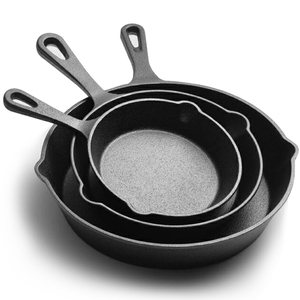
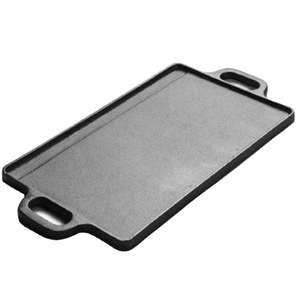
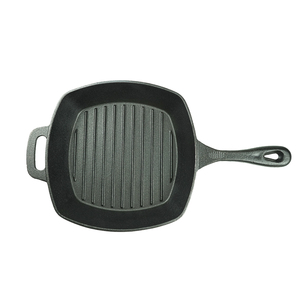

Established as a premier industrial standard setter, our manufacturing enterprise operates state-of-the-art facilities specializing in advanced metallurgical processing, deep-drawing stainless steel forming, automated DISA green sand casting, and eco-certified anti-corrosion surface treatments. Under executive leadership led by Rakesh Jain (Chief Executive Officer) and Anmol Jain (Managing Director), the company has grown from a regional pioneer into an international OEM/ODM powerhouse supplying high-performance kitchenware to top tier importers across Europe, North America, the Middle East, and Asia-Pacific.
Our core competitive advantage rests upon end-to-end supply chain integration. From raw material spectrographic analysis of incoming austenitic stainless steel coils to automated multi-stage nitric-citric passivation lines, we eliminate intergranular corrosion risks before products reach global markets. Operating over 700 active product SKUs—including Tri-Ply clad cookware, hard-anodized aluminum vessels, commercial hospitality serveware, and pre-seasoned cast iron skillets—our production facility adheres strictly to ISO 9001:2015 quality management protocols and international food contact compliance standards.
Chemical immersion processes remove free surface iron, inducing a dense chromium oxide ($Cr_2O_3$) passive barrier that guarantees 720+ hours of salt spray rust resistance.
Precision thermal cladding bonding 304 food-grade stainless steel internal lining with an ultra-pure aluminum core and magnetic 430 stainless steel induction base.
Vertical high-pressure sand casting technology providing uniform wall thickness, zero internal porosity, and superior mechanical tensile strength for heavy-duty cast iron.
Corrosion resistance in stainless steel kitchenware is primarily governed by the electrochemical behavior of chromium and nickel content within the metallic matrix. In commercial manufacturing, selecting the precise alloy grade determines not only the longevity of the pan under severe acid/alkali culinary conditions but also its magnetic induction permeability.
Grade 304 (18/8 Stainless Steel): Comprising 18% Chromium and 8% Nickel, Grade 304 forms the golden standard for internal food contact surfaces. Chromium instantly reacts with ambient oxygen to produce a self-healing, non-porous chromium oxide ($Cr_2O_3$) film. Nickel stabilizes the face-centered cubic (FCC) austenitic crystal structure, rendering the material non-magnetic and highly resistant to organic acid attack (organic compounds found in tomatoes, vinegars, and citrus solutions).
Grade 316 (18/10 + 2% Molybdenum): For specialized commercial serveware exposed to extreme saline environments (heavy sea-salt boiling, marine catering, high-concentration saline sauces), 316 grade incorporates 2-3% Molybdenum. Molybdenum dramatically increases the Pitting Resistance Equivalent Number (PREN), preventing localized anodic dissolution and micro-pitting caused by chloride ions ($Cl^-$).
Grade 430 (17/0 Ferritic Stainless Steel): Because 304 and 316 austenitic steels are non-magnetic, modern induction cooktops cannot induce eddy currents within them. To resolve this, our factory engineers impact-bonded and encapsulated tri-ply bases utilizing Grade 430 ferritic stainless steel as the exterior bottom layer. Grade 430 possesses a body-centered cubic (BCC) structure that delivers high magnetic permeability while maintaining high resistance to atmospheric oxidation.
| Steel Grade | Chemical Composition | Microstructure | Corrosion Resistance Rating | Primary Commercial Application |
|---|---|---|---|---|
| SUS304 (18/8) | 18% Cr, 8% Ni, Balance Fe | Austenitic (Non-magnetic) | Very High (Standard Acid/Base) | Cooking vessel interior, stock pots, mixing bowls |
| SUS316 (18/10+Mo) | 18% Cr, 10% Ni, 2.5% Mo | Austenitic (Non-magnetic) | Extreme (Chloride & Marine resistant) | High-salinity steam kettles, marine hospitality |
| SUS430 (17/0) | 17% Cr, 0% Ni, Balance Fe | Ferritic (Magnetic) | Moderate-High (Atmospheric) | Encapsulated induction caps, exterior base cladding |
| Cast Iron (A48-30) | 3.2-3.6% C, 1.8-2.3% Si | Grey Iron (Flake Graphite) | Requires Polymerized Seasoning | Heavy-duty searing skillets, sizzling platters, griddles |
Raw stainless steel after mechanical deep drawing, stamping, or welding contains micro-contaminants such as embedded free iron particles from tooling dies. If left untreated, these microscopic particles act as active anodic sites, initiating localized rust spots (tea staining) even on high-grade 304 steel. Our factory eliminates this through a strict 4-step chemical passivation line compliant with ASTM A967 standards:
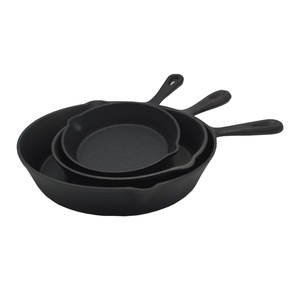
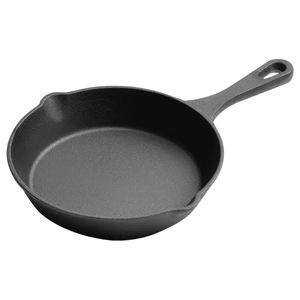
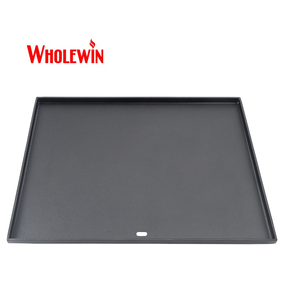
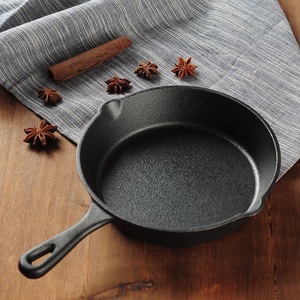
For our heavy-duty cast iron product lines (such as the 3-Piece Skillet Sets, Sizzle Platters, and BBQ Griddles), rust prevention is achieved through controlled high-temperature thermal polymerization. Cast iron (Grey Iron ASTM A48 Class 30) possesses a porous surface matrix filled with microscopic valleys. In our automated seasoning tunnel, non-GMO unsaturated vegetable oil (high in linoleic and oleic fatty acids) is sprayed atomized across the bare metal.
The cookware is then passed through a multi-zone tunnel furnace heated precisely to 350°C (662°F) under an inert nitrogen curtain. At this temperature, the fatty acid chains undergo thermal oxidation and cross-linking polymerization, transforming liquid oil into a hard, hydrophobic, non-stick carbon-polymer matrix chemically bonded to the iron surface. This natural, PFAS-free coating seals cast iron micro-pores against moisture ingress, delivering lifetime rust immunity when properly maintained.
Global legislation across Europe (REACH restrictive annexes) and North America (EPA regulations) is systematically banning synthetic PTFE/PFAS coatings. Procurement is rapidly shifting toward non-coated passivated 304 stainless steel and natural pre-seasoned cast iron.
Hospitality operators are converting gas ranges to high-efficiency commercial induction cooktops. Cookware procurement mandates 100% flat-bottom induction compatibility, driving demand for multi-ply magnetic base cladding technology.
Retail brands and commercial chains demand direct factory logo customization, customized handle ergonomic geometry, laser-engraved volume scale inner walls, and retail-ready zero-plastic eco packaging.
As raw material price volatility impacts global supply chains, international buyers must align with China factories capable of long-term hedging, high-volume automated throughput, and strict quality control. Procurement trends demonstrate that buyers who prioritize low-grade 201 stainless steel (which contains low nickel and high manganese) suffer from high return rates due to micro-pitting corrosion within 3-6 months of customer use.
By transitioning global orders to true 304/316 austenitic alloys and impact-bonded tri-ply bases, buyers secure high brand equity, reduce warranty claims to under 0.1%, and comply seamlessly with international food safety certifications including FDA 21 CFR 175.300, LFGB (Germany), and DGCCRF (France).
To ensure that every shipment leaving our factory meets rigorous international standards, our dedicated Quality Assurance (QA) team executes a 5-tier inspection process supported by on-site laboratory testing:
Optical Emission Spectrometry verifies exact elemental percentages (Cr, Ni, Mo, C, Mn) for every incoming steel coil batch before stamping.
Randomly selected sample vessels are subjected to 5% neutral salt fog chamber testing continuously for 720 hours to verify zero micro-corrosion.
Cookware is heated rapidly to 300°C and instantly quenched in 15°C water to test tri-ply bond shear strength and cast iron warp resistance.
Our factory exclusively uses certified prime-grade SUS304 and SUS316 raw stainless steel coils from top tier steel mills. Unlike lower-cost suppliers who utilize high-manganese Grade 201 or recycled scrap metal, we perform 100% automated nitric-citric chemical passivation compliant with ASTM A967. This removes surface free iron contaminants that cause tea-staining and micro-pitting, providing guaranteed rust resistance even in salt-heavy commercial kitchens.
Grade 304 (18/8) is the global standard for daily food contact, providing excellent resistance against food acids. Grade 316 (18/10+Mo) contains 2.5% Molybdenum, making it hyper-resistant to high-saline marine and commercial environment corrosion. Tri-Ply construction fuses an inner 304 layer, an aluminum core for rapid heat conduction (eliminating hot spots), and a magnetic 430 exterior for universal compatibility with gas, electric, and high-frequency induction cooktops.
We offer comprehensive OEM/ODM customization including custom bottom mold casting (recessed or raised logos), laser engraving on handles, specialized handle geometry, custom color enamel coatings, customized pre-seasoning oil formulations, and tailored retail packaging (color display boxes, master carton sleeve inserts, non-plastic protective wraps).
Yes. Our pre-seasoned cast iron products undergo high-temperature (350°C) thermal oil polymerization using non-GMO vegetable oils. The seasoning layer is 100% free from PTFE, PFOA, PFOS, lead, and cadmium, complying fully with US FDA 21 CFR 175.300, European LFGB, REACH regulations, and California Proposition 65.
Every piece of cookware is wrapped in VCI (Vapor Corrosion Inhibitor) paper or anti-humidity PE bags, sealed with industrial silica gel desiccants inside master cartons. Cardboard cartons are palletized, shrink-wrapped with waterproof stretch film, and strapped to withstand high humidity during ocean freight travel across tropical maritime transit routes.
Standard catalog item MOQ starts at 500 units per SKU. Custom OEM tooling or custom-branded cast iron runs typically require 1,000 units per size. Pre-production tooling samples can be rendered and dispatched within 7–12 days, while mass production lead time averages 25–35 days from sample approval and deposit confirmation.
Whether you are establishing a new cookware line, seeking high-capacity OEM manufacturing, or upgrading your restaurant chain's hospitality serveware, our engineering team provides direct factory pricing, rapid prototyping, and guaranteed anti-corrosion quality.