Explore our top-rated heavy-duty cast iron skillets engineered for commercial foodservice, retail distribution, and private label brands.
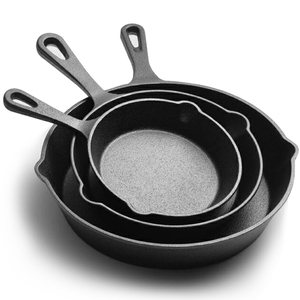
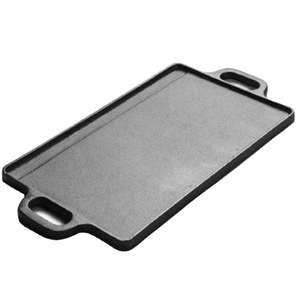
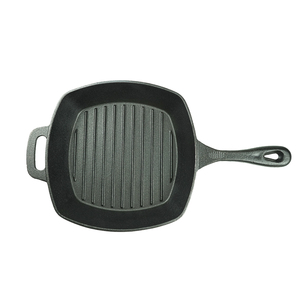
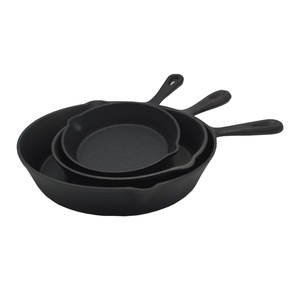
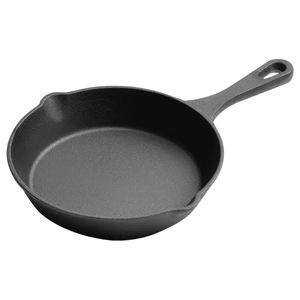
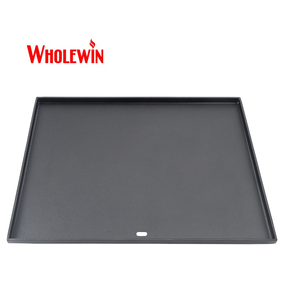

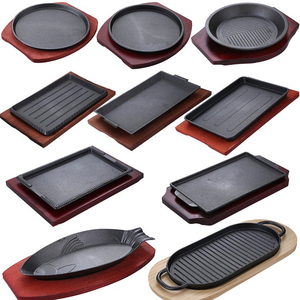
The global cookware landscape is undergoing a structural transition back to high-thermal-mass, chemical-free, heirloom-grade cookware. Driven by growing consumer aversion to synthetic PFOA/PFAS non-stick coatings and a surging demand for professional-grade sear performance, heavy-duty cast iron skillets have re-emerged as the gold standard in both residential and commercial kitchens. For global brand owners, cookware importers, and hotel supply procurement executives, partnering with top-tier China cast iron manufacturers offers unprecedented technological, economic, and operational advantages.
Modern Chinese cookware foundries have evolved far beyond basic manual sand casting. Today’s premier OEM/ODM manufacturing hubs utilize vertical high-pressure DISAMATIC® molding technology, spectrographic metallurgical composition monitoring, dynamic thermal curing tunnels, and robotized automated polishing lines. This comprehensive whitepaper provides B2B buyers with a technical blueprint for evaluating China's top cast iron skillet factories, understanding metallurgical standards, assessing pre-seasoning polymerization chemistry, and managing international supply chain risks.
The culinary utility of a heavy-duty cast iron skillet is fundamentally determined at the molecular level inside the electric induction melting furnace. Inferior cast iron pans suffer from thermal shock fracturing, structural micro-porosity, uneven thermal hot-spots, and brittle handle stress joints. Leading OEM factories in China adhere to strict chemical composition ratios to guarantee superior mechanical strength and optimal thermal diffusion.
Gray iron is selected for cookware due to its flake graphite microstructure, which provides unmatched thermal storage capacity, superior damping of mechanical vibration, and natural anti-stick oil absorption properties. Premium manufacturing standards require strict spectroscopic gating:
| Element Name | Optimal Percentage Range (%) | Technical Function in Cookware Performance |
|---|---|---|
| Carbon (C) | 3.20% – 3.55% | Forms graphite flakes; maximizes thermal storage capacity and natural carbon oil-binding micro-pores. |
| Silicon (Si) | 1.80% – 2.30% | Promotes graphite graphitization, lowers eutectic solidification temperature, and prevents white iron brittleness. |
| Manganese (Mn) | 0.50% – 0.80% | Increases matrix tensile strength and hardness (HB 180-220 target); neutralizes excess sulfur trace elements. |
| Phosphorus (P) | < 0.12% | Enhances liquid iron fluidity during thin-wall mold filling; strictly capped to prevent micro-fractures. |
| Sulfur (S) | < 0.08% | Kept ultra-low to prevent internal micro-porosity and grain boundary embrittlement. |
When selecting a factory, procurement teams must audit the foundry's molding machinery. While traditional sand casting leads to wall thickness variations, rough surface finishes ($Ra > 12.5\ \mu\text{m}$), and heavy manual labor costs, DISAMATIC® green sand vertical molding lines ensure high-precision reproducibility suited for mass-market retail brands.
Automated DISAMATIC sand compaction yields strict wall thickness tolerances within ±0.4mm, eliminating hot spots and pan warping during induction heating.
Advanced shot-blasting with ultra-fine steel grit creates a smooth micro-textured matrix ($Ra\ 6.3\text{--}8.0\ \mu\text{m}$), optimizing mechanical seasoning adhesion.
Engineered handle gussets and integrated helper handle geometry eliminate mechanical load failure during high-volume commercial kitchen use.
The non-stick efficiency of a heavy-duty cast iron skillet is governed by the chemical process of oil polymerization. Raw cast iron naturally oxidizes upon exposure to atmospheric moisture. To establish rust immunity and a slick cooking surface, top OEM factories deploy multi-stage thermal curing lines.
Seasoning is not merely coating iron with oil; it is a high-temperature chemical reaction where unsaturated fatty acids undergo cross-linking polymerization to form a hard, hydrophobic polymer layer bonded directly to the iron matrix.
For high-end consumer brands, Chinese factories also offer specialized alternative surface treatments:
As international consumer safety regulations tighten regarding synthetic chemicals in kitchenware, procurement officers must realign their sourcing strategies to capture emerging market demand. Key macroeconomic and industry shifts include:
Stringent legislation in North America and Europe banning "forever chemicals" is accelerating retail conversion toward 100% natural pre-seasoned cast iron cookware.
With global adoption of commercial and residential induction cooktops rising, cast iron's high magnetic permeability ensures maximum energy efficiency ($>90\%$).
Foundry tooling advances now yield "lightweight heavy-duty" skillets—reducing weight by 20–25% while maintaining heavy thermal mass performance.
Building on over 30 years of industrial hardware manufacturing experience, top-tier factories in China enforce systematic quality control across five distinct production gates. Importers and OEM buyers can leverage the following audit criteria during factory inspections:
| Inspection Stage | Test Parameters & Tools | Pass / Fail Acceptance Standard |
|---|---|---|
| 1. Raw Material Gate | Optical Emission Spectrometer analysis of molten iron batch samples. | Carbon 3.2-3.55%, zero heavy metal contamination (Lead < 5ppm, Cadmium < 1ppm). |
| 2. Cast Integrity Gate | X-Ray Radiographic Flaw Detection & Ultrasonic Thickness Gauging. | Zero internal gas blowholes, zero micro-cracks, wall variation within ±0.4mm. |
| 3. Thermal Shock Gate | Rapid thermal cycle: Heated to 300°C then quenched into 20°C water bath. | Zero mechanical structural cracking or warpage after 10 consecutive cycles. |
| 4. Seasoning Adhesion Gate | Cross-Hatch Hatch Adhesion Test (ASTM D3359) & Salt Spray Test (ASTM B117). | Class 4B/5B coating adhesion; zero rust formation after 48 hours in salt fog chamber. |
| 5. Food Contact Safety | Heavy metal migration leaching tests under acid conditions (3% acetic acid). | 100% Compliance with US FDA 21 CFR 175.300, EU Resolution CM/Res(2013)9, LFGB. |