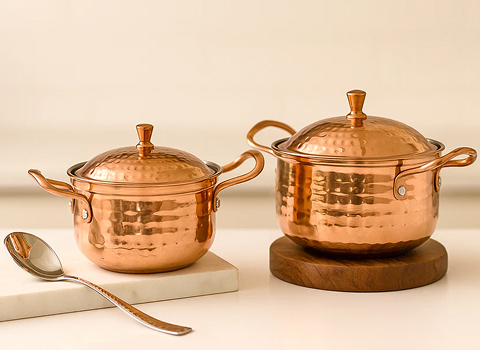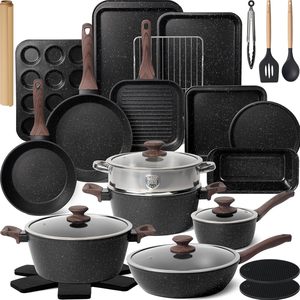
Hot Selling Black Granite Nonstick Cookware Set Modern Luxury Design Fry Pan
Granite Coating
Heat Resistant
Eco-Friendly

Discover our tier-1 export range of deep flared skillets, multi-layer non-stick pans, and commercial-grade cookware engineered for worldwide distribution.
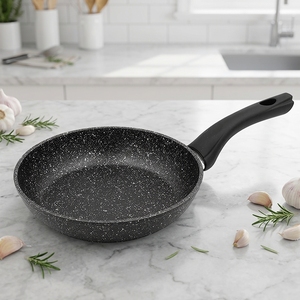
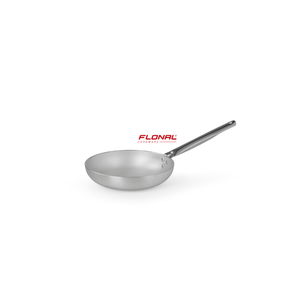
An in-depth analysis of supply chain dynamics, factory tier classifications, and engineering criteria for international procurement directors.
China's non-stick deep skillet pan manufacturing ecosystem is heavily concentrated in Zhejiang (Yongkang, Wuyi), Guangdong (Foshan, Jiangmen), and Shandong provinces. Tier-1 factories leverage complete localized supply chains—from raw ingot smelting and precision cold-rolling to automated fluoropolymer spraying—delivering unmatched economies of scale and rapid OEM turnarounds.
Global procurement data reveals a structural shift toward high-walled deep skillets (sauté pans with 60mm–85mm sidewalls). Combining the high-heat searing capacity of a traditional skillet with the volumetric retention of a shallow Dutch oven, deep skillets meet consumer demands for multi-functional one-pot cooking across North American and European retail channels.
Evaluated under Google’s Search Quality Rater Guidelines, securing verified China factories requires verifying high-pressure aluminum die-casting (ADC12), tri-ply impact-bonded induction bases, and certified PFOA/PFAS-free non-stick coatings. Rigorous factory audits prevent field failures such as delamination, thermal warping, and coating degradation.
Selecting the optimal substrate material directly dictates heat distribution uniformity, thermal retention, structural durability, and manufacturing unit economics.
Utilizing high-tonnage automated cold-chamber die-casting (800T to 1800T presses), die-cast deep skillets feature thick bases (4.5mm–6.0mm) tapering to thinner sidewalls (2.5mm–3.5mm). This wall-thickness gradient optimizes weight while eliminating thermal hotspots and preventing bottom bowing under thermal shock.
Forged cookware utilizes high-density 3003-series aluminum blanks pressed under extreme mechanical pressure. Forged pans exhibit superior grain structure and tensile strength compared to basic stamped aluminum, supporting heavy daily commercial use.
Premium OEM skillets incorporate 3-ply clad metal: an interior hygienic 304 food-grade stainless steel layer, a 1050 pure aluminum core for ultra-fast thermal conductivity, and an exterior magnetic 430 stainless steel layer compatible with commercial induction cooktops.
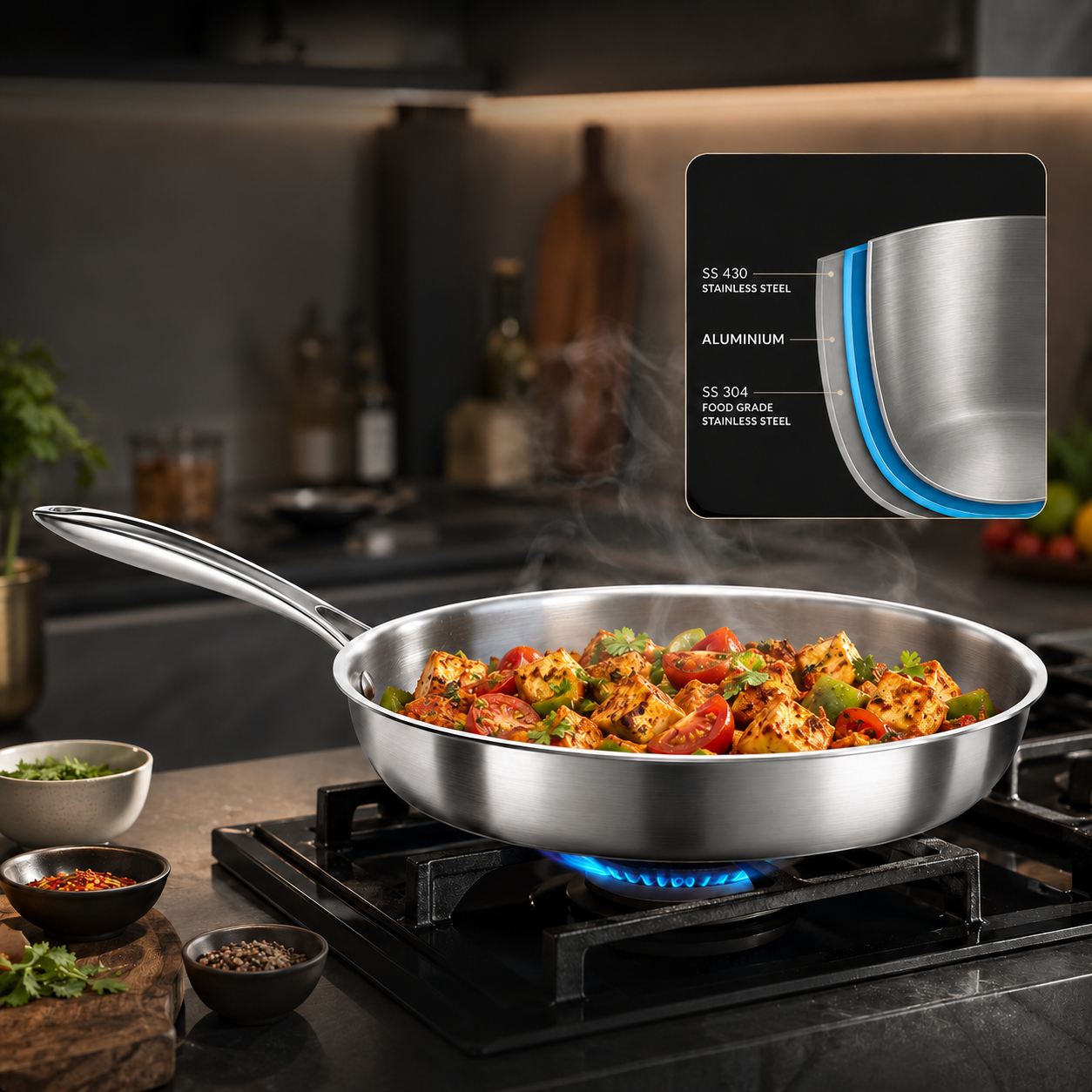
Understanding the transition from PTFE fluoropolymers to Sol-Gel ceramic matrices amidst evolving FDA, LFGB, REACH, and US State-level PFAS bans.
Modern multi-layer PTFE coatings (e.g., ILAG Ultimate, Greblon C3+, Whitford QuanTanium) utilize a primer coat, a mid-coat reinforced with mineral particles (granite/diamond/titanium), and a smooth fluoropolymer topcoat. Applied via automated electrostatic spray booths and cured at 380°C–420°C, these systems deliver exceptional wet-rub release properties (BS EN 12983-1 compliant for over 50,000 abrasion cycles).
Silica-based Sol-Gel ceramic coatings are synthesized through hydrolysis and condensation of metal alkoxides, creating a dense inorganic cross-linked glass network. Ceramic coatings are inherently free from PFAS, PTFE, GenX, lead, and cadmium, serving as the leading solution for eco-conscious brand positioning.
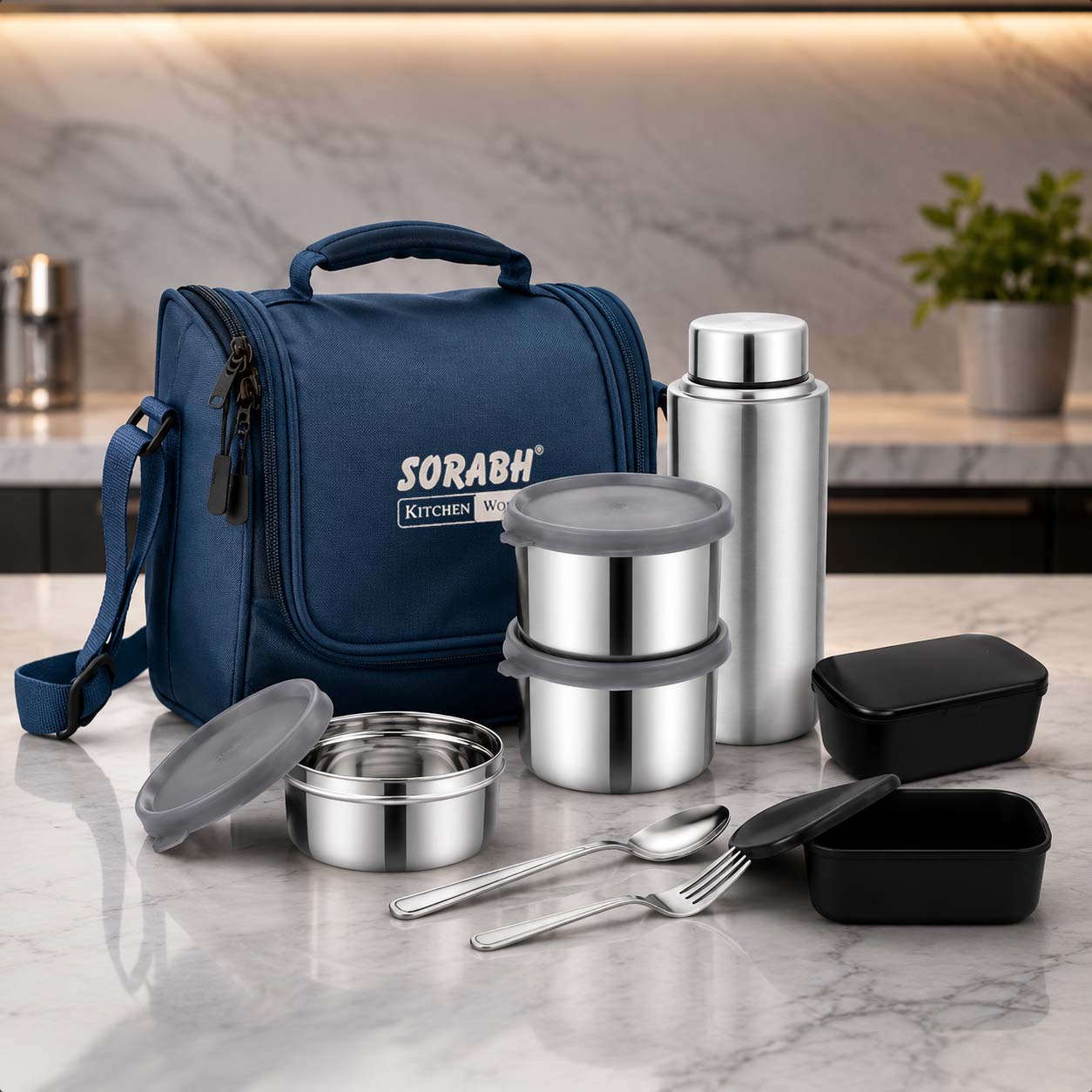
Top China non-stick deep skillet factories implement stringent laboratory testing prior to bulk shipment release:
Leveraging over three decades of precision metal fabrication, integrated spray lines, and international OEM/ODM expertise.
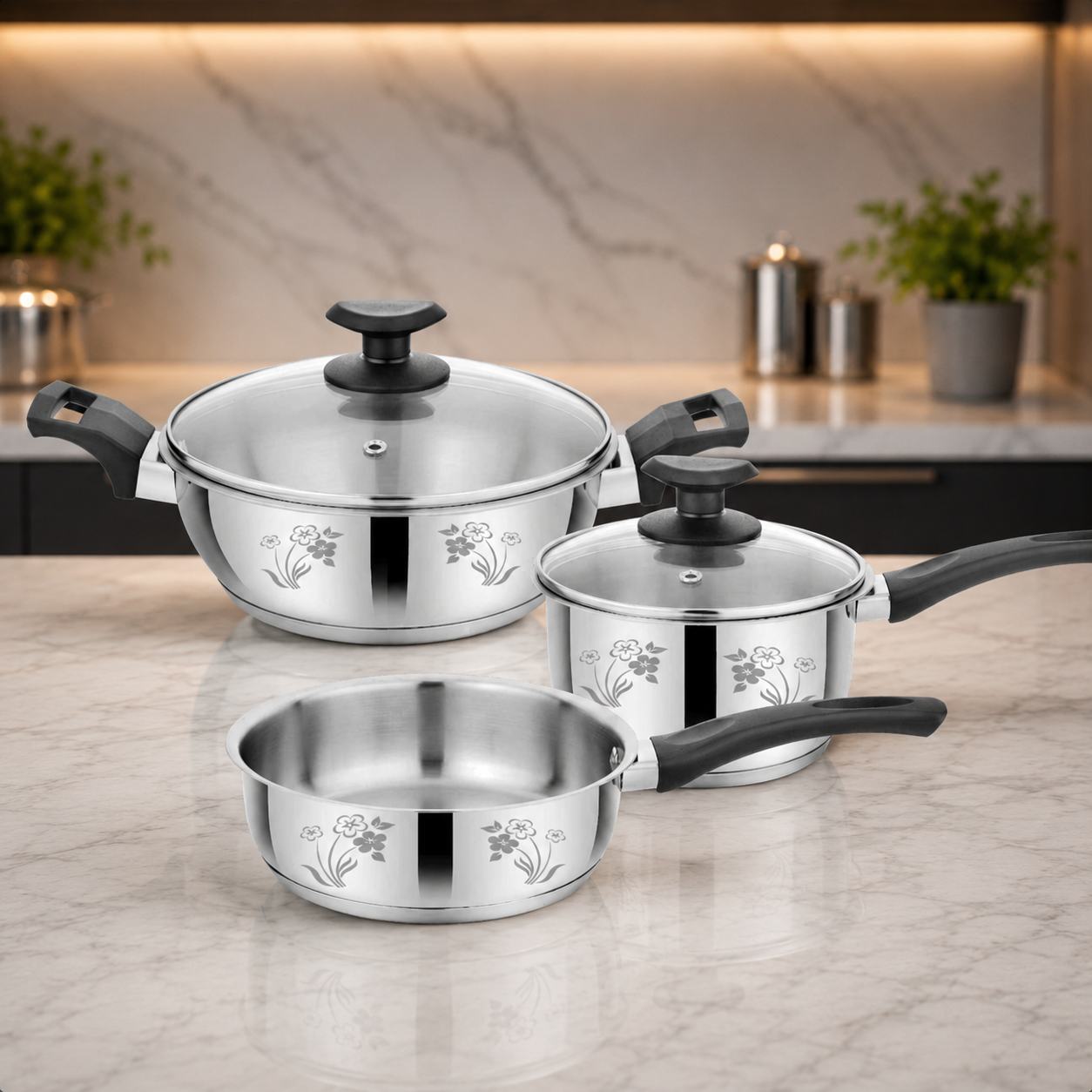
From flared rim geometry that prevents messy pouring drips to hollow stay-cool 304 stainless steel handles, our deep skillets are engineered for seamless balance, comfort, and presentation in contemporary commercial and residential kitchens.
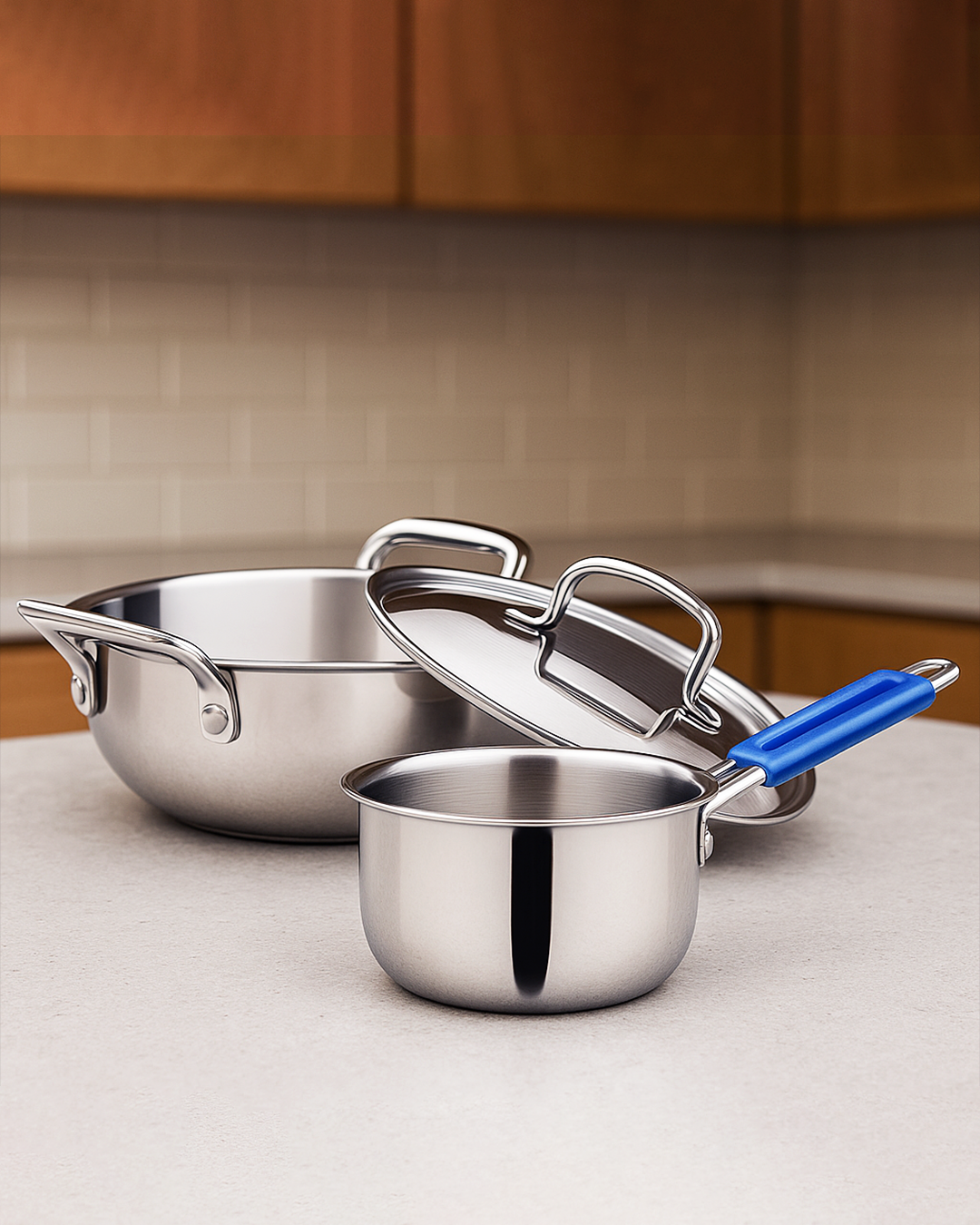
Our heavy-duty friction-impact bonding machines fuse 430 stainless steel induction discs under 2,500 tons of hydraulic pressure, ensuring zero air pockets, maximum thermal conductivity, and immunity to base separation over prolonged heating cycles.

Electrochemical anodization converts the raw aluminum surface into an aluminum oxide layer twice as hard as stainless steel. This produces an ultra-durable, scratch-resistant surface ideal for intensive hotel, restaurant, and catering operations.
Use this benchmark matrix to evaluate supplier capabilities, tooling investments, quality control standards, and total cost of ownership.
| Evaluation Parameter | Tier-1 OEM/ODM Megafactory | Tier-2 Standard Manufacturer | Tier-3 Trading / Small Workshop |
|---|---|---|---|
| Manufacturing Process | High-Tonnage Die-Casting & Automated Spraying | Forged & Stamped Sheet Pressing | Manual Stamping & Subcontracted Spraying |
| Coating Durability (BS EN 12983) | > 50,000 Abrasion Cycles (Verified) | 15,000 – 25,000 Cycles | < 5,000 Cycles (High Risk of Flaking) |
| Toxicity Certifications | FDA, LFGB, REACH, PFAS-Free Certified | Basic FDA / Partial LFGB | Uncertified / Basic Self-Declaration |
| Induction Base Technology | Full-Bound Impact Plate / Hole-Pattern Disc | Standard Riveted Plate | Gas Stove Only / Weak Bonded Base |
| OEM Mold Tooling Lead Time | 15 – 25 Days (In-House CNC Mold Shop) | 35 – 45 Days (Outsourced Tooling) | 60+ Days |
| Quality Assurance (QA) | 100% In-Line Automated + X-Ray Thickness Test | Random Batch AQL 2.5 Sampling | Visual Inspection Only |
| Minimum Order Quantity (MOQ) | 1,000 – 2,000 Pcs per SKU | 2,000 – 3,000 Pcs per SKU | 500 – 1,000 Pcs (Stock Material) |
Strategic forecasting for global retail buyer catalogs, private label brands, and commercial kitchenware distributors.
Traditional spray-hole induction bases are rapidly giving way to full-plate, edge-to-edge magnetic bottom cladding. Full-surface bases increase thermal coupling with induction hobs by up to 28%, drastically reducing boil times and eliminating edge-cooling phenomena during deep searing.
With ocean freight volumes and e-commerce packaging costs continuing to influence landed margins, deep skillets with removable click-lock handles are experiencing explosive demand. Detachable handles permit nestable stacking—saving up to 45% in box volume—and allow seamless transition from stove-top to oven to table storage.
To extend release longevity without sacrificing health compliance, advanced factories are integrating micro-ceramic, volcanic stone, and diamond dust particles directly into the primary primer layers. This hybrid structure creates a textured microscopic surface that shields the release coat from sharp metallic kitchen tools.
Global retailers are enforcing Scope 3 carbon reduction mandates. Forward-thinking China factories are adopting 100% recycled post-consumer aluminum ingots, certified by international standards (such as GRS - Global Recycled Standard), reducing manufacturing energy consumption by up to 95% compared to primary aluminum smelting.
Our leadership team brings decades of combined expertise in metal fabrication, export compliance, and strategic OEM client partnerships.
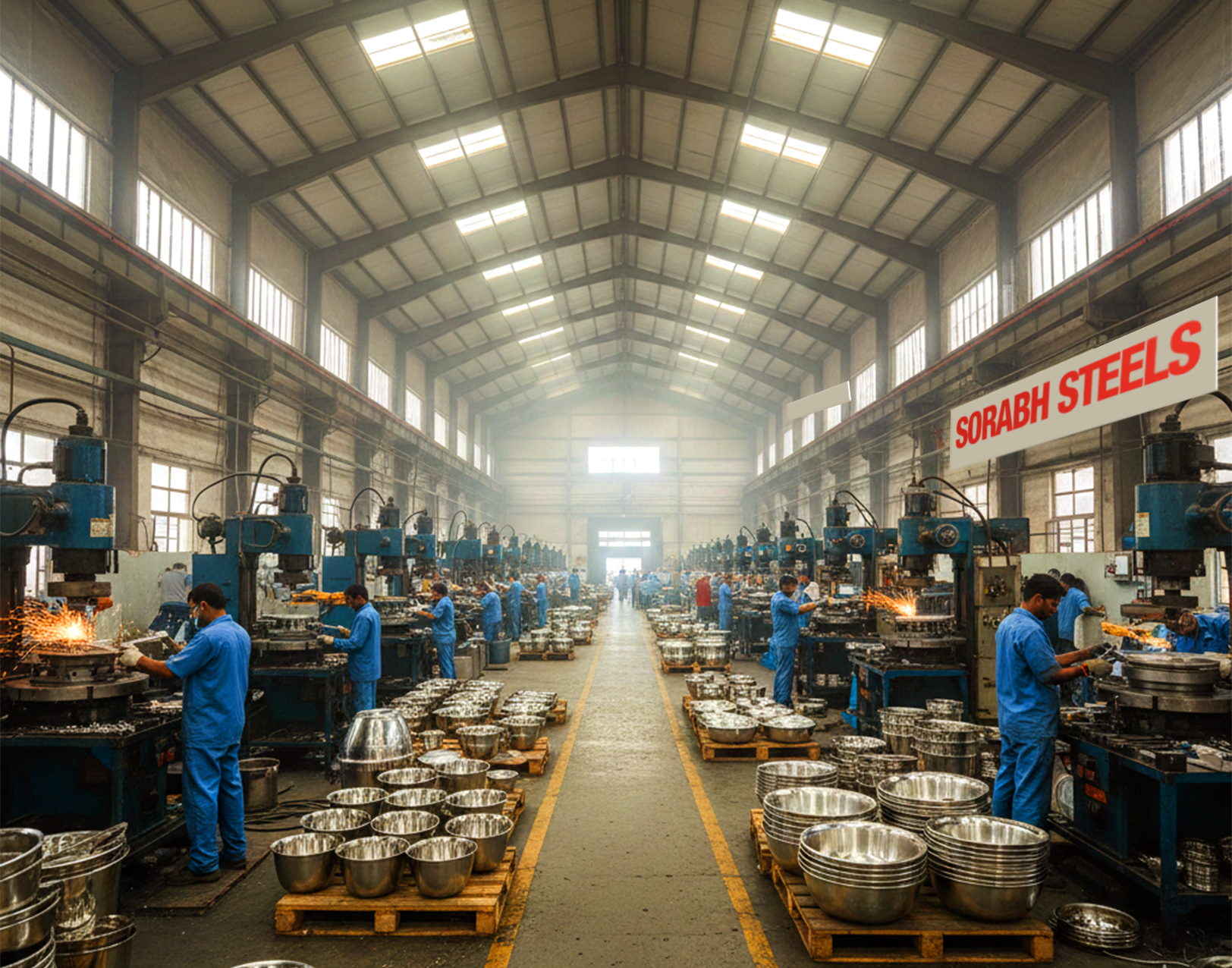
Established in 1991, Sorabh Kitchen World (Saurabh Steels India) has evolved from a specialized stainless steel facility into a multi-category global cookware manufacturer with over 700 active SKUs. Our commitment to continuous tooling innovation, zero-defect quality management, and ethical supply chain standards makes us a trusted manufacturing partner for major retail brands, hospitalities, and importers worldwide.
 Rakesh Jain
Chief Executive Officer
 Anmol Jain
Managing Director

Detailed technical and commercial answers addressing common OEM/ODM non-stick skillet purchasing inquiries.
Standard production MOQs range from 1,000 to 2,000 units per size/SKU for custom body colors or custom handle configurations. For existing running factory molds with standard black granite or matte grey finishes, lower trial order quantities (500 units) can often be accommodated depending on scheduled production batches.
Tier-1 non-stick cookware factories partner with accredited third-party testing laboratories (SGS, TÜV Rheinland, Bureau Veritas). Every coating batch undergoes extractable heavy metal testing, overall migration testing, and organic fluorocarbon vapor analysis to certify complete compliance with FDA 21 CFR 175.300 and EU REACH regulations.
Stamped aluminum is cut from flat sheet metal (2.0mm–3.0mm), making it cost-effective but prone to warping under high heat. Forged aluminum uses heavy mechanical pressing to compress 3003 alloy blanks, creating structural strength with a reinforced rim/base. Die-cast aluminum involves injecting liquid ADC12 alloy into high-pressure molds, enabling custom variable wall thicknesses, integrated handle lugs, and ultimate resistance to thermal distortion.
Yes. Full OEM/ODM customization services include laser-etched bottom logos, custom color silicone-sleeved stainless handles, custom flame-guard castings, color gift boxes, mail-order drop-ship packaging, and branded protective felt dividers.
We offer three main induction base options: 1) Stamped hole-pattern stainless steel discs (economical and functional), 2) High-pressure friction impact-bonded full plates (maximum heat distribution and premium aesthetic), and 3) Spray-atomized magnetic thermal coating (lightweight and seamless). Impact-bonded plates are recommended for commercial and high-end retail lines.
For initial OEM orders requiring custom logo tooling and color matching approval, lead times are typically 35 to 45 days. Repeat production orders are processed within 25 to 30 days. Rapid sample delivery for pre-production evaluation is available within 7 to 10 days.
All cookware handles undergo static load bending tests, dynamic fatigue drop tests, and thermal cycle testing according to BS EN 12983-1 standards. Stainless steel handles attached via heavy-duty solid rivets or high-torque dual-screw assemblies must withstand over 50kg of downward bending force without joint failure.
While ceramic coatings resist chemical degradation better than traditional soft coatings, commercial dishwashing detergents contain harsh alkaline salts that can gradually wear down non-stick release properties over time. We recommend marketing hand-wash care while engineering the coating base to withstand standard domestic dishwasher cycles.
Download our comprehensive 2026 OEM/ODM Non-Stick Cookware Product Catalog, request factory direct pricing, or schedule a technical consultation with our engineering team.