Direct-from-factory procurement catalog engineered for global hospitality distributors, commercial kitchens, and retail brands.
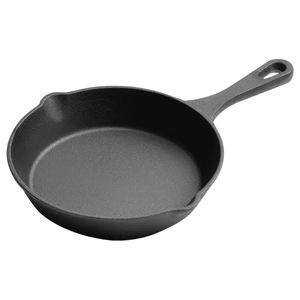
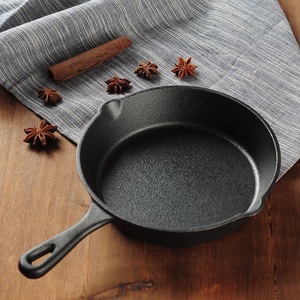
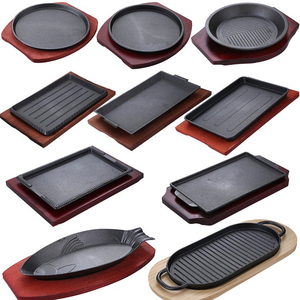
Operational scale and metallurgical rigour backing world-class cookware brands since 1991.
In the highly regulated global B2B procurement landscape, procuring CE Certified Heavy Gauge Stainless Steel Cookware requires a rigorous understanding of compliance directives, structural metallurgy, and mechanical safety standards. European and North American import frameworks demand compliance beyond cosmetic finishing; cookware must strictly conform to EU Regulation (EC) No 1935/2004 for materials intended to come into contact with food, EN 12983-1 standards governing domestic and commercial cookware safety, and strict heavy metal leaching limits (lead, cadmium, and nickel migration compliance under DGCCRF and FDA guidelines).
Sorabh Kitchen World (Saurabh Steels India), operating since 1991, engineered its advanced manufacturing facilities in Delhi's Badli Industrial Complex to address these critical compliance benchmarks. Heavy gauge stainless steel cookware—typically defined by wall thickness exceeding 0.8mm to 1.2mm, and impact-bonded encapsulated bottom discs ranging from 4.0mm to 6.5mm—provides structural immunity against heat-induced warping (thermal deformation) while guaranteeing optimal thermal diffusion across all stove platforms, including high-frequency induction surfaces.
Core Metallurgical Principle: Standard commercial grade cookware often suffers from cold-spotting and stress corrosion cracking due to thin-gauge metal construction. CE certified heavy gauge tri-ply and encapsulated cookware utilizes a 3-layer metallurgical sandwich: AISI 304 (18/10) surgical stainless steel for the food-contact surface, a pure 1050/1100 aluminum core for hyper-fast thermal conduction, and AISI 430 (18/0) magnetic stainless steel for seamless induction resonance.
Selecting the appropriate steel alloy dictates product longevity, corrosion resistance in acidic cooking environments (e.g., high sodium or tomato-based commercial cuisine), and overall return on investment for commercial buyers:
Formulated with 18% Chromium and 10% Nickel, this food-grade alloy exhibits an exceptionally inert surface resistant to organic acid oxidation, pitting, and chemical degradation up to 850°C. Standard for interior lining in premium CE-certified pots and pans.
Rather than utilizing a simple bottom disc, full-body tri-ply features continuous 3-layer bonding extending from the base up through the rim. Eliminates scorching at the side-wall junction and reduces commercial kitchen energy consumption by up to 28%.
Ferritic stainless steel containing 16-18% Chromium with high magnetic permeability. Engineered specifically to interface with commercial induction cooktops operating at high kilohertz frequency without thermal loss.
To aid procurement officers, hotel chain buyers, and private-label brand managers, the following data table compares key physical and performance specifications across standard cookware engineering modalities.
| Evaluation Parameter | Single-Layer Stamped SS | Impact-Bonded Encapsulated SS | Full-Body Tri-Ply SS (3.0mm) | Pre-Seasoned Sand Cast Iron |
|---|---|---|---|---|
| Thermal Conductivity (W/m·K) | 16.3 (Low) | 160 to 210 (High at Base) | 205 (Uniform Body-Wide) | 52.0 (High Heat Retention) |
| Warp Resistance Threshold | Low (< 200°C) | High (< 380°C) | Extreme (< 550°C) | Indestructible (< 800°C) |
| Induction Efficiency Rate | Variable / Poor | 92% - 95% Efficiency | 98% Energy Conversion | 99% Magnetic Coupling |
| CE (EN 12983-1) Compliance | Basic Grade | Full Certification | Exceeds Premium Benchmark | Exceeds Heavy Duty Grade |
| Commercial Lifetime Expectancy | 1 - 2 Years | 5 - 8 Years | 15+ Years Commercial Use | Lifetime Heavy Use |
| Primary Target Application | Budget Domestic Retail | Mass Market & Hospitality | Professional HORECA & High-End | BBQ, Steakhouse & Specialty |
As global supply chains realign toward sustainable manufacturing and health-conscious food processing, major importers and retail brands face radical shifts in consumer demand and regulatory enforcement. B2B buyers must adapt procurement strategies to four dominant macro-trends:
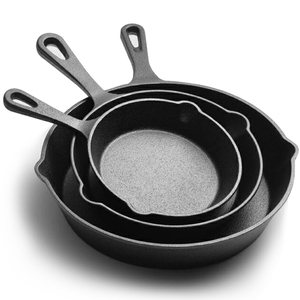
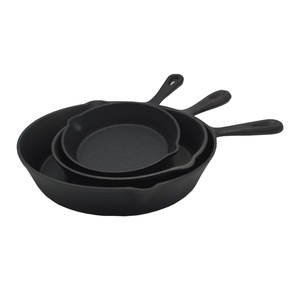
Global legislation (including the EU REACH restrictions and US EPA directives) is actively phasing out per- and polyfluoroalkyl substances (PFAS) in food-contact cookware. Importers are aggressively transitioning orders toward two sustainable alternatives: Natural Pre-Seasoned Cast Iron (which forms a natural hydrophobic polymer layer through vegetable oil baking) and Heavy-Gauge Stainless Steel Satin Finishing, which relies on mechanical polish rather than chemical sprays.
With commercial restaurants shifting away from open-flame gas ranges to induction for carbon reduction and kitchen climate control, cookware must possess perfectly planar bottoms. Heavy-gauge bottom stamping with zero center-concavity ensures maximum surface contact with sensor-controlled induction hobs, preventing emergency thermal shutdown in automated commercial kitchens.
Enterprise procurement tenders now mandate environmental, social, and governance (ESG) verification. Leading suppliers like Sorabh Kitchen World incorporate recycled stainless steel scrap (up to 75% recycled content in melting furnaces) certified under ISO 14001, providing buyers with verifiable carbon footprint documentation for corporate sustainability reporting.
Established in 1991 under the corporate umbrella of Saurabh Steels (India), Sorabh Kitchen World has evolved into one of South Asia’s premier industrial producers of stainless steel utensils, tri-ply cookware, hard anodized kitchenware, and heavy cast iron cookware. Spanning expansive manufacturing premises in Delhi’s Badli Industrial Area, the enterprise operates integrated toolrooms, hydraulic pressing bays, automatic polishing lines, and strict QA laboratories.
In-house CAD/CAM tooling allows custom depth, diameter, and handle geometry creation. Laser-etched capacity markings, custom bottom logo stamping, and bespoke retail box design are executed seamlessly under standard OEM agreements.
Every production batch undergoes X-Ray Fluorescence (XRF) spectro-analysis to verify alloy composition, followed by 30-bar handle rivet shear tests, thermal shock immersion cycles, and non-stick coating cross-hatch adhesion testing (ASTM D3359).
Serving over 13 international markets across North America, Europe, the Middle East, and Asia-Pacific. Optimized flat-pack drop-test approved packaging minimizes ocean freight volume and protects high-polish mirror finishes.
Submit custom specifications, target gauge, base encapsulated disc thickness, and quantity requirements.
Sample casting, CNC tooling setup, XRF material verification, and pre-shipment prototype dispatch.
Automated deep drawing, impact bonding, rim trimming, handle riveting, and CE compliance testing.
Palletized shrink wrapping, custom barcode labeling, containerization, and bill of lading issuance.
Expert insights on technical standards, order minimums, laboratory certifications, and OEM logistics.
Whether you are expanding a retail kitchenware brand, equipping a commercial hotel chain, or sourcing custom OEM heavy gauge cookware, our engineering team is ready to deliver tailored production solutions.