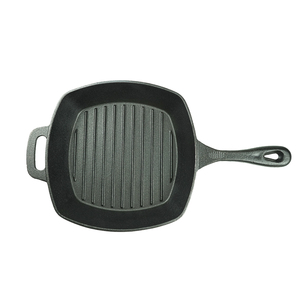
High Quality Sand Casting Bbq Grill Griddle Pan Pot Cookware Set Cast Iron
Sand Cast AlloyBBQ / CommercialHeavy Thermal Mass
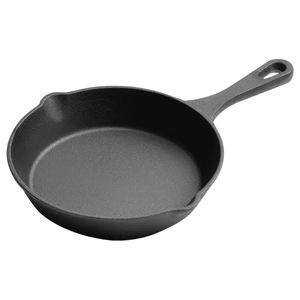
Heavy Duty Cast Iron Skillet with Helper Handle OEM Custom Logo All Stovetops Compatible Cast Iron Skillet for Steak and BBQ
OEM Custom LogoHelper HandleAll Stovetops
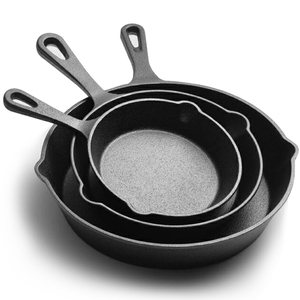
Pre-Seasoned Cast Iron Skillet Set 3-Piece - 6 Inch, 8 Inch And 10 Inch Cast Iron Set - Black
3-Piece SetPre-Seasoned6" / 8" / 10"
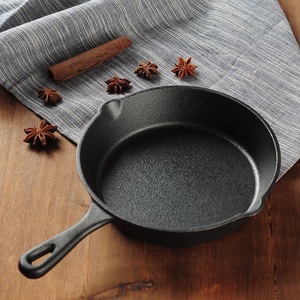
Pre-seasoned Cast Iron Skillet Set Non-stick Frying Pan with Dual Spouts Heavy Duty Cast Iron Cookware for Kitchen Camping
Dual Pour SpoutsOutdoor / KitchenHeavy Duty Build
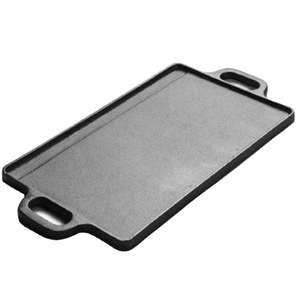
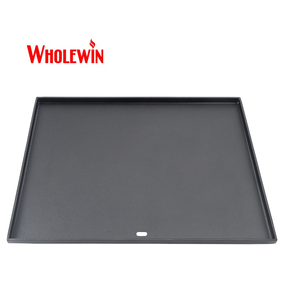
Flat Top Square Cast Iron Griddle For Summit Grills Compatible Carbon Steel Grill Pan For Induction Cooking
Flat Top SquareGrill CompatibleInduction Steel
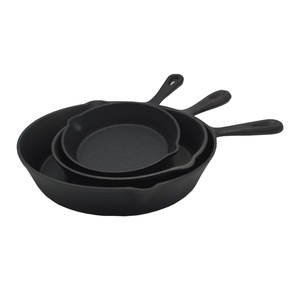
Heavy Duty Cast Iron Fry Pan Pre-Seasoned Non-Stick Skillet 6 8 10 Inch
Commercial SkilletPre-SeasonedHigh Temperature
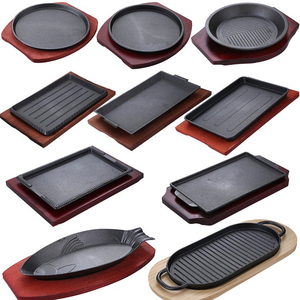
Custom Size Shape Classic Black Cast Iron Eco-Friendly Sizzling Hot BBQ Grill Frying Pan Skillet Sizzle Platter
Custom Shape/SizeSizzle PlatterEco-Friendly
33+
Years Manufacturing Legacy (Est. 1991)
700+
Product SKUs & Tooling Units
180+
Global B2B Distributors
13+
International Export Markets
Technical Whitepaper
Engineering Standards & Metallurgical Physics of Commercial Aluminium Cooking Pots
In commercial culinary environments—ranging from Michelin-starred restaurant kitchens and hotel banqueting centers to industrial food processing plants—cookware is subjected to extreme thermal cycles, intense mechanical strain, and continuous chemical exposure from acidic food matrices. Specifying the correct cookware substrate is not merely a purchasing preference; it is an engineering calculation that directly governs energy consumption, food safety compliance, labor efficiency, and capital expenditure amortization.
Core Engineering Insight: Heavy-gauge aluminium (AA3003/AA1050 alloy) exhibits a thermal conductivity rating of approximately 225 W/m·K, compared to stainless steel’s 15 W/m·K and cast iron’s 52 W/m·K. This physical property enables instant thermal responsiveness, eliminating hot spots that cause food scorching and reducing commercial kitchen fuel usage by up to 28%.
As an established CE certified heavy duty aluminium cooking pot manufacturer & factory, Sorabh Kitchen World (Saurabh Steels India) integrates advanced metallurgical formulation with high-precision cold-forging and pressure die-casting technology. Standard thin-gauge cookware (1.5mm to 2.5mm) under continuous exposure to 800°C commercial gas burners undergoes thermal stress distortion, known in metallurgy as planar warp failure. Our commercial pot series utilizes heavy-duty wall thicknesses spanning 4.0mm to 6.5mm, backed by reinforced rim beads and multi-point hot-riveted stainless steel handles capable of enduring shear forces exceeding 550 Newtons.
Thermal Diffusivity
Uniform radial heat spread eliminates thermal gradients, allowing bulk liquids to reach rolling boils faster while preventing localized protein scorching during long simmer cycles.
CE Compliance (EN 12983-1)
Rigorous mechanical safety validation covering handle torque, thermal insulation limits, base concavity retention under thermal shocks, and non-toxic metal migration tests.
Type III Hard Anodization
Electrolytic conversion creating an aluminum oxide layer up to 50 microns deep—yielding a surface twice as hard as stainless steel (9 on Mohs hardness scale) with zero chemical reactivity.
Founded in 1991 in the Badli Industrial Area of Delhi, Sorabh Kitchen World has built a 33+ year reputation as India’s premier manufacturer and exporter of commercial-grade kitchenware. Operating across an integrated manufacturing complex equipped with automated drawing presses, CNC spin-forming lines, automated polishing workcells, and multi-stage quality assurance laboratories, we maintain complete vertical control over the entire production cycle.
Under the strategic direction of Chief Executive Officer Rakesh Jain and Managing Director Anmol Jain, the organization has scaled its portfolio to over 700 distinct SKUs. Supported by an expansive national distribution network of 180+ tier-1 dealers and exporting to more than 13 international markets across Europe, North America, the Middle East, and Southeast Asia, our enterprise provides corporate procurement teams with unprecedented supply reliability and custom engineering flexibility.
Commercial Cookware Material Comparison Matrix
Performance Metric
Heavy Duty Aluminium (AA3003)
Cast Iron (Sand Cast)
Tri-Ply Stainless Steel
Thin-Gauge Economy Aluminium
Thermal Conductivity (W/m·K)
220 - 235
50 - 55
15 - 30 (Core dependant)
200 - 210
Base Thickness Range
4.0mm - 6.5mm
5.0mm - 8.0mm
2.5mm - 4.0mm
1.2mm - 2.0mm
Specific Heat Capacity (J/kg·K)
900
460
500
890
Thermal Shock Warp Threshold
High (>450°C delta)
Moderate (Brittle risk)
High
Very Low (<180°C delta)
Handle Shear Resistance
> 550 N (Hot Riveted)
Monolithic Cast
> 480 N (Welded/Riveted)
< 220 N (Light Spot Weld)
Food Contact Certification
CE / EN 601 / LFGB
FDA Pre-Seasoned / Organic
CE / EU 1935/2004
Basic Grade / Non-Certified
Future Procurement Trends in Commercial Kitchenware (2026–2030)
The commercial kitchen equipment market is undergoing a structural transition driven by rising commercial energy tariffs, stringent ESG (Environmental, Social, and Governance) mandates, and rapid expansion in cloud kitchens and hospitality chains. B2B procurement managers must align their purchasing strategies with four decisive trends:
1. Induction-Compatible Hybrid Bases
While pure aluminium is non-magnetic, modern procurement demands compatibility with high-efficiency induction cooktops. Advanced factories utilize high-pressure (2,000+ ton hydraulic force) cold-impact bonding to fuse a 430 magnetic stainless steel base plate to the heavy aluminium vessel bottom. This achieves induction readiness without sacrificing aluminium’s rapid lateral heat transfer.
2. Next-Gen PFOA & PFAS-Free Hard Surfaces
Global chemical regulations (including EU REACH updates and US EPA guidelines) are phasing out legacy fluoropolymer non-stick systems. The future belongs to inorganic sol-gel ceramic non-stick coatings and heavy-coat hard anodization. These surfaces resist mechanical abrasion from metal utensils while guaranteeing zero hazardous chemical off-gassing at temperatures above 260°C.
3. Circular Aluminium Sourcing & ESG Compliance
Enterprise buyers are evaluating scope 3 upstream emissions. Aluminium smelting from recycled post-industrial scrap consumes 95% less energy than primary bauxite refining. Leading manufacturers are establishing closed-loop alloy recycling schemes, certifying that heavy-duty cooking pots retain 99.9% metallurgical purity while fulfilling international sustainability targets.
Product Industry Development & Manufacturing Innovation
Technological advancement in aluminium cooking pot manufacturing centers on structural reinforcement and surface passivation. Traditional gravity casting is increasingly replaced by cold-forging processes where solid billets of virgin aluminium are compressed under extreme tonnage. This alters the internal grain structure of the metal, eliminating internal microscopic voids, increasing tensile strength by up to 40%, and guaranteeing uniform wall-to-base density.
Furthermore, ergonomic safety engineering has become paramount. Heavy commercial stock pots holding 50 to 100 liters of boiling liquid pose significant occupational safety hazards if handles fail. Our OEM factory designs utilize drop-forged stainless steel tubular handles fitted with silicone thermal breaks and anchored via multi-point, large-diameter solid aluminium rivets. This setup spreads structural loads across an expanded wall surface area, completely eliminating handle detachment risks over decades of heavy service.
Enterprise Buyer Procurement FAQ
Addressing common technical, legal, and operational inquiries from global procurement officers, hotel supply chain heads, and equipment importers.
What specific CE certifications apply to heavy-duty aluminium cooking pots for commercial export?
CE compliance for commercial non-electrical cookware is governed primarily by EN 12983-1 (Safety and performance for domestic and commercial cookware) and European Union Regulation (EC) No 1935/2004 on materials intended to come into contact with food. Compliance involves rigorous laboratory testing for handle strength (torque resistance and pull-off force), thermal hazard prevention (handle temperature limits), base resistance to thermal bowing, and heavy metal migration limits under EN 601 standards.
How does wall thickness (4.0mm to 6.5mm) impact energy efficiency and pot longevity in high-volume HORECA environments?
Heavy wall thickness acts as a thermal buffer. While thin aluminium heats quickly, it cools instantly when cold ingredients are introduced, leading to erratic cooking temperatures and thermal warping under commercial power burners. A 4.0mm - 6.5mm wall maintains thermal momentum, distributing heat uniformly across the entire vessel geometry. This eliminates hot-spot scorching, reduces overall gas consumption by keeping energy retained inside the metal mass, and prevents base cupping over prolonged usage.
What is the Minimum Order Quantity (MOQ) and production lead time for custom OEM/ODM orders?
Standard catalog items feature flexible MOQs starting at 200 units per SKU. For custom OEM/ODM projects requiring private brand tooling, custom dimensions, specialized handle configurations, or laser-etched corporate logos, MOQs generally start at 500 to 1,000 units depending on vessel volume. Standard production lead times span 25 to 35 days post-sample approval, supported by full container-load (FCL) shipping logistics from major Indian ports.
How does Sorabh Kitchen World guarantee zero heavy metal leaching during high-acid food preparation?
Raw aluminium reacts with highly acidic (tomato sauces, citrus dressings) or alkaline liquids if unpassivated. We prevent metal migration through two advanced surface treatments: (1) Type III Hard Anodizing, which creates an inert, non-porous ceramic sapphire layer (Al2O3) over the aluminium substrate, and (2) High-Grade PTFE/Sol-Gel Ceramic Non-Stick Coatings certified 100% PFOA, Lead, and Cadmium-free. All products undergo certified migration testing per EU 2024/1638 standards.
What is the difference between impact-bonded induction bases and encapsulated bases on aluminium pots?
Encapsulated bases involve a steel cap welded over an aluminium disc, which can form internal air pockets over time, leading to delamination and hot spot burn-through under intense commercial heat. Impact bonding uses a 2,000-ton hydraulic press to interlock the magnetic 430 stainless steel disc directly into the aluminium pot base at a molecular level without adhesives or solder. This guarantees 100% surface contact, maximum induction heat transfer, and lifetime base integrity.
How are coating adhesion and mechanical durability tested in your factory laboratory?
Every production batch undergoes standardized Quality Control (QC) protocols: (1) Cross-Hatch Adhesion Test (ASTM D3359), where lattice patterns are cut into the coating and stress-taped to verify zero flaking, (2) Mechanical Abrasion Resistance using weighted oscillating pads (100,000+ stroke cycles), (3) Thermal Shock Resistance, involving heating pans to 250°C and instantly plunging them into 15°C cold water, and (4) Salt Spray Corrosion Testing (ASTM B117) for surface passivation verification.
Can commercial heavy-duty aluminium cookware withstand automated commercial dishwashers?
Hard anodized aluminium and stainless steel impact-base cookware are fully compatible with commercial dishwashers utilizing neutral pH detergents. Natural plain aluminium cookware can undergo surface oxidation (darkening) when exposed to high-alkaline commercial dishwasher detergents, though this is aesthetic and does not alter structural performance. For long-term luster in high-volume settings, hard-anodized or coated series are strongly recommended.
Which specific aluminium alloy grades are selected for your commercial cookware lines?
We primarily utilize AA3003 (Aluminium-Manganese alloy) for deep-drawn and cold-forged commercial stock pots due to its superior mechanical strength, excellent work hardening characteristics, and enhanced corrosion resistance compared to standard pure aluminium. For specialized die-cast cookware, high-grade silicon-aluminium alloys are used to guarantee crack-free casting and flawless structural density.
How do pre-seasoned cast iron products complement heavy-duty aluminium pots in a commercial setup?
Commercial kitchens utilize both materials for their distinct thermodynamic properties. Aluminium pots are essential for rapid heating, boiling, boiling-water sauce work, and rapid temperature control. Cast iron skillets and sizzle platters provide unmatched high-thermal retention mass, ideal for searing meats at 300°C+, oven-to-table presentation, and maintaining heat during table service. Sorabh Kitchen World manufactures both product lines to provide complete enterprise equipment packages.
What quality inspection documentation accompanies container shipments for international importers?
Each container shipment is issued a complete Quality Assurance Documentation Package, including: Material Test Certificates (MTC) verifying alloy chemistry, CE Compliance Declarations of Conformity, Food Contact Safety Test Reports (FDA/LFGB/EU 1935/2004), Factory Final Inspection Reports (AQL 1.5/2.5 standards), and Container Loading Verification Photos with seal registration numbers.
Partner with India’s Leading Commercial Cookware Factory
Whether you are expanding a global kitchenware brand, procuring equipment for a hotel chain, or sourcing reliable OEM/ODM heavy-duty aluminium stock pots, Sorabh Kitchen World provides certified manufacturing excellence, competitive factory pricing, and strict QA standards.