
CE-tested, ergonomically weighted stainless steel and hybrid cookware engineered for high-volume commercial kitchens and premium brand catalogs.
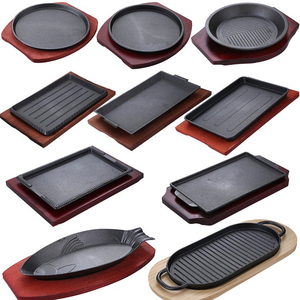
In high-intensity commercial culinary environments and modern home kitchens alike, the benchmark for food-preparation tools has evolved far beyond basic utility. Today's global procurement buyers, brand managers, and commercial kitchen suppliers require tools certified for rigorous safety standards (such as European CE marking and EU Regulation EC 1935/2004), while demanding sophisticated biomechanical engineering to prevent repetitive strain injuries (RSI) among kitchen staff.
Core Technical Insight: Implementing human factors engineering in stainless steel handles reduces wrist flexor muscular workload by up to 34%, while deep-drawn AISI 304 austenitic steel structure eliminates micro-fissure bacterial harborages inherent in cast or inferior alloy tools.
Ergonomics in kitchen tool design is fundamentally rooted in torque distribution, hand-grip geometry, and thermal decoupling. Standard commercial utensils often feature flat or cylindrical handles that require excessive pinch force, leading to early hand fatigue during long food preparation shifts. Advanced manufacturing addresses this through three primary parameters:
Optimized grip angles designed via CAD kinetic simulation to eliminate high-stress pressure points during repetitive turn and lift motions.
Food-grade 18/8 and 18/10 austenitic alloys containing 18% chromium and 8-10% nickel for total immunity against acid corrosion and pitting.
Fully compliant with EU General Product Safety Directive 2001/95/EC and EN 12983-1 physical stress standards for professional cookware.
Selecting the appropriate stainless steel specification determines lifecycle durability, sanitization efficacy, and total cost of ownership (TCO). Below is a technical comparison Matrix utilized by procurement engineers when evaluating industrial kitchenware:
| Material Grade | Chemical Composition | Corrosion Resistance | Ergonomic Formability | Primary Commercial Use |
|---|---|---|---|---|
| AISI 304 (18/8) | 18% Cr / 8% Ni | High (Resists food acids) | Excellent (Deep drawing) | Premium Ladles, Turners, Pots & Skillets |
| AISI 316 (18/10/2) | 18% Cr / 10% Ni / 2% Mo | Extreme (Resists saline/chides) | Superior | Hospitality & Marine Commercial Kitchens |
| AISI 430 (18/0) | 18% Cr / 0% Ni | Moderate | Good (Ferritic magnetic) | Induction Base Cladding & Value Utensils |
| Tri-Ply Clad (304-Al-430) | Multi-Layer Composite | High Thermal Spread | Precision Molded | Heavy Duty Energy-Saving Induction Cookware |
Global supply chains are undergoing structural shifts toward sustainability, traceability, and automated risk mitigation. When sourcing stainless steel kitchen utensils from OEM/ODM factories, corporate buyers must align with several prominent market trends:
Institutional buying groups in Europe and North America now require verified Carbon Footprint calculations for stainless steel manufacturing. Utilizing electric arc furnace (EAF) steel with recycled scrap ratios exceeding 75% dramatically reduces Scope 3 embedded carbon emissions without compromising tensile strength or surface finish.
While traditional raw stainless steel is inherently hygienic, upcoming trends favor non-toxic titanium PVD coatings (Gold, Rose Gold, Matte Black) and copper-ion anti-microbial surface texturing. These coatings provide non-reactive chemical barriers while enhancing aesthetic differentiation for private label brands.
Importers are moving away from massive single-SKU inventory holds toward agile manufacturing. Modular die tooling allows factory production lines to swap handle profiles, logo laser-engravings, and functional working ends with minimal setup downtime, drastically reducing Minimum Order Quantities (MOQs).
Our OEM manufacturing facility operates under rigorous ISO 9001:2015 quality management procedures, spanning deep-draw press hydroforming, robot-assisted mirror polishing, and automated laser seam welding.
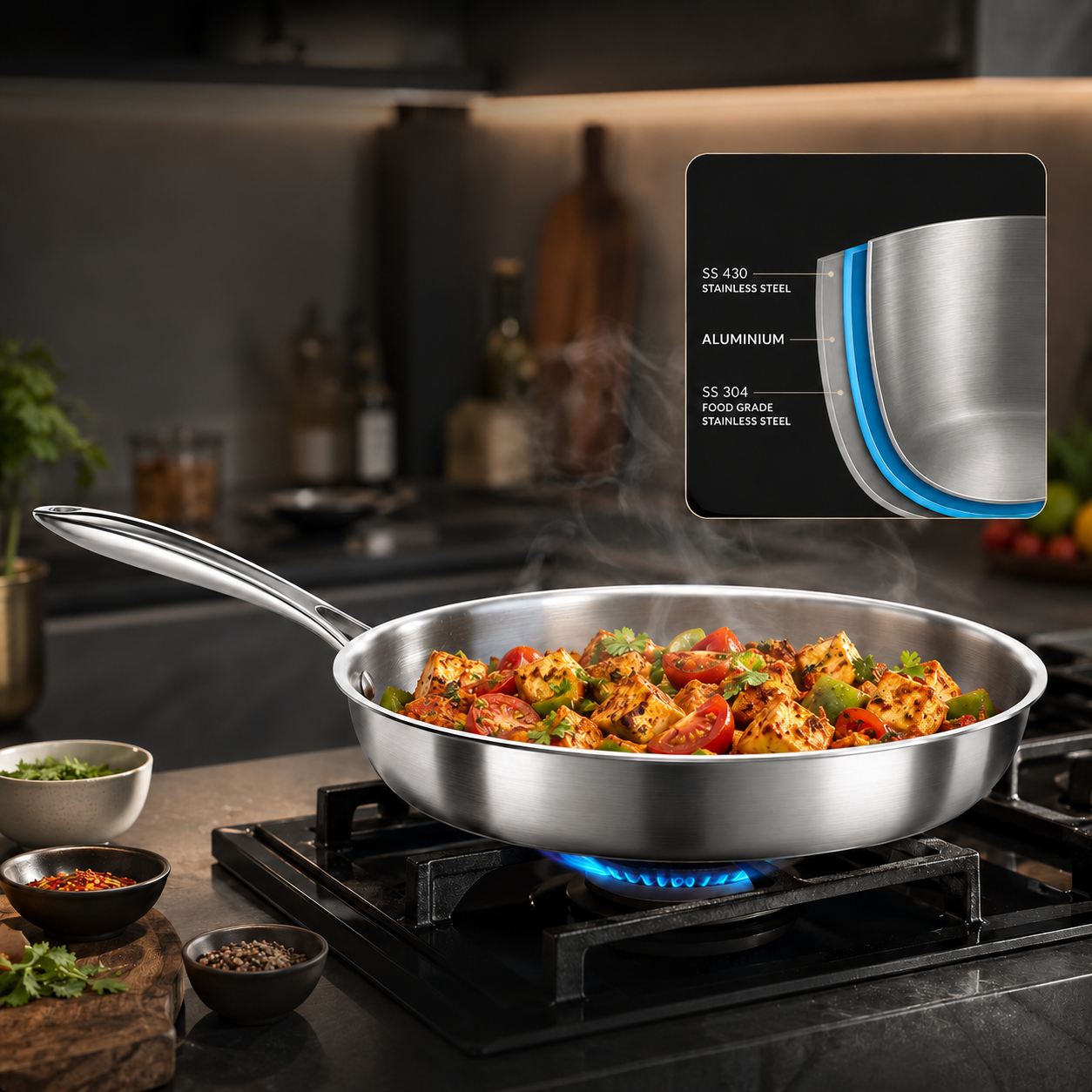
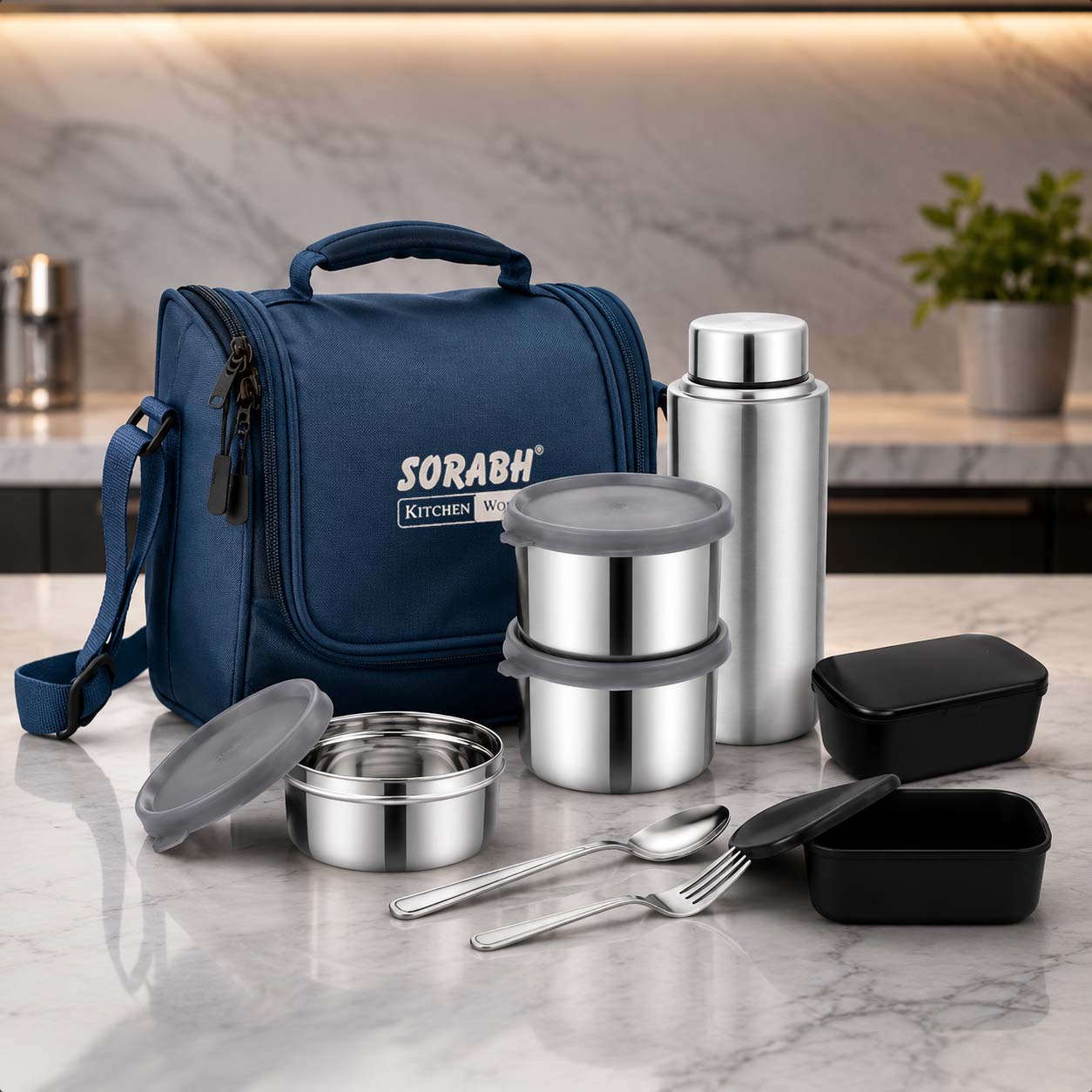
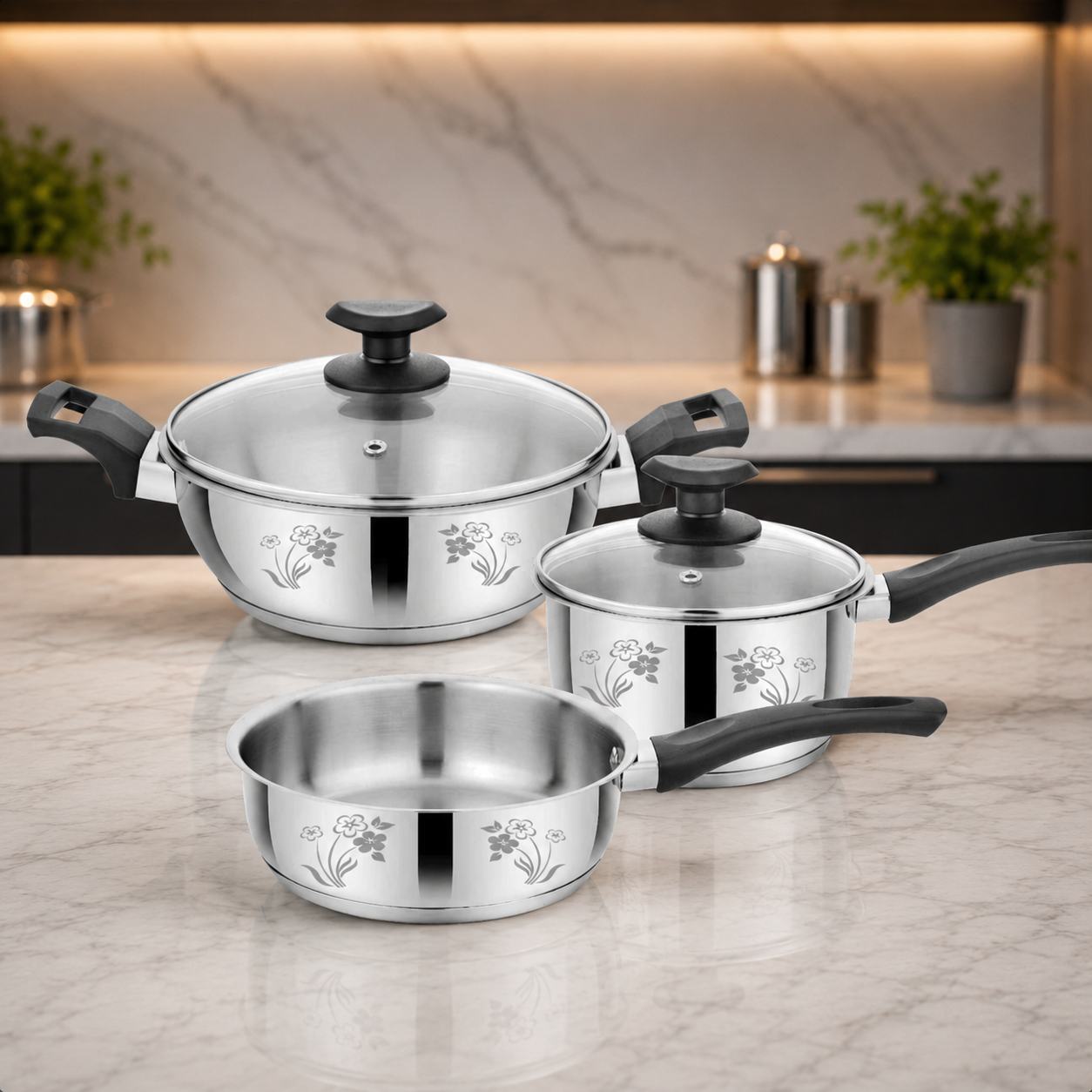
Established in 1991, Saurabh Steels (India) / Sorabh Kitchen World has grown over more than three decades into a leading force in stainless steel utensils, tri-ply cookware, and commercial hotelware manufacturing. Operating out of the Badli Industrial Area in Delhi, India, the company maintains an extensive catalog exceeding 700+ active product SKUs, supported by a domestic network of over 180 dealers and international export channels spanning 13+ global markets.

30+ years leading industrial steel innovation, quality assurance standards, and global corporate expansion.

Head of factory operations, advanced CNC hydroforming automation, and international OEM business development.
CE certification confirms that the kitchen tools comply with essential European safety, health, and environmental protection standards. This includes mechanical stability (handles won't detach under load), thermal safety, non-toxicity, and compliance with EU Directive 2001/95/EC and Food Contact Material Regulation (EC) No 1935/2004.
Ergonomic handles optimize grip angle and stress distribution, reducing wrist torque and hand fatigue for professional chefs. Biomechanically engineered tools significantly lower repetitive strain injuries (RSI), boost kitchen task velocity, and feature thermal isolation breaks to prevent handle overheating.
AISI 304 (18/8) and AISI 316 (18/10) are the industry gold standards due to high chromium and nickel content. They offer total resistance against acidic foods, zero metallic leaching, superior rust resistance, and high structural strength during heavy daily commercial dishwashing.
Standard catalog items support flexible low MOQs starting at 500 units per SKU. Custom OEM orders featuring bespoke handle molds, laser-etched logos, and customized retail packaging typically start at 1,000 to 3,000 units depending on tooling complexity.
Yes. Every production batch is dispatched with comprehensive spectro-analysis material test reports verifying chemical composition. We provide official compliance certification for LFGB (Germany), FDA (USA), and EU 1935/2004 food-safe standards.
Sample dispatches for evaluation take 5–7 working days. Bulk factory production runs generally require 25–35 days from deposit confirmation and artwork approval, with complete FOB/CIF shipping logistics support.
Direct factory pricing, complete OEM flexibility, and engineered ergonomic reliability for your enterprise brand or commercial supply business.
Inquire Now